So Watt? you may ask
When was the last time you really thought about how your home and lifestyle is powered? More than four million Australian households now have solar. Home battery installations have rapidly risen in recent months. How are you heating and cooling your home? And how are you travelling from Point A to Point B?
In Season 4 of our So Watt? podcast, we’re diving deeper into electrification – from solar panels, home batteries and EVs, to unpacking the fully electrified home. Connecting you with experts in the field, to help you make smart energy choices. So, jump right in with our host Emma Edwards in this season of So Watt? – the podcast that questions everything you thought you knew about energy.

Meet our host, Emma Edwards
Emma Edwards is a financial content creator and an expert in money psychology and behaviour. She founded her media platform, The Broke Generation, to help people feel good about money by making small but impactful changes to their financial behaviour and money mindset. Emma authored the book, Good With Money, which has transformed thousands of people’s finances across the world.
Emma admits that one of the areas overlooked in her life is energy consumption – so she’s on a journey to uncover practical energy efficiency tips that all of us can implement to make an impact on our wallet. Whether you own or rent, live on the coast, city, suburbs, regional or even remote areas, join her across as she goes room to room at home. Let’s get started.

Season 4
Welcome to season four of So Watt?. In this season, we’re unpacking all things electrification – from home batteries and EVs, to fully electrified homes – to help educate Australians on ways they can make smart energy choices, become more energy efficient and save on energy bills.
So Watt? is a community battery
This season, we’ve heard about home batteries and ‘batteries on wheels’ – aka, EVs. Now it’s time to talk community batteries.
So Watt is a community battery? And most importantly, could you be accessing one to save on your energy bills while participating in the energy transition? Origin’s David Gilligan joins the podcast to introduce Australians to the new kid on the block.
So Watt? is brought to you by Origin, with production from the team at Rolln Media.
Episode transcript
Transcript to come soon

So Watt? Making your journey electric
You may have noticed electric vehicles have become more commonplace on Australian roads in 2026. So Watt is driving people to make the switch to an all-electric journey?
Chau Le, Origin’s GM of E-Mobility and Chair of the Electrical Vehicle Council, joins the podcast to discuss Australia’s EV landscape – everything from EV uptake and Vehicle To Grid (V2G) trials, to new makes and models and advances in charging infrastructure.
So Watt? is brought to you by Origin, with production from the team at Rolln Media.
Episode transcript
Transcript to come soon
So Watt? Future proof like a pro
So Watt should Australians be looking out for if they’re exploring solar, batteries or other assets for their home? And where is Australia at on its electrification journey?
SolarQuotes founder Finn Peacock joins the podcast to talk about Australia’s electrification landscape, including solar and battery uptake, consumer advice and much more.
So Watt? is brought to you by Origin, with production from the team at Rolln Media.
Episode transcript
Transcript to come soon
So Watt? The fully electrified home
You could say Origin’s Darryn McShane lives and breathes energy. He’s just a built a fully electrified home. And in his day job, he’s creating products to help Aussie households benefit from electrification assets.
So Watt is a fully electrified home, and how can Australian households benefit from electrifying?
So Watt? is brought to you by Origin, with production from the team at Rolln Media.
Episode transcript
Transcript to come soon
So Watt? The great home battery boom
Australia is in the middle of a home battery boom, with interest and installations at an all-time high. So Watt does this mean for Australian consumers? And should you be considering a battery at your home?
Join Origin’s GM of Electrify and New Connections, Chris Zondanos, for all the answers in our latest episode.
So Watt? is brought to you by Origin, with production from the team at Rolln Media.
Episode transcript
Transcript to come soon
Season 3
When was the last time you thought about how much energy your appliances use and how your home is powered? Did you know that home design can make a positive impact on your energy use and bills?
In Season 3, we explore tips, tricks, and design hacks to make our homes more energy efficient and save on energy bills. From draught proofing and insulation to solar and doing your research before buying new appliances – there are loads of ways to make smart energy choices at home. So, go room to room with Emma Edwards of The Broke Generation in this season of So Watt? – the podcast that questions everything you thought you knew about energy.
So Watt? Bonus Episode – The Price of Energy
Take energy out of the too-hard basket with a bonus episode of So Watt? on energy price changes. So Watt does it mean for household budgets and how can you make sure you’re getting the best deals? Listen to previous episodes below.
So Watt? is brought to you by Origin, with production and scripting from the team at Lawson Media.
Episode transcript
Transcript to come soon
So Watt? Episode 10 Season 3 – Knowledge is Power
From draught proofing and insulation, to solar and doing your research before buying new appliances – there are loads of tips, tricks and design hacks that can make our homes more energy efficient and help bring our energy bills down. But did we find out where the heart of the home really is?
So Watt? is brought to you by Origin, with production and scripting from the team at Lawson Media.
Episode transcript
EMMA EDWARDS: Welcome back to So Watt?, the podcast that questions everything you thought you knew about energy,
I’m Emma Edwards and we have arrived. This is the final episode of the season and throughout the series I’ve learned tips and tricks and design hacks that can make our homes more energy efficient and ultimately save us money. And there’s been a lot of them – so in this episode – I’m going to give you my key take-aways, the TLDR, the executive summary on some of the best things I’ve learned this season.
So where should we start… maybe back here:
NANCY LAU: In my opinion, there isn’t really no room in the house that wouldn’t have a ceiling fan.
EMMA EDWARDS: You might remember Nancy Lau from earlier in the season. Nancy is an architect, project manager, and design consultant, and she’s a big advocate for ceiling fans. And you know, she’s turned me into one too. The reality is, fans are now designed with features that make them useful anywhere in the country whether you’re up the steamy north or down in the chilly south. Some fans can even push warm air down. Which means there might even be days you don’t need to run your home heating system to stay warm.
NANCY LAU: I guess the technology has changed enough that you can have DC fans, which are incredibly efficient and quiet… they’re much more gentler particularly when you’re sleeping.
NANCY LAU: Ceiling fans are reversible, so you can actually run them during winter. And there’s a little switch on your ceiling fan, and it reverses it, so the hot air is just the direction of the fan, so it is actually circulating the hot air down.
NANCY LAU: Ceiling fans… why wouldn’t you put them in?
EMMA EDWARDS: But another great tip I got from Nancy is if you’re building a new home, make sure you design for the climate.
NANCY LAU: The cheapest and most basic, fundamental principle is design for the climate. So then you’re not actually trying to wrangle against something that you’ve already got on your side. So… classic things that we see now, and when I do a lot of the room innovation work, is that the buildings aren’t faced the correct way. It’s about the orientation, knowing where the sun is, the breezes, the topography. There’s micro climates, particularly in the part of Northern Australia where we live, there’s valleys and hills and mountains and those sorts of things, and sea breezes. So it’s really just designing for your climate.
EMMA EDWARDS: I’ve also learned you don’t need to be spending big dollars on new gadgets to make a real difference to your energy usage. Remember our energy assessor Dale Boucher – he’s a big advocate for making sure homes have adequate insulation.
DALE BOUCHER: If I had a golden wand, we’d be making sure that every house had a really good thermal envelope, and that means having really good insulation in the ceiling, in the walls and in the under floor… Now I’ve assessed hundreds of houses, hundreds, and I get up into the ceiling of every house, and I can count on two hands, the number of ceiling insulation installs that I’ve been happy with. Every house has really significant gaps in their ceiling insulation. Now if you have five per cent of gaps in your ceiling insulation that reduces the insulation performance by fifty per cent.
EMMA EDWARDS: I loved learning that you can use bubble wrap to insulate your home. Bubble wrap is a great way to create an affordable, temporary double glazing. And because it’s temporary, it’s especially great for renters. Dale also says make sure you have curtains or blinds to help prevent heat loss or heat gain. And of course don’t forget your draught proofing.
DALE BOUCHER: Now there are many, many houses that have more than five per cent gaps. So for me the first thing that people should be doing is working on that thermal envelope. Solar PV systems and batteries are well down the track, you need to get your thermal envelope in order first. The two obvious things and the two best returns on investment are draught proofing your house so the air can’t escape, and insulating your house to a high standard, So that the air is not wanting to escape your room and the air is being contained in those rooms.
EMMA EDWARDS: Don’t forget about researching incentives offered by your state government like a scorecard assessment program that rates how much energy it takes, and therefore how expensive it is, to run your home.
Beyond bubble wrap, Canstar Blue’s Sally Tindall gave me the data on purchasing electric appliances. Whether it’s upgrading your home to a heat pump, or figuring out which air conditioner, or air fryer, to buy – Sally is a big advocate for making sure you do your research before spending your hard earned cash.
SALLY TINDALL: If I had a golden wand to make a house more energy efficient, I would say a computer or a mobile phone, because technology is developing in leaps and bounds. Knowledge is power. You will get great energy efficiency tips from doing a bit of research on your computer or on your phone. You can also do a lot of retrofitting of your old appliances to make them technologically advanced. Things like little motorised gadgets that sit on your blinds that open them up and down whatever time of day you want, without having to invest in a whole new blind system. It’s fantastic what technology can do.
EMMA EDWARDS: So do your research, use sites like Canstar Blue to help guide and inform your appliance purchases, because don’t forget spending a little bit more on an energy efficient appliance could save you money in energy in the long run. Then, you can then proudly display your appliances in the space that Sally considers the true, pure, heart of the home.
SALLY TINDALL: I want to say the kitchen because we really do congregate there. Whether that’s to cook dinner, eat our dinner there, have breaky, it’s a lovely place where we bond over the bench. But I know in my heart of hearts the engine room of the home perhaps is in the laundry. That’s where all the action is done. I am forever in there because my goodness my children get so dirty.
EMMA EDWARDS: The point is, research is vital to guiding your purchases to make sure you’re making smart energy choices. Whether in the home, in the garden, or as Chau Le, Origin’s General Manager for E-Mobility tells us, in the garage. Chau spends most of her time thinking about the future, and a lot of it looks like something you might see in the Jetsons cartoon.
CHAU LE: Imagine a house where you’ve got solar, you’ve got an electric car in the garage that is a massive battery, and then you’ve got all of these appliances, and you know, your fridge and your washing machine and your pool all connected to each other and talking to each other, so that they are maximizing the solar consumption during the day, minimizing the consumption when there’s high prices, the car is charging at the right price, the car is discharging into the house… powering your fridge at the right time, like all of that needs to operate as a whole.
EMMA EDWARDS: I thought Chau’s advocacy for Electric Vehicles was infectious. To be honest she’s converted me from EV sceptic to EV curious. So if you want to be reminded about Government incentives, EV subscription models, bi-directional charging, EV versus Internal Combustion Engines, costs and much more, go back to episode two; The Garage, where Chau talks about EVs in loads more detail.
EMMA EDWARDS: And making that full Jetson future work requires a lot of software and technology. Origin’s Brooke Pauwells and her team design energy products and services for customers to help them get the most out of their electrified home. One of them is called EV Power Up.
BROOKE PAUWELS: And that allows customers to charge their EV for around $5. All you do is connect your EV and our app, you tell us when you need it charged by each day, and we manage all of the charging in the background to give you that nice, low-cost charge, and often at times when there’s more renewable energy in the grid.
EMMA EDWARDS: And if you happen to have a home battery – or you’re thinking about getting one – look at options like Origin’s Virtual Power Plant, Loop. It’s proving popular as a way to help use your stored energy to make some extra cash and offset the purchase price.
BROOKE PAUWELS: By connecting their battery, they can earn extra money for exporting their battery when that energy is in high demand and really valuable. So what that’s doing for them is giving them some extra earnings in their pocket to help pay back their battery faster. But it’s also supporting the grid when there’s a lot of pressure on the grid.
EMMA EDWARDS: Brooke also suggests checking out apps like Spike or any new ones which appear and can help you take action to save energy or improve energy efficiency. We covered it extensively in the first season. So it came as no surprise that when I asked Brooke to nominate the room she believes is the heart of the home she had some questions of her own.
BROOKE PAUWELS: How warm does the space need to be? How cool does it need to be? Could I open the window or the door and get the same outcome? Could I use a blanket or put on some more clothes? Do I need to heat the whole space or just one room?
EMMA EDWARDS: I’ve learnt so much from the experts and voices we’ve heard from this season and am taking away plenty of hacks to become more energy efficient with some simple changes that ultimately save us money.
EMMA EDWARDS: But it was a young voice, university student Lauren Ryan who’s dedicating her life to making sound energy efficient choices not just for herself, but for the world, that I thought summed up perfectly, the mindset we all need to have around energy.
LAUREN RYAN: If I have one thing for everyone to do to make their house more energy efficient or sustainable? I think it would just be to, in the simplest terms, just do the right thing.
EMMA EDWARDS: So Watt? is the show that questions everything you thought you knew about energy and explores the solutions that exist today – and it’s brought to you by Origin.
This series has been about making better, energy efficient choices for our homes and our lives. We all have the ability to become more informed, be more energy conscious, and use the simple hacks and innovations we’ve learned from in this podcast, to make our spaces more efficient.
Whether you own or rent, live in a unit, an apartment, a suburban house, a city, or even in the regions.
So if you’d like to find out more about the electrification of your home, I’ve left a link in the show notes of this episode.
You can also head across to originenergy.com.au/sowatt to catch up on all the episodes from this season. We’ve also got a great archive of episodes from Season one and two which are worth having a listen to as well.
So Watt? will be back sometime in the future – so just hit follow in your favourite podcast app to be the first to get new episodes when they drop. I’m Emma Edwards and happy hacking.

So Watt? Episode 9 Season 3 – The Great Outdoors
Australians love the great outdoors, and many of us look for ways to connect our indoor and outdoor spaces at home. And it turns out, our gardens and landscape design are pretty important to the energy efficiency of our internal spaces. So Watt do we need to pay attention to when designing our outdoor spaces?
So Watt? is brought to you by Origin, with production and scripting from the team at Lawson Media.
Episode transcript
EMMA EDWARDS: Ahhh… the outdoors… that peaceful place where we all get to relax… or where you might have a pool party with friends and family.
EMMA EDWARDS: You might even throw some sausages on the barbeque.
EMMA EDWARDS: Pour a crisp glass of dry Rosé.
EMMA EDWARDS: But, what can any of this have to do with energy? As it turns out… Your outdoor spaces are actually quite important to the energy efficiency of your home.
EMMA EDWARDS: Hello again, I’m EMMA EDWARDS and this is So Watt?, The podcast that questions everything you thought you knew about energy.
EMMA EDWARDS: In this episode, we’re going outside.
TRIVESS MOORE: The spaces around our housing are so critical for the management of thermal performance of our indoor areas.
EMMA EDWARDS: This is Dr Moore, Dr Trivess Moore. He’s an associate professor at RMIT University, and while he might have a James Bond name… Dr Moore actually works in the school of property construction and project management. We heard from him earlier in the series. And he’s passionate about finding ways to deliver more sustainable housing, with new builds and retrofitting.
But, how do our outdoor spaces impact on our own energy usage? Not just in our homes but in our cities as well?
TRIVESS MOORE: We know that kind of across time, we’ve tended to kind of pave over everything, and so that kind of contributes to the kind of the phenomenon of the urban heat island, which is where we’re kind of trapping heat in our cities, because it doesn’t have anywhere to dissipate, because all the hard surfaces are holding that heat.
EMMA EDWARDS: Heat in our cities means our backyards are warmer than they once were, and all that hot air is warming up our homes. So we’re trying to cool it all down with air conditioners inside. And that costs us money. But the heat also makes our outdoor spaces less pleasant to enjoy. Most of us have walked through a city on a scorching hot day and the sun and heat is bouncing off the walls and footpaths and windows and all we want to do is sit in the shade of a tree. And it’s the same in our patios and gardens – we want to have liveable spaces that are comfortable to enjoy at any time of year.
TRIVESS MOORE: Any time you can either add a garden in or enhance a garden, or have some greenery around a dwelling, is really critical for helping with that, that thermal regulation. What we know is, though, that you can also use it or use different plants in different ways. And so each kind of climate zone or city will have different plants which might be better suited in different spots around the house. So for example, you might have a pergola that you want to be able to let the sun through in winter, so that you can warm up certain indoor spaces in winter, but you want to try and block the sun out in summer. And so, you know, there are different plants that will, you know sort of climbing plants that you could use to grow over the pergola that will have the leaves in in summer and kind of keep that heat out and then drop the leaves to allow the sun to come through in winter. And so I think we need to have better connections with those experts in that space to be able to better deliver improved performance outside and around our house.
Because if we stop things like heat getting in, it makes it easier to maintain our comfort inside the dwelling. It means we don’t have to rely as much on, you know, heating and cooling systems.
EMMA EDWARDS: Now we’ve met someone already this series who spends a lot of time thinking about their outdoor space. Remember Michael Mobbs, Michael has a house in inner city Sydney, and he does almost everything he can to improve its energy efficiency and make it sustainable.
MICHAEL MOBBS: So come outside, and I’ll show you the garden
EMMA EDWARDS: We are in Michael’s outdoor space, it’s complete with Penny, his chicken, and a must-have for many Aussies… a deck.
MICHAEL MOBBS: We’re standing on a back deck. This is energy efficient because I’ve reused plastic for the decking. It’s actually a mistake in some ways, because it’s black. Do not use black things in your garden because they absorb the heat and re-radiate. Use pale things in the garden… So you don’t want a black roof if you’ve got a black roof, so Black tile, I know it’s fashionable, but your heating and cooling bills is going to be at least double, because they act like a kind of a fry pan. They don’t stop at the surface of the roof. They re-radiate that heat below. Black roofs are a no no. And if you’re looking at renting, do not, if at all possible, rent a house or a unit with a black roof, because you will cook. The other thing that’s out here are lots of trees. Trees are the cheapest air conditioners on Earth.
EMMA EDWARDS: Adding greenery might seem like an obvious tip but it’s one that applies to home owners and renters and often transforms a space, making it more pleasant on the eye and cooling things down when it’s hot.
MICHAEL MOBBS: Here’s something that is really powerful for tenants. You can put pot plants out, there are some that have little water storage things at the base, they’re called Water ups… I’m looking at one now. It’s a pot plant, and underneath it is what is called a wicking cell, or the trade name is water ups. It reduces watering by 80%.
EMMA EDWARDS: There are a lot of people around Australia, like Michael, that do what they can to make their homes more energy efficient, sustainable and are moving towards electrification in the process. But, according to Dr Moore, there are over nine million Australian houses that need to be retrofitted to improve their performance quality: to make them efficient, sustainable and affordable. It’s a massive and expensive task. And it’s one that he believes should include a focus on energy efficiency, but also, now more than ever, a focus on climate resilience as well.
TRIVESS MOORE: And there has been some research done by people at CSIRO and other organizations, other universities as well, which has kind of showed that depending on where you are in Australia, the changing climatic conditions may mean that your housing performance improves in some cases, but in a lot of cases, it actually will will decrease. And so what we know is there’s going to be a lot of costs to go back and retrofit quite a lot of these houses to make sure they are kind of climate safe moving forward… Now if we go back to before when the houses were built before that kind of 2004, 2005 period, where there were very little requirements for any energy efficiency elements, and in fact it was only in the early 1990s that we had some minimum kind of ceiling insulation requirements come in, but if know that if we go back to that sort of 10-star scale, that housing built before the, kind of the early 2000s really rates at somewhere between about 1 and kind of 3 stars. So quite poor performing. You’re not going to be comfortable in them in winter. You’re not going to be comfortable in them in summer. You’re going to have to have your heating and cooling running all the time.
EMMA EDWARDS: And according to Dr Moore, these poor performing homes don’t just make living in the home uncomfortable – but with so many of us now working from home too it could have a major impact on our productivity. And frankly, I’ve never related to anything more. When it’s too hot in my office, it is sO hard to get anything done.
TRIVESS MOORE: As the price of energy goes up everything gets really expensive, and there’s other impacts too. We know there’s research that shows that indoor environment quality, so the, I guess the temperature and how comfortable you are, can impact on things like productivity. So we have a lot more people working at home now. So this is going to be impacting on their productivity. We know that there is impacts on health and wellbeing. Houses increasingly are having issues with things like mould and condensation and that is no doubt a health impact for people. And so we will need to kind of address those houses but we need to do so in a way that factors in the future climatic conditions. So what are the conditions going to be like in 2050. And I think that what we need is we need a shift in the building regulations to factor in for those future climatic conditions, and if, you know, for example we assume a house should last 60 years, or 80 years, you know, we should be using that midpoint in that lifecycle to say okay well that’s going to be the climatic conditions that we need that house to be comfortable in 30 years time, 40 years time.
EMMA EDWARDS: For Dr Moore – this is really the key to the future of Australian housing. New homes are required to be seven star rated – which means they are more energy efficient by default. But also more resilient to a changing climate – and he says this is actually the future of how we design our homes.
TRIVESS MOORE: We’re going to start to see a shift from focusing on trying to improve energy efficiency to actually being delivering climate resilient housing, because we know that we need to be proactive there, because the cost for fixing housing or rebuilding communities is too costly, and we see things then that happen, like when floods go through, insurance prices go up, and this impacts, you know, significantly as well. So I think that that kind of energy efficiency discussion needs to go hand in hand now with that climate resiliency discussion for households moving forward.
EMMA EDWARDS: So Watt? is the podcast that questions everything you thought you knew about energy and explores the solutions that exist today.
If you’d like to find out more about anything on today’s episode I’ve left a link to a blog post in the show notes. And if you want to catch up on previous episodes – you can learn more at originenergy.com.au/sowatt, or just hit follow in your favourite podcast app.
Next time on So Watt?
SALLY TINDALL: Technology is developing in leaps and bounds. Knowledge is power.
EMMA EDWARDS: That’s coming up in the next and final episode of the season. I’ll speak to you again soon. And maybe if you’re lucky we’ll find out where the heart of the home really is.
So Watt? Episode 8 Season 3 – The Bedroom
In this episode, So Watt? pulls back the covers to reveal how to make your bedroom more comfortable and improve its energy efficiency whatever the season.
So Watt? is brought to you by Origin, with production and scripting from the team at Lawson Media.
Episode transcript
DALE BOUCHER: Well bedrooms are normally not a high priority because you’re only spending a few hours, or sleeping overnight, in the bedroom. And bedrooms, you’re not often having a really, really warm temperature. So often people don’t sleep with with heating.
EMMA EDWARDS: Hello again, I’m EMMA EDWARDS and this is So Watt?, The podcast that questions everything you thought you knew about energy.
In this episode we are going ‘under covers’ and entering the bedroom.
Some of you might think the bedroom is a great candidate to be the heart of the home, I mean I did, why wouldn’t it be?
But then again some of our guests suggested the garage or solar panels are the heart of the home. I mean, really? So at this point I don’t know what to think.
Not that I’m going to dwell on it.
Let it go Emma, leeetttt it go. Let’s go into the bedroom…
EMMA EDWARDS: We spend a third of our life in the bedroom, So Watt can we do to make it more energy efficient?
DALE BOUCHER: For a bedroom, I’d be making sure that there are really good interior window coverings… on that bedroom, making sure that… you know, the room is well insulated, the room is well draft proofed.
EMMA EDWARDS: This is Dale Boucher, Dale is an energy consultant, we heard from earlier in the series.
EMMA EDWARDS: And Dale says a lot of Australian homes – particularly the older houses, have gaps that let all that warm snuggly air escape in the winter – and let the heat in during summers – and that can affect how comfortable your space is.
DALE BOUCHER: So, when I’m doing an energy audit, I’m getting up into a roof cavity. I don’t want to see plasterboard. I want to make sure that all that plasterboard is insulated. So for a lot of houses, it’s essentially one or two bags of batts can repair all those gaps. And for many houses, you can double the performance of your ceiling insulation by repairing those gaps. So that’s something that can be a really cheap and effective task is to repair those gaps.
EMMA EDWARDS: So making sure you have ceiling insulation is important, but there are often other gaps we need to look at. Just like other rooms in the house, draught proofing the bedroom can help make your space more comfortable and improve its energy efficiency.
DALE BOUCHER: Householders are spending a fortune keeping their house warm, and that air just quickly and easily escapes, and they’re having to reheat and reheat that air, and it easily escapes. So that’s one area where you can easily work on draught proofing. And draught proofing, you know there are many, many areas in a house where warm air can escape your house. The obvious ones are external doors, windows, but then we get a lot of older housing stock that’ll have wall vents. You might have ducted floor heating, and you’ll get draughts around floor vents as well as wall vents, ceiling exhaust fans, down, lights, animal doors. There are many, many examples of where air can easily escape out of your house.
EMMA EDWARDS: Now this might sound a bit expensive to be plugging all those gaps, but it doesn’t need to be. Some states in Australia even help home owners and renters’ with the process.
DALE BOUCHER: An example in Victoria, the state government has a free program to do draught proofing around external doors and windows. So that could be another thing that a renter could do.
EMMA EDWARDS: Not every state has these free programs, and things do change so check the latest programs your own state Government offers.
In an earlier episode, Dale mentioned one of my favourite super cheap hacks to help insulate windows and keep in warmth, can you guess what that is?
DALE BOUCHER: Bubble wrap
EMMA EDWARDS: That’s right, bubble wrap.
DALE BOUCHER: And you can buy bubble wrap for $1-$2 a square meter.
And by putting bubble wrap on windows in the winter months… That really works. It effectively works like a cheap form of double glazing.
EMMA EDWARDS: A tip I learned recently to stay warm in the bedroom during winter is actually to use an electric blanket. I always thought that they used loads of energy, but actually heating the bed rather than the room is more energy efficient. Who knew?
EMMA EDWARDS: Because Dale is based in Victoria a lot of his energy is focused on improving the efficiency in the wintery south. But a lot of us live where it’s warm, even tropical… which can get really steamy in summer. So, let’s hear from someone up North just to balance things out.
NANCY LAU: In my opinion, there isn’t really, no room in the house that wouldn’t have a ceiling fan.
EMMA EDWARDS: This is Nancy Lau, a Cairns based architect, project manager and design consultant in other episodes who we heard from her earlier in the series. And like me she’s a huge fan… of fans. But what if your bedroom doesn’t have a ceiling fan and you can’t afford to get one installed? And what if you’re renting and can’t make those kinds of modifications to your property?
NANCY LAU: Look, you can get pedestal fans. You can get box fans, some of them, honestly, I think you do get, you do get what you pay for. But definitely try and get one that’s quiet and non clicky. It’s just too painful. Otherwise, you’re just not going to get any sleep. Yeah, certainly if you don’t have, if you don’t have the ability to get a ceiling fan installed, certainly look towards getting a pedestal or a box fan that is generally quiet so you can actually get some rest.
EMMA EDWARDS: Fans are a great way to circulate airflow and find a comfortable temperature before mindlessly switching on the air-con. But for places in Australia that really feel the heat, shading windows is also a way of keeping the bedroom cool and reducing energy consumption.
NANCY LAU: One of my biggest tips to give, would be to shade your windows, whether you do this internally or externally, this can be easily done as a renter or as a homeowner. Shading internally, you can put up blinds. Double roller blinds are excellent if you have block out and sunscreen. It gives you flexibility of how you use that room for privacy and for Sun issues. Or externally, so, whether that is an external shade, planting, or some sort of pergola or some sort of more permanent structure, there are ways to shade that wall, which is particularly on the east and west where you’re where you will need to have some assistance to cool that room down… if you’re on the east and west, particularly for bedrooms, and if you’re not able to shade those windows either internally or externally, if you can, move your bed away from that wall. So you’re not getting that heat radiating back onto you as you’re sleeping because it’s incredibly uncomfortable.
That’s another really good reason why you have ceiling fans is because they don’t use that much energy. You could still open a window, have a ceiling fan on and be comfortable. If you had no ceiling fans, you’re just in a hot box, and it’s really awful, so you just have some flexibility in that room.
EMMA EDWARDS: Home design naturally differs state to state. For homes built in warmer or tropical zones these features help circulate air, moderate temperature and make our homes and bedrooms that little bit more energy efficient. And Nancy says if you’re starting from scratch – building something new – that’s the perfect time to really consider how liveable your home will be in the summer heat.
NANCY LAU: If you are building new… build with higher ceilings, mainly because you can get that ceiling fan in and you don’t feel like it’s going to whip you on the head there. But also, just means bigger volume there for that hot air to go out. Certainly, things that we always talk about in tropical buildings over here is to actually have wider eaves and to protect your outdoor deck area as well. The reason why we have wider eaves is so that when it’s raining, you can still have the window open as long as it’s not driving rain, but you can have that window open so therefore you’re not using air con, and also just, you know, it’s just a little bit more pleasant around, so that’s why you see those wide eaves. And also that shades your walls which means you’re not getting heat on your walls and those sorts of things.
EMMA EDWARDS: While making design choices when building is the best time – many of us do renovate our homes – and Nancy says this can be the perfect time to bring in an expert – to make sure you’re making the right choices for your home design.
NANCY LAU: So another tip would be to engage an architect or a building designer, and even get an energy efficiency consultant to help you if you’re going through a full renovation phase. I think that is another tip, because, you, it’s a holistic approach to it. It’s not just, oh, I can just put all my dollars in glazing over here, and then the rest of my house will be fine. No, it’s not like that. It is a full system approach, and we can look at buildings at a full system.
EMMA EDWARDS: Any final tips Nancy?
NANCY LAU: We put ceiling fans in outdoor areas…you can put them outside. And we definitely put them outside, because they also help to get the mozzies away and those sorts of things. And if, you know, on a still night, it’s great to have a ceiling fan there.
EMMA EDWARDS: So Watt? is the show that questions everything you thought you knew about energy and it’s brought to you by Origin.
Next week on So Watt?
TREVISS MOORE: The spaces around our housing are so critical for the management of thermal performance of our indoor areas.
If you’d like to find out more about anything on today’s episode I’ve left a link to a great blog post in the show notes.
You can also head across to originenergy.com.au/sowatt to learn more about the podcast and listen to other episodes.
And if you want to be the first to hear the next episode when it drops – just hit follow in your favourite podcast app.
So Watt? Episode 7 Season 3 – The Living Room
The living room is where we spend most of our time, and Australians have really embraced open plan living. In this episode, we’re looking at windows, heating, cooling and creating zones to help make our living rooms more energy efficient.
So Watt? is brought to you by Origin, with production and scripting from the team at Lawson Media.
Episode transcript
EMMA EDWARDS: Hello again, I’m EMMA EDWARDS and this is So Watt? the podcast that questions everything you thought you knew about energy.
In this season, season 3, we go room to room through the place we call home, hearing from experts about how to make our home space more energy efficient.
In this episode we are looking at the space in our home where many of us spend most of our time, our living rooms, because for a lot of us, the living room really is the heart of our home.
SALLY TINDALL: Can I say something nice about the living room?… well we took the TV away. Do you want me telling you that?
EMMA EDWARDS: This is Sally Tindall from Canstar Blue, we heard from Sally in a previous episode, but if not here’s a reminder.
SALLY TINDALL: I’m the data insights director. What that means is that I get to get down into the weeds of data, day in, day out.
EMMA EDWARDS: Sally often gets down into the data weeds and emerges with insights to help consumers make the best decisions when shopping for appliances… whether you’re choosing the right washing machine, or perhaps a giant TV for your living room. And while Sally has removed the TV from her living space – most of us put our televisions front and centre. And that’s somewhat fitting – because in your living room – whether you’re watching a show, or it’s sitting there on standby, your television and entertainment system is costing you money. But Sally says there are other ways to make this space in our home more energy efficient. And one of her tips involves a simple retrofit – for your blinds.
SALLY TINDALL: We used to have a house that had a lot of easterly sun and a lot of westerly sun. So, in summer, on those really hot days, we did not have air con, I used to frantically put the blinds down in the morning, so to block out that sun, lift them up at about 11 o’clock, and then at about three o’clock, right over to the other side of the house. Wasn’t very far, and then put the blinds down in the West. But if I missed that, the house really cooked itself. And so the idea of having a little device… that you can control on your phone that rolls your blinds up and down when you need it, it’s fantastic, and it’s not a huge investment.
EMMA EDWARDS: I completely relate. That afternoon sun will heat up my living room faster than my air fryer can cook me a tray of chips! Though at least my cat’s happy, because he literally bakes himself in the sun rays!
If you’re wanting to make a bit more of an investment, you can consider engaging an energy consultant to give your home an energy audit. We’ve heard from Energy Consultant Dale Boucher across the series already, and he says our living spaces are the core of his work.
DALE BOUCHER: So the main room that I focus on when I’m doing an audit is the lounge room or the living room. And this room is really important because this is the room where people spend their most time in. This is the room where they want to have the room nice and warm. And this is where I’d be looking to ensure that the lounge room, the living room, which is often open plan to the kitchen as well, is really has an efficient heating system, has an efficient cooling system. I want to see whether this room can be zoned off so that you can just heat the living room and not the whole house.
EMMA EDWARDS: Dale is a bit of a PI, but for energy – and he’s always scouting around for where homes might be losing energy – and the first place he looks is often the windows.
DALE BOUCHER: So when I’m walking into a living room, you know, I’m looking at the glazing, I’m looking at the orientation of the windows. I’m wanting to see the window coverings on the windows to see what type of window coverings. Do all the windows have window coverings? Are there ceiling fans? Are there exhaust fans? These are the areas that I’ll be looking at, and when we’re looking at upgrades, I’m generally prioritizing the living room first. So for example… if a house doesn’t have any window coverings, you know, the first priority would be to work on installing window coverings for the living room, because that’s when that’s the room that people are spending the most time in.
EMMA EDWARDS: Australian houses, especially new builds, tend to have large single glaze windows. And they’re a thermal weak spot which translates to a 30 to 40 percent heat loss or heat gain through that window. So it’s important to be able to seal gaps, shield sunlight, insulate and find out where the draughts are coming from so you can prevent them.
DALE BOUCHER: Now, a really good way to see if you’ve got draughts is to check around the external doors, windows, skirting boards, window architraves. On a really windy day or night, you’ll be able to feel the draughts coming through those areas if it’s really, really windy outside. Now, if you can feel draughts, that means that the warm air is leaking out of those draft points, and you’ll be able to get, you know, a cork, a cork or a silicon, silicon cork and a product like Moroday gap rod filler for a $20 investment, you can make a huge impact on the comfort of your house and stop those draught points leaking out.
EMMA EDWARDS: Dale also says that one of the other major issues with the homes he sees can be found in the walls and the ceiling.
DALE BOUCHER: Really look at your insulation. You’re wanting to see insulation in the ceiling, in the walls and in the under floor. You’ve got to have that whole envelope insulated.
And for many houses, I do not see that at all. And you could start by getting up and having look at your ceiling insulation. Again, a cheap tip would be to start by repairing those gaps.
EMMA EDWARDS: Making modifications is great if you can get a tradesperson, but what if you live somewhere regional or remote and finding tradespeople might be difficult, or expensive? And what if you rent and can’t make modifications – are there any affordable hacks that you can use to help lower your energy bills?
DALE BOUCHER: There are cheap products that renters can install to glass such as bubble wrap. Bubblewrap is a really effective method to thermally improve the glass. There are window insulating kits, which you can buy online. And those window insulating kits, it’s a bit like a clear plastic, like a heavy duty glad wrap, and they seal tight around the wind window perimeter, they trap a layer of air between the clear plastic and the window. So for around $50 kit, you can do two or three windows where you can install this product and it actually works like a double glazing. Finally, for renters, making sure that every window has an interior window covering and you can buy some cheap blinds, cheap curtains. You can store them up, but when you leave that, when that lease expires, you will need to remove them, because… it’s part of the lease agreement that you can’t leave those appliances on the window. So there’s some advice that I would give to improving a rental property.
EMMA EDWARDS: But if you are undertaking a larger refit or building a new home, Dale thinks you should consider his suggestions for heating and cooling.
DALE BOUCHER: When we’re looking at heating and cooling, reverse cycle air conditioning is now easily, by far, the cheapest form of heating. And there are three main types of reverse cycle air conditioning. The first type, and most common type, is to have a split system air conditioner, and this is where you have a either a wall mounted or a floor mounted indoor head, and that will be connected to an outdoor heat pump. The second type of reverse cycle air conditioner is a multiple head system, and that will have one outdoor compressor and 2,3,4,5, indoor heads, and they are connected through insulator pipe. And for a lot of households, that multiple head system can be a really good option. The third option is to have a fully ducted and heating and cooling. And that is a common installation in many houses.
EMMA EDWARDS: I’m finding all of this so juicy, because I’m actually in the process of exploring air conditioning options myself. I am a hot gal, and I need it to be crispy cold where possible. There are a number of options available when it comes to making the spaces in our home more liveable. And your options, and how you use them, really depend on where you live. Here’s Sally again:
SALLY TINDALL: At Canstar Blue. We are surveying people across the country almost every week, and what we find is that often what consumers want and what they’re looking for and what they put a priority on is different depending on where they live. So down south, say, in Tassie or Victoria, there’s a big focus on, say, reverse cycle air conditioners to heat the house. It’s cold down there, but at the top end, there’s a focus on reverse cycle air conditioners to cool the house. Ceiling fans also important. Even pools and bar fridges are super important.
EMMA EDWARDS: Ok so you’ve got split systems, multiple heads, ducted systems… with so many options for air conditioning – I’m particularly interested in Dale’s advice on which is the best way to go here, especially from an efficiency perspective.
DALE BOUCHER: I’m a big fan of individual split systems. They are really, really efficient. They’re cheap to run. They’re cheap to install. You don’t have to install, you know, all of them at once. You can do a room at a time each year. So I find that split systems are my favorite… The other advantage of individual split systems is you’ve got perfect zoning, you know, you only need to heat the rooms that you need to heat… a ducted system is fine. You can get ducted systems that have lots of zoning capabilities, but what I find is that you lose a lot of energy through those ducting vents. And I can see from my experience that… householders with ducted heating cooling can use 20,30, 40 per cent more energy than a house with individual split systems.
EMMA EDWARDS: From large reverse cycle air conditioning systems to putting bubble wrap on your windows, checking your insulation and draught proofing your house. These are some of the things we can all do – renters and homeowners alike – to improve our home’s energy efficiency, making us as comfortable as we can be in the room some say is the heart of the home, the living room. But, what about the bedroom?
DALE BOUCHER: A bedroom for me would not really be a high priority.
EMMA EDWARDS: Next week on So Watt? we venture into the room where we spend a third of our lives, the bedroom.
EMMA EDWARDS: So Watt? is the show that questions everything you thought you knew about energy and it’s brought to you by Origin.
If you’d like to find out more about anything on today’s episode I’ve left a link to a blog post in the show notes, you can also visit originenergy.com.au/sowatt if you want to listen to other episodes.
I’ll speak to you next time.
So Watt? Episode 6 Season 3 – The Home Office
For many Australians, working from home has become semi-regular. And the set-up – monitors, lights, internet – it all adds up. So Watt can we do – in this age of super connectivity – to make the humble home office more energy efficient?
So Watt? is brought to you by Origin, with production and scripting from the team at Lawson Media.
Episode transcript
EMMA EDWARDS: This is So Watt? The podcast that questions everything you thought you knew about energy. I’m EMMA EDWARDS and in this season, season 3, we go room to room through the place we call home, hearing from experts about how to make our home space more energy efficient.
Like lots of people I’ve found myself working from home more and more in recent years, and I’ve got to say, rolling out of bed, sliding into my trackies and getting stuck into my work day without spending time commuting… It’s pretty convenient. But while we’ve all decked out our home offices with gadgets and gizmos a plenty, is there anything we can do to be more energy conscious?
TÉA ANGELOS: The home office is actually the heart of the home.
EMMA EDWARDS: I knew it was going to be too good to be true… okay Téa why is the home office the heart of the home?
TÉA ANGELOS: It’s where we create, it’s where we share our ideas, and it’s where we create pathways for our future.
EMMA EDWARDS: This is Téa Angelos and she’s the founder and CEO of Smart Women Society.
TÉA ANGELOS: We’re an online education company that empowers women to get smarter with their money, their career, their well-being and their relationships.
EMMA EDWARDS: Téa works from home a lot, so she’s well placed to paint a picture about the trends we’ve experienced since the pandemic of people choosing to work much closer to where they live.
TÉA ANGELOS: So I have a dedicated room in my home that I fitted out as a full Office. I have my laptop in there, I have monitors, I have filming equipment. Everything that I kind of need to do my job and check in with the team and all the projects we’re on.
EMMA EDWARDS: There’s a lot that goes into working from home – and all that gear – the screens, the monitors – it all uses power that in previous years your employer might have been paying for at the office. But Téa says there are simple things we can all do to make our working from home environments more energy efficient, and therefore cheaper on the budget.
TÉA ANGELOS: So I have multiple ways that I keep my home office energy efficient. All our light bulbs are LED light bulbs that use a lot less energy. I’ve also set up all our computers to turn themselves off and go into sleep mode after a minute or two, which is a great way to save energy and not have them in live mode if I’ve stepped away…
So I always keep the blinds down as much as possible, especially because where my office is, it gets hit with direct sunlight so it gets quite hot in the afternoon. So I make sure to keep the blinds down throughout the day to minimize that heat. And I also have a fan in the home office as well, so I use that as much as possible, and only resort to the air con on those really hot Brisbane days.
EMMA EDWARDS: Téa and her partners run Smart Women Society, and their mission is to empower women by improving financial literacy. But she’s got some tips that all of us can be empowered by.
TÉA ANGELOS: If you want to start making positive progress to breaking any bad financial habits that you have, here are a few simple things that you can do today. Number one is tracking your spending. For the next seven days, I want you to track your spending, every single transaction that you’re doing and every single bill that you’ve been paying. At the end of the week, I want you to go through and highlight with two different colors, your essential and your non-essential expenses. Once you’ve done that, understand the patterns in your spending. Did you realize you were spending that much on different categories. Is there something that you want to change with your spending? Use these insights to make positive changes in your spending habits. Once you’ve done that, you can then make a budget. It’s really important to know how much money you have coming in every month and how much money you have going out every month. As you’re creating your budget, start thinking about whether there’s any bills that you could reduce. Are you getting the best deals with all your bills? Are there ways that you can reduce the cost of your bills, for example, with your energy bill, are there ways that you can reduce your energy usage to therefore reduce the cost of your energy bill?
EMMA EDWARDS: Téa, you are speaking my language. I could not agree more.
Across this series we’ve heard from a variety of experts that have given us data and facts and great tips along the way. But when we were out in the field we met a student from Sydney who is at the beginning of their energy efficiency journey. So what is this young person thinking about?
LAUREN RYAN: I’m not interested in sustainability because I’m a liberal snowflake. I’m interested in it because I think it’s the right thing to do, ethically and morally. And it’s made me sad that sustainability and energy efficiency has become such a divisive topic, when it could be such a strong uniting force.
Hi, I’m Lauren Ryan. I am a college student at the University of Minnesota Twin Cities, studying sustainable systems management with an emphasis in sustainable products business management.
EMMA EDWARDS: Like a lot of students Lauren rents and she changes her accommodation on a yearly basis. So making permanent changes to a property is out of the question. But that doesn’t stop her thinking about energy efficiency.
LAUREN RYAN: In my own space I still try to be very sustainable by keeping track of how long of showers I’m taking, turning lights off when I can, turning the AC or heat off when I’m not home… I use public transportation. I try not to waste food. I’ll compost. Yeah, just stuff like that. Turn off lights, unplug, like my chargers and things that I know are drawing phantom power…
So I feel like I should start by clarifying that I’m not a crazy tree hugger or a hippie. I’m a city girl at heart, and my friends tease me because I’ve never been camping or skiing. I don’t like fishing or swimming in the ocean. But I do want to live in a way that I can be proud of, and that allows me to sleep at night knowing I’ve done my part. Like when I die. I want to know that I did my best to leave this planet better than I found it.
EMMA EDWARDS: For students a lot of your time spent at home is spent studying and working in whatever room you decide to make your work space. And Lauren does what she can as a young student renting, but after she graduates she wants to continue making office spaces as energy efficient as they can be.
LAUREN RYAN: I really want to work with really big corporate companies that have buildings all over the world and teach them what materials they should be using, what type of energy they should be using, how to be more efficient, how to be more sustainable, like how to deal with their waste, what to do with their water, stuff like that. I think the corporate companies are what’s going to make the biggest difference, and that’s how I want to contribute.
EMMA EDWARDS: And Lauren’s top tip to be more energy efficient, is perhaps one of the simplest and yet more profound that we’ve heard so far.
LAUREN RYAN: I would say, if I have one thing for everyone to do to make their house more energy efficient or sustainable… I think it would just be to, in the simplest terms, just do the right thing.
EMMA EDWARDS: So, the heart of Tea’s home is the home office, and as it turns out, there are plenty of ways to save energy there too.
Next time on the So Watt?:
SALLY TINDELL: I’m very worried about anyone that says the heart of the home is the home office, because I think they’re working too hard!
EMMA EDWARDS: We look at ways to make the living room more energy efficient, because after all… well, you know the rest.
EMMA EDWARDS: So Watt? is the show that questions everything you thought you knew about energy and it’s brought to you by Origin.
If you’d like to find out more about anything on today’s episode I’ve left a link to a useful blog post in the show notes of this episode.
You can learn more about the podcast and listen to other episodes at originenergy.com.au/sowatt, or just follow the show in your favourite podcast app.
I’ll speak to you next time.
So Watt? Episode 5 Season 3 – The Space Above
Australians are the biggest adopters of rooftop solar panels in the world. So Watt can we do to make the most of the space above, capturing energy during the day and putting it to use when we need it most?
So Watt? is brought to you by Origin, with production and scripting from the team at Lawson Media.
Episode transcript
EMMA EDWARDS: Hello again, I’m EMMA EDWARDS and this is So Watt?, The podcast that questions everything you thought you knew about energy.
In this season, season 3, we go room to room through the place we call home, hearing from experts about how to make our home space more energy efficient.
If you want to hear specific energy efficiency tips relating to a certain room, go back through our series and use the titles to find that room.
Who knows, you might even identify it as the heart of your home… because, as I’m learning, some people have some wild ideas about which room is the heart of the family home.
But in episode FIVE: The Space Above, I’ve got a feeling things are looking up.
BROOKE PAUWELS: So the heart of the home has to be your solar panels. What else generates you energy, is going to keep you warm in winter, cool in summer, and make you feel good all year round. It’s got to be the solar panels.
EMMA EDWARDS: This is Brooke Pauwels. Brooke is the Group Manager for Future Energy and Digital at Origin.
BROOKE PAUWELS: My team and I are lucky enough to design the future of energy products and services. So we’re really thinking hard about how can we help customers unlock more value from their electrified home, their solar, their battery, their EV. How can we help them bring down their energy bill? And how can we also help Australians use energy at times when there’s more renewables in the grid. One of the things that I really love about working in this space is that we can help consumers get more from their electrified home. We can help them save money. And we can help work towards a more renewable future. Each one of those things on their own are good, but you don’t have to trade any of them off. You can get all of those things together. So I think that’s pretty incredible.
EMMA EDWARDS: Brooke and her team help customers understand energy bills and, with new technology, manage their energy usage.
BROOKE PAUWELS: So Origin’s got lots of tools to help you on your energy efficiency journey. You could check out the Origin blog, you could start monitoring your usage in the Origin app, or you could participate in one of our spike hours, and get rewarded for saving energy.
EMMA EDWARDS: You may have heard about Spike in earlier seasons, but if you don’t remember – here’s the TLDR.
BROOKE PAUWELS: Spike is our Energy Saving Program, which is both fun and rewarding for customers. When you enroll, we run spike hour events regularly, where if you beat your energy savings target for the hour you get rewards. And we find that over 90% of customers say that it’s fun, it’s rewarding, it’s engaging. It’s a good way to get the family together and actually talking about energy saving. How much are we using? What could we do to reduce our usage? And that might be everything from the obvious, running round and switching off the lights, but it might be turning the air conditioning down. It might be, you know, choosing to do things like charging the EV later. And basically, what we’re doing is rewarding customers for using less energy at times when there’s a lot of demand on the grid.
EMMA EDWARDS: This is SO cool, gamifying changes to our behaviour is something I’m so passionate about in a personal finance sense, and it totally works here too for energy consumption. Now when it comes to things like spending, tracking where your money is going is really helpful when trying to optimise your behaviour – and the same is true for energy. Having an app to track your energy usage works exactly the same way.
BROOKE PAUWELS: You can’t manage what you can’t see or what you can’t measure. So you know, for our customers, if you’ve got a smart meter, you can go in and you can see in the app how much energy have I used each day? Where are the hours where I’m using a lot of energy? What’s that costing me? And therefore, what could I potentially save? And then we’ve got, we’ve just launched a really great tool on our website where you can get quotes from three different solar providers. You can get an estimate of how much you’ll save by going solar. So there’s a whole lot of tools to help people figure out, you know, what’s the right next step for me to take? How much could I benefit, and how do I move forward in a way that’s simple?
EMMA EDWARDS: Just like being intentional with our finances, there’s a lot to be said about being intentional with energy too. I’d actually love to get solar panels one day, so I’ll be checking out those calculators for myself.
DALE BOUCHER: Solar panels are still a really good investment. However, there are some caveats.
EMMA EDWARDS: This is Dale Boucher. Dale runs Boucher consultancy. And basically, he’ll come into your home and give you personalised advice on how to be more energy efficient.
DALE BOUCHER: Houses that get the most benefit out of a solar PV system are the houses that have the ability to use a lot of electricity during the day. That’s really important. So you need to have electric heating, electric hot water, potentially down the track, you might have an electric car that you can charge up during the day. If you have these appliances in your house, then you’re going to get a really, really good return on installing a solar PV system. However, I get to see a lot of houses, and they’ve got gas hot water, gas cooking. They use very little electricity during the day. Solar for those houses is really not worth it, and you’re not going to get a great return. So my recommendation is to first electrify your house, then get solar PV, but go large, go a large solar PV system. The future’s looking electric. The future is looking all electric, oversize that solar system. I worked in the solar industry for six years, and for all the systems I installed, I never got anyone complain that the solar system was too big.
EMMA EDWARDS: Australian home-owners uptake of solar is significant. We have more solar per capita than any other country, but if you want to store all that energy you’re generating so you can use it at night you’ll need a battery. But when it comes to batteries we’re a little more cautious, although Dale says batteries will become a more affordable option for people over time.
DALE BOUCHER: One of the drivers of battery uptake is the reducing feed-in tariffs. And in past years, the feed-in tariffs were quite generous… So householders now are saying, Okay, well, why don’t I get a battery, and I can still capture that electricity during the day and then use it for the evening. The other importance, or the secondary importance, for getting a battery, is to have backup electricity during a blackout, and this can be critical for particularly in regional areas where bushfires can be a threat, having backup electricity for emergencies is very critical, so those houses are really looking at investing in the battery for those reasons.
EMMA EDWARDS: A battery is not only a great thing to have so you can use your solar energy at night. Dale says it’s also helping the National Electricity Market. Which is becoming flooded with clean solar power during the day.
DALE BOUCHER: Now there are some incentives coming for batteries, and we’re seen in New South Wales… they have quite a generous rebate for installing a battery. So we’re starting to see some governments give incentives for installing batteries. The other main benefit of household batteries is it really helps with reducing all that excess solar electricity coming back into the national grid during the day, so it’ll be soaking up all that excess electricity and then reducing that evening demand. So having a battery, you know, it does help the householder, but it also helps the national grid as well.
EMMA EDWARDS: While installing a battery can be a significant expense, there are ways to get that battery and offset the costs and earn you extra cash. One option is connecting your battery to a VPP – a Virtual Power Plant – Origin VPP is called Loop. Here’s Brooke again.
BROOKE PAUWELS: So at Origin, we have a product called Origin Loop for customers who have a battery. And by connecting their battery, they can earn extra money for exporting their battery when that energy is in high demand and really valuable. So what that’s doing for them is giving them some extra earnings in their pocket to help pay back their battery faster. But it’s also supporting the grid when there’s a lot of pressure on the grid.
EMMA EDWARDS: So we’ve heard about Spike, we’ve heard about Loop, and we’re understanding the future link between Australia’s keen adoption of solar with technology like electric vehicles and home batteries. But if you were to wave a magic wand what else could you do to make your home more energy efficient?
BROOKE PAUWELS: So if I had a magic wand, the one thing I’d want people to do is just spend a few minutes thinking about where you spend your energy and having a look into it. You know, check out the origin app and see what time of day am I using the most energy?… It might be first thing in the morning, it might be late at night. And just asking yourself, ‘oh, what was it that I was doing then? And is there something that I could do about that’. It’s going to be completely different for you, for me, for someone else. So you know, getting informed is the first step to being able to take some action.
DALE BOUCHER: Start that process of replacing those gas appliances with electric… The beauty of electricity is that it is significantly more efficient, and then you have the ability to offset the consumption during the day with a solar PV system, and eventually in the evening with a battery.
EMMA EDWARDS: So Watt? is the show that questions everything you thought you knew about energy and it’s brought to you by Origin.
If you’d like to find out more about Spike and Loop – I’ve left some links in the show notes of this episode. I hope we ahem, ‘spiked’ your interest, you can always ‘loop’ back to us.
You can learn more about the podcast and listen to other episodes at originenergy.com.au/sowatt, or just follow the show in your favourite podcast app.
Next week on So Watt?.
TEA ANGELOS: The home office is actually the heart of the home. It’s where we create, it’s where we share our ideas, and it’s where we create pathways for our future.
EMMA EDWARDS: Wow, I didn’t see that one coming. Join us next time as we dive into the one room we’ve probably all spent a bit too much time in in recent years – the home office.

So Watt? Episode 4 Season 3 – The Bathroom
Heated floors and towel rails, hot showers, big bathtubs and charged appliances. Our bathrooms use a lot of energy to make our lives more comfortable, even though it’s one of the least used rooms in the house. So Watt can we do to make the bathroom more efficient?
So Watt? is brought to you by Origin, with production and scripting from the team at Lawson Media.
Episode transcript
MICHAEL MOBBS: I know, I know this is a strange invitation, but would you like to come to the bathroom?
EMMA EDWARDS: Hello again, I’m Emma Edwards and this is So Watt?, The podcast that questions everything you thought you knew about energy. In this season, season 3, we go room to room through the place we call home, hearing from experts about how to make our home space more energy efficient.
If you want to hear specific energy efficiency tips relating to a certain room, go back through our series and use the titles to find the room you’re looking for. Who knows? You might even identify it as the heart of your home… just saying.
In this episode we are lathering up and showering you with practical tips that most of us can do to improve the energy efficiency in our bathrooms.
You’ve just heard from Michael Mobbs who we spoke with earlier in the series… and he’s very keen for us to learn about his bathroom.
MICHAEL MOBBS: This is a two-story terrace house and the bathroom is about halfway along it.
Now I’m standing outside the bathroom and we don’t need light. So there are skylights throughout the house. All the hot water from this house is from the sun. The sun gives us two things at once. It gives us light and her heat. And the heat pump works a bit like the sun. It uses the heat to make hot water. I put in a solar hot water heater before heat pumps were a thing, 28 years ago… So if you’re choosing between a heat pump and a solar hot water heater, look at the amount of energy it takes to run them. It’ll vary according to the appliance. Do not be guided by fashion. The main thing is, outside our conversation, get the figures. Once you’ve got the data, you’ve got the high ground on energy and water efficiency.
EMMA EDWARDS: In the previous episode on the laundry, we heard about Heat Pumps, so head back to that episode if you want to know more. But as you’ll hear there are other simple, affordable energy efficient hacks for the bathroom.
MICHAEL MOBBS: I have the most amazing, powerful shower head… Most water efficient shower heads slow the water down and drive anyone crazy, including me. This speeds the water up. At the top of the shower head is a hole. As the water goes past the hole the air’s drawn in and turns the water into 1000s of little bubbles. So you get a cascade. It’s like standing under a waterfall. You get these cascading bubbles of water exploding against your skin, or in my case my hairy back. It’s a kickass show head… it is just the best, one of the best Australian energy and water efficient appliances ever.
EMMA EDWARDS: Products like heat pumps are great for people that own their home. They’re considered to be a great all-rounder, really efficient and will only use a couple of kilowatts of electricity during the day. But if you’re renting – you can’t just change your hot water service. So maybe changing a showerhead is something you can actually do, because as Michael says – you can install it while you’re there, and take it with you when you leave.
MICHAEL MOBBS: You can buy this energy and water efficient showerhead, and take that with you. There are some things in rented properties you can temporarily replace and take with you.
EMMA EDWARDS: Australians generally spend fifteen to twenty minutes a day in their bathrooms. And although that’s not a long time, when we are in the bathroom we are really challenging the internal environment of that room.
Here’s Dr Treviss Moore, he’s an associate professor at RMIT specialising in sustainable housing and energy efficiency.
DR TREVISS MOORE: In terms of the bathroom, I think there are some key things that we need to think about there. Bathrooms are often one of those spots in the home that we see quite a lot of mould issues with, and so making sure ventilation in the bathroom is good is really important. Now that might be that you can open windows after you’ve had a shower to let steam go out. It might be that you have an extraction fan in the ceiling there as well. Again, thinking about things like the water efficiency, you know, low flow shower heads are important, but there are different qualities between them, so it is important to make sure you get one that kind of suits your needs in that regard.
EMMA EDWARDS: Our well-being is often tied to our comfort. In Australia it can be freezing cold down south and warm in the north, so it’s important for us to hear how people make their bathrooms comfortable and improve energy efficiency, whether that’s in the Top End North or the southern, um, bottom bit.
NANCY LAU: In my opinion, there isn’t really no room in the house that wouldn’t have a ceiling fan.
EMMA EDWARDS: This is Nancy Lau, Nancy is an architect, project manager and design consultant based in Cairns.
Nancy Lau: And I love working and designing special, delightful spaces in the tropics.
EMMA EDWARDS: As you’ll find out Nancy loves ceiling fans.
NANCY LAU: One of my biggest tips would be ceiling fans. If you’re trying to cool a space, have ceiling fans. Now that means you’re not using the air con. You’re just limiting the air conditioning hours, because sometimes you just need some air movement through the room. A ceiling fan is one of them. And one of my other favourite tips is to put a ceiling fan in your bathroom.
EMMA EDWARDS: A ceiling fan in your bathroom? Okay.
Nancy Lau: It’s one of those things that I’ve noticed that if you’re standing there with the hair dryer, you’re getting hot, or you’re shaving and it’s humid and you’re going to get hot, it is just really horrific. So obviously you have your exhaust fan take out the steam, but just for your own personal comfort, a small ceiling fan does absolute wonders to everyone’s mental health.
EMMA EDWARDS: Oh. I definitely relate – I do not cope well in humidity, and neither does my hair to be honest, I am a woman in dire need of a ceiling fan.
Nancy’s suggestion of installing ceiling fans in the bathroom might sound odd to listeners in southern states, but it does tap into designing homes with climate in mind. Finding ways to use the climate to make our homes more energy efficient. In new builds part of that design ethos is about maximising energy efficiency and there are things you should consider before you build.
NANCY LAU: Basic things is just design for the climate, like that is the most – the cheapest and most basic, fundamental principle, is design for the climate. So then you’re not actually trying to wrangle against something that you’ve already got on your side.
EMMA EDWARDS: So how do we design our homes for the climate when it comes to energy? Nancy Lau: It’s about the orientation, knowing where the sun is, the breezes, the topography. There is micro-climates, particularly in the part of Northern Australia where we live, there’s valleys and hills and mountains and those sorts of things, and sea breezes. So it’s really just designing for your climate… and really just understand those fundamentals of where you’re living and what is happening there with the environment around you. That’s top tip number one.
Ceiling fans is my other next big tip, have them in your bathroom. Have them in your bedrooms. Just move that air. And for the Southern, Southern Australian areas, ceiling fans are reversible, so you can actually run them during winter, and there’s a little switch on your ceiling fan, and it reverses it, so the hot air is just the direction of the fan, so it is actually circulating the hot air down.
EMMA EDWARDS: Oh, I never knew that! Well there’s a hot tip if you’ve got ceiling fans! As we’ve learned this episode, our bathrooms are one of the least used rooms in the home, but they do pack a punch when it comes to energy efficiency potential.
NANCY LAU: In my opinion, there isn’t really no room in the house that wouldn’t have a ceiling fan.
EMMA EDWARDS: So Watt? is the show that questions everything you thought you knew about energy and it’s brought to you by Origin.
If you’d like to find out more about anything on today’s episode I’ve left a link to Origin’s blog post in the show notes of this episode, you can also head across to originenergy.com.au for energy efficiency tips.
You can also learn more about the podcast and listen to other episodes, or just hit follow in Apple Podcasts, Spotify, or your favourite podcast app.
I can’t believe we got through this without arguing about the heart of the home!
Next week on So Watt:
BROOKE PAUWELS: So the heart of the home has to be your solar panels.
EMMA EDWARDS: That’s next time on So Watt? I’ll see you then.
So Watt? Episode 3 Season 3 – The Laundry
Our laundry is often hidden away in a corner of our home, but is actually the workhorse of many households. So Watt energy efficient choices should we put on rinse and repeat in the laundry?
So Watt? is brought to you by Origin, with production and scripting from the team at Lawson Media.
Episode transcript
SALLY TINDALL: In my heart of hearts, the engine room of the home, perhaps is in the laundry. That’s where all the action is done. I am forever in there because my goodness my children get so dirty.
EMMA EDWARDS: Ahhh, the laundry, the heart of any home.
I’m EMMA EDWARDS, and this is So Watt? The show that questions everything you thought you knew about energy. In earlier episodes we whisked through the kitchen and steered through the garage, and now, in episode three, we set the spin cycle on high to wring out the energy efficiency tips from experts that have all the data to help us understand how to make our laundry room more energy efficient.
You just heard from Sally Tindall, from Canstar Blue. Sally is the Data Insights Director and what that means is…
SALLY TINDALL: What that means is that I get to get down into the weeds of data, day in, day out… At Canstar we rate appliances for every single room in the house. You’d be amazed what we rate. I almost fell off the floor when I looked at the list of things that we do rate in Canstar. We rate things that are in your cupboards. We rate things that are potentially under your bed.
You name it, we rate it.
EMMA EDWARDS: Okay, in any case, Canstar Blue is a great source of information to help consumers shop for appliances in every room of the house and more. So, let’s start in the room that some consider the heart of the family home, the laundry, obviously.
SALLY TINDALL: The laundry is one of the biggest culprits when it comes to electricity guzzlers, because obviously you’ve got your washing machine there. Some people have a dryer in there…
For those that use a dryer regularly, they need not look past the laundry for a culprit, because when it comes to energy suckers, it’s up there with Dracula.
EMMA EDWARDS: I can almost hear Dracula saying, ‘I want to dry your clooooothhheeessss.’
SALLY TINDALL: What’s important though, particularly if you’re in the market for a new dryer, is to understand that not all dryers are created equal… the type, size and energy efficiency rating of your dryer will have a huge impact on how much a load will cost you. And if you’re one of those families that does multiple loads a week, those dollars are really starting to add up.
Most families are likely to have what I would call an old school vented dryer. It blows hot dry air onto your clothes, and then expels hot wet air out of the dryer. And while it does the job relatively quickly, the whole process is wet and horribly energy inefficient.
EMMA EDWARDS: Ah yep, I’m guilty of using my dryer when I’m in a pinch! Especially in winter when it’s that classic ‘is it wet or is it just cold’ conundrum.
SALLY TINDALL: A heat pump dryer, on the other hand, sucks water out of the air within your dryer. It acts like a dehumidifier in that dryer. It then captures the water into a tank or pumps it directly into the drain, and then the air in your machine still is now dry, but the air remains hot. That’s the key here. It’s keeping the heat energy in your machine where it’s reused over and over and over again…
This conserves a huge amount of energy while the dryer is running, and also stops your entire laundry from getting hot and wet and full of mould. I know from previous experiences just how painful it is to scrub that mould off your laundry walls.
EMMA EDWARDS: And it turns out using a heat pump clothes dryer is a great way to reduce energy usage.
CASSANDRA KEEP: In the laundry for example, you know you could look at a heat pump clothes dryer, it uses a third or less than a third of the energy required for a traditional clothes dryer.
EMMA EDWARDS: This is Cassandra Keep – the Group Operations Leader at Origin.
CASSANDRA KEEP: My area of expertise is residential solar and battery and now moving into electrification of homes and helping customers electrify their homes.
EMMA EDWARDS: Unlike Sally, Cassandra isn’t going to try and convince me that the heart of the home is the laundry.
CASSANDRA KEEP: Some people say the heart of the home is the kitchen, some people say the heart of the home is the garage, I say the heart of the home is the laundry… I think about the warmth that the heat pump clothes dryer brings to the clothes of my children that I love.
EMMA EDWARDS: Ok ok ok fine, you win, the heart of the home is the laundry. Let’s just all agree and move on. Now back to heat pumps – they don’t just benefit the laundry. Cass is going to tell us how a heat pump can reduce energy elsewhere as well.
CASSANDRA KEEP: You could use a heat pump to heat your water, again, it uses less than a third of the energy required to heat a traditional hot water system.
EMMA EDWARDS: Great, so if you were in the market for a heat pump, where would you start?
CASSANDRA KEEP: I think it’s important when you’re considering heat pumps, to speak to a local specialist.
So, you know, I live in regional Victoria, it gets really cold where I live, and I know that not every heat pump is suitable for where I live. So a local specialist will be able to recommend a product that suits because otherwise, I have the risk of a heat pump freezing if I chose one of the wrong product. It’s also important to understand your capacity, how big of a tank you need? When to use that heat pump, how it heats. Because there are some nuances that are a little bit different to a traditional water tank, or instantaneous hot water service. So it’s really important to speak to a local specialist before you get one installed.
EMMA EDWARDS: Some great advice there from Cass. It’s important to select the right heat pump for where you live, and if you are wanting a heat pump clothes dryer I reckon our friend Sally from Canstar Blue might have a few tips to keep in mind.
SALLY TINDALL: So heat pump dryers are more expensive to buy, but the maths can work out in your favour in relatively short space of time, from money saved in electricity costs.
EMMA EDWARDS: Okay so let’s talk some numbers. I’ve just had a quick Google and I found this Fisher and Paykel seven kilo vented dryer. Says it uses 315 kilowatt hours per year. Then there’s also an eight kilo heat pump dryer, so extra load size, same brand, but this one uses 155 kilowatt hours per year. What kind of savings can we expect?
SALLY TINDALL: Now this equates to a one year running cost of $171.11 for the vented dryer, and just $84.20 for the heat pump dryer. According to Energyrating.gov.au.
EMMA EDWARDS: Ok, savings of almost $90 on just one appliance? That is pretty significant. Now I want to know about washing machines, because I’ve always wondered whether a top loader or a front loader is better.
SALLY TINDALL: Deciding between a front loader or a top loader washing machine is critical. Front loader washing machines, according to some reports, can use up to 60 per cent less energy and water than top loading washing machines. A lot of front loader models also come with additional energy saving features, such as programmable timers to schedule your washing during off peak times when electricity is cheaper and cold-water cycles with lower spin speeds.
EMMA EDWARDS: Okay, yep, I do love the satisfaction I get when setting the washing machine to do an off peak cycle late at night. It’s kinda like I’ve beaten the system.
SALLY TINDALL: Other things to think about is features. What features are important to you in an appliance? Do you need a specific type of cycle for your washing machine? Features are important.
Brand reputation is also really important. It’s important to take the time to research different brands to find one with a good reputation for quality and reliability.
A good warranty can give you peace of mind in case your appliance breaks down. The last thing you… want is for your appliance to go kaput the day your warranty dies. We really want appliances that stand the test of time so we’re not having to invest and reinvest time and time again.
EMMA EDWARDS: Features, brand reputation, reliability. These all contribute to the energy efficiency of these larger appliances. Ahhh… I think the laundry deserves a big warm hug. It does so much for us and works hard to save us money.
SALLY TINDALL: At Canstar Blue, we look at the average cost of almost everything. And so when it comes to the washing machine, we looked at the average annual washing machine cost, that’s running costs, and we broke it down by city. So let’s have a look at Darwin. In Darwin, we estimate that a top loader machine costs $65.16 in a year for an average household. A front loader, however, $37.49… it’s a difference of $27.67. Okay, what’s that going to buy you? Five coffees, maybe a few more. But if you think about it, if you make those savings year after year after year across all sorts of appliances in your house, they can actually start to stack up.
EMMA EDWARDS: Sometimes spending a bit more upfront saves you money in the long run. It really does add up, especially as you say, making these savings year after year, and stacking the savings across multiple appliances. I didn’t know there was so many money saving opportunities in the laundry to be honest! Got any other tips for us Sally?
SALLY TINDALL: Don’t neglect your lint filter… A full lint filter in your dryer will slow down the drying process and cost you more in electricity…
Ah, the lint filter, it catches my husband out every time.
EMMA EDWARDS: Ah yep, I learned this one the hard way myself! It’s annoying to empty but it really does make a difference. Now let’s hear from Cass with her final tips for the heart of the home.
CASSANDRA KEEP: If I can recommend one thing for anyone to do, it is to go into your laundry, check the filter in your clothes dryer, empty it. Clean it out. It’ll improve the efficiency of that appliance… because don’t forget the laundry is the heart of the family home.
EMMA EDWARDS: I think we need a… lintervention.
EMMA EDWARDS: Next time on So Watt.
NANCY LAU: In my opinion, there isn’t really no room in the house that wouldn’t have a ceiling fan.
EMMA EDWARDS: So Watt? is the show that questions everything you thought you knew about energy and it’s brought to you by Origin.
If you’d like to find out more about anything on today’s episode I’ve left a link to Origin’s blog post in the show notes of this episode, and you can also head across to originenergy.com.au for more tips or to listen to previous episodes of the show. And to be the first to listen to the next episode – just hit follow in your favourite podcast app.
I’ll speak to you next time.
So Watt? Episode 2 Season 3 – The Garage
The Australian garage is transforming as more of us jump into an Electric Vehicle and install solar panels to keep our cars charged up. In fact, EV drivers become much more engaged in the way they use and produce energy. And soon, we’ll even be able to use our cars to power our homes. So Watt does it mean for our garage and our wallet? Maybe we are heading to an EV Utopia – let’s find out.
So Watt? is brought to you by Origin, with production and scripting from the team at Lawson Media.
Episode transcript
EMMA EDWARDS: Hello again and welcome back to So Watt. We are the podcast that questions everything you thought you knew about energy and explores the solutions that exist today. And in this season, season three by the way, we are going room to room finding practical ways to make our home space more energy efficient. In episode one we looked at the kitchen, go back if you missed it. And now, come with me, your delightful and charming (if I do say so myself) host, Emma Edwards as we enter the garage.
Can you believe someone had the audacity to suggest the garage is the heart of the home?
CHAU LE: Everyone thinks that the kitchen is the heart of the home, but I think the garage is the heart of the home.
My name is Chau Le, I’m the general manager of the E mobility team at origin.
EMMA EDWARDS: You might remember Chau from our first season – and right now we need to understand why she believes the garage is the heart of the home.
CHAU LE: That is where your car is, and a car is a very, very personal asset to Australians.
EMMA EDWARDS: Well I suppose that bit is true for some people.
CHAU LE: We find that people who jump into an electric car become so much more engaged in the way that they consume energy and the way that they produce energy because they have an electric car that is now a very valuable asset for them, that is not just getting them from one place to another, but they are looking at how they charge their car, the way that they charge the car in combination with the way that they consume solar and produce solar, how the time at which they charge the car coincides with when they turn on the washing machine. So electric car makes the consumer become super engaged in the home and in energy.
EMMA EDWARDS: But they are proving pretty popular, Australian EV sales topped over 100,000 in 2024. So why don’t we drill down into the real benefits of EVs?
CHAU LE: So consumers spend 1000s of dollars owning and maintaining a car and then use it maximum 5 per cent of the time. Going to EV has a lot of benefits for consumers, as well as increasing the energy efficiency of the home and of their lifestyle. So the vehicle is no longer just an asset that gets you from A to B, it can also be a very valuable energy asset that can soak up your excess solar during the day, and then discharge it back into the grid when there’s periods of high prices and actually earn money for the EV drivers.
EMMA EDWARDS: On average Australian’s drive around 10 to 15 thousand kilometres a year which translates to spending at least $2,000 dollars in fuel. If I charge an EV at home on a typical tariff, that cost comes down to about 7 or 8 hundred dollars, but then if I do it with solar it’s pretty much free. I’ll certainly be thinking about that next time I’m pumping fuel into my car at 2 dollars something a litre!! But I’m still a bit nervous about forking out what feels like a million dollars for an EV!
CHAU LE: We’re seeing the cost of EVs come down significantly over the last 12 months. So there are very affordable EV models right now available to Australians. MG, which is one of the EV brands, has a vehicle for as low as $30,000.
EMMA EDWARDS: Okay, I didn’t know they had come down that much in price. $30,000 for an EV – even a small one – is starting to sound a lot more reasonable when you consider the average price Aussies are spending on small cars, according to Canstar Blue, that’s a touch over $26,000 dollars.
CHAU LE: So the affordable EV models are here. There are government incentives to make that economic equation even more compelling for consumers. So there are fringe benefit tax exemptions on EVs, where employees can pay for their EV and everything associated with the car. So registration, maintenance, insurance, everything to do with the car, pre tax. So you are saving all of that tax, which makes the economic equation much, much more attractive than running a petrol car…
There are subscription models out there that enable consumers to try an EV before committing to buying one or entering into a long-term lease. And then really see whether the electric car works for their lifestyle, understand whether the charging is convenient for them. We’re really confident that as soon as Australians jump into an EV they’re going to completely fall in love with it and never go back. But if it doesn’t work for them, subscription enables them to have the flexibility to hand the car back or swap into another electric car. So that would be the first step for consumers who are interested in an EV is just to try out one.
EMMA EDWARDS: So just like we can get tv streaming subscriptions, it turns out you can get an EV subscription. I better cancel my streaming services then. Okay, but realistically what will this space age Jetson future look like?
CHAU LE: Imagine a house where you’ve got solar, you’ve got an electric car in the garage that is a massive battery, and then you’ve got all of these appliances, and you know, your fridge and your washing machine and your pool all connected to each other and talking to each other, so that they are maximizing the solar consumption during the day, minimizing the consumption when there’s high prices, the car is charging at the right price, the car is discharging into the house, powering your fridge at the right time, like all of that needs to operate as a whole.
EMMA EDWARDS: In late 2024 The Australian Government announced new standards relating to vehicle to grid and vehicle to home… that means that soon you’ll be able to effectively use an EV to power a home and send energy back to the grid.
CHAU LE: So right now – energy is flowing one way, into the car. When bi directional charging comes, your vehicle can then discharge that power back into the home to power your house or feed that back into the grid. So two-way, two-way charging. I think it’s going to come in in the next 12 months in Australia… The average household consumes 20 kilowatt hours a day, so that battery can power your whole house for three days.
EMMA EDWARDS: I could run my whole house on an EV for three days! That’s starting to sound pretty futuristic. And if you like Chau’s Full Jetson vision, maybe start with a test drive or consider a short-term subscription to see if an EV future is something that works for you. I mean just taking one for a spin would be fun.
TOM GAN: Alright so here we are just driving around Chatswood at the moment, it’s nine o’clock in the morning or so. And we’re driving in my BYD Seal which is a full electric vehicle. I purchased this in December 2023, I’ve had this for almost a year now, and I’m loving it.
My name is Tom Gan. I’m a medical doctor, and I’m also a content creator, and I’ve got a YouTube channel called ludicrous feed, where I review electric vehicles and show my audience how easy it is to own an EV in a place like Sydney, Australia.
EMMA EDWARDS: Tom has done a lot of the leg work for anyone considering entering the EV market. But his reasons for going electric might not be what you’d expect.
TOM GAN: So I’ll tell you my journey, which started back in 2016 really. At the time, I had a diesel SUV. I’m not proud of this, by the way, but this is a dirty little secret. We had the diesel SUV. But what spurred me to change to buying an electric car and to change my home setup was, at the time, my family didn’t enjoy having the diesel SUV because my wife and my kids are asthmatic. So a lot of the time running the diesel, the fumes would enter the car. And when you stop the car, even in the garage, you would enter the home and yeah, they would cough a lot. And I thought at the time, I need to do something about this. I can’t keep going, causing illness to my family. So I changed. I thought at the time I could either change to a more fuel efficient car, or I could completely change my mindset and buy an EV.
EMMA EDWARDS: And like many who buy an EV – for Tom this was just the start of the journey.
TOM GAN: So I got the Tesla and also decided to look into how to make the home more efficient as well. So I get off gas, changed to electricity, changed my hot water system, get solar panels, buy a battery at the same time, just to make the home more eco friendly, make it more efficient, improve my power bills. And that kind of started me on the whole journey of electrification. So I think when you buy an EV, it’s great to also think about making the home more efficient at the same time solar, battery, getting off fossil fuel like gas powered stoves, and changing things like ducted air conditioning and yeah, I think that will certainly improve the health of your family as well as well as improve your power bills as well.
EMMA EDWARDS: I’m all for finding ways to save money, especially when it comes to reducing your power bills because that’s just money back in your pocket. Maybe you could even use those savings to get that 8-star fridge we talked about. But for Tom – he sees his EV as something more than a way to save money – it’s all part of a bigger picture.
TOM GAN: And EVs are very much an outlet for me. It’s a form of creativity that I can do, it’s very different from surgery. But, you know, it’s part of healing as well because I think EVs are kind of an answer to creating a cleaner city. You know, we’re driving around Sydney now, a lot of diesel buses and trucks. Can you imagine a future where it’s pretty much 100% electric, whether it be buses, trucks, Utes, vans, cars, bikes. It’s just quiet. It’s peaceful. There’s no smog. People are walking around in harmony with vehicles and enjoying the clean air. So, you know, I think it lends very naturally being a doctor to embark on this journey of electrification and clean energy… That’s the kind of future I want for my kids and their kids, having clean cities, clean quiet cities.
EMMA EDWARDS: Electrification is happening. Our homes are incorporating induction cooktops, solar, home batteries, and EVs. But even if I’m renting or might not have a spare 30, 40 thousand dollars to drop on an EV I can still take one for a test drive and I can even sign up to an EV subscription for a selected period of time. And with the growing network of EV chargers around, I don’t even need a dedicated charger at home – you can also just plug it into the wall socket like charging your phone. Maybe we are heading to an EV Utopia.
CHAU LE: An EV utopia is where your vehicle is thinking on its own. Right. Your vehicle is understanding how you use your car as a vehicle, understanding how much charge the vehicle needs to get you from where you need to get to, understanding what your energy tariff is, and then optimizing when to charge, when to discharge, so that you have enough power in your car to get you from A to B, but also earning you money at the same time that it’s not doing anything.
EMMA EDWARDS: You know what, I’m almost convinced, and I never thought I’d say this, that the heart of the home might even be the garage!
Next time on So Watt?
CASSANDRA KEEP: Some people say that the heart of the home is the kitchen. Some people say that the heart of the home is the garage. I say the heart of the home is the laundry.
EMMA EDWARDS: The laundry? Okay, that’s gonna take some serious convincing! But join us next week to find out.
EMMA EDWARDS: So Watt? is the show that questions everything you thought you knew about energy and it’s brought to you by Origin.
If you’d like to find out more about how Electric Vehicles fit into the electrification of your home, or you’d like more info on subscribing to an EV I’ve left a link in the show notes of this episode.
You can also head across to originenergy.com.au. There’s heaps of great resources there, and you can go back and listen to other episodes from the series too, or just hit follow in the podcast app you’re in right now.
I’ll speak to you again soon.

So Watt? Episode 1 Season 3 – The Kitchen
The heart of the home – the kitchen is undergoing a profound electrification makeover, and with so many appliances (toaster, beloved coffee machine, kettle, microwave, oven, slow cooker, air fryer, sandwich press, pie maker, rice cooker, blender… and big things like fridges, ovens and dishwashers!) where do we start and what does electrifying the kitchen mean for you?
So Watt? is brought to you by Origin, with production and scripting from the team at Lawson Media.
Episode transcript
EMMA EDWARDS: Hi I’m EMMA EDWARDS. And this is So Watt? the podcast that questions everything you thought you knew about energy.
In the first two seasons my predecessors spent a lot of time looking at some really big ideas for how our energy system is changing – from shutting down the biggest power plant in Australia, to installing large-scale solar and batteries. But this time we are taking things a little closer to home. Whether you own your home or rent, live on the coast, city, suburbs, regional or even remote areas, making your home more energy efficient can really have an impact on your wallet.
I’m all about being financially savvy but I’ll be honest, one of the areas I most overlook in my own life is energy consumption, and I bet you do too. I know there’s things I can be doing to make my home, that gets freezing in the winter, but boiling in the summer, more energy efficient. But it’s not always clear where to start.
So this season, join me as I take you room to room through the spaces of our home, to find practical energy efficiency tips that all of us can implement. It’s out with the old and in with the new, kind of like how I got rid of the last hosts, (jokes by the way). Let’s start in the room we call the heart of the home.
EMMA EDWARDS: For many, the kitchen is the heart of a home, So Watt does that mean as our homes move towards being more electrified?
Dr TRIVESS MOORE: It’s certainly exciting to think about moving to all electric housing. I’ve been an advocate for electrification for a long time.
EMMA EDWARDS: This is Dr Treviss Moore and he’s an associate professor at RMIT, specialising in sustainable housing and energy efficiency.
Dr TRIVESS MOORE: I’m really passionate about my research area, which is, how do we deliver a more sustainable housing sector in Australia?… But also, how are we going to retrofit the existing kind of 9 million plus houses that we know are kind of poor quality, poor performing, to be able to deliver a more sustainable, equitable, affordable housing future for everybody?
EMMA EDWARDS: Like Dr Moore many of us want to make our houses more affordable and efficient to run. But how can we do that in our kitchens? There are so many appliances in the kitchen that use energy like my toaster, my beloved coffee machine, my coffee grinder, my kettle, microwave, oven, slow cooker, air fryer, sandwich press, pie maker, rice cooker, blender – where do I even start?
Dr TRIVESS MOORE: So within the kitchen, I think there’s quite a lot that can be done. If we think about the appliances we know, things like dishwashers, fridges, for example, have had energy rating labels, water rating labels for quite a while now in Australia. And what we are seeing is that there’s some of those higher performing models that have been available internationally are starting to kind of appear in Australia as well. And so we’re starting to see some of that shifting of kind of the bands of performance there. So if you’re thinking about the kitchen, it’s, it’s always, I think, wise to try and get the highest kind of energy rated, water rated, appliance that you can afford for your budget. And of course, I always recommend that, if you have time on your side, you know, wait for a sale, because then you can get something even better for the amount you had, or pay less for what you’re looking to get.
EMMA EDWARDS: So, there’s a few tips from Dr Moore already: Get the highest energy rated appliance you can afford, wait for a sale, and if your budget allows, explore the high performing international models that are appearing on the market. But what can this look like at a more personal level, let’s meet someone now that is really living that energy efficient ideal.
MICHAEL MOBBS: Come with me into the kitchen.
EMMA EDWARDS: This is Michael Mobbs. Michael’s inner-city Sydney terrace is a wonder of sustainability and energy efficiency. We’ll hear from Michael a few times through our series, but right now he’s taking us into his kitchen. I hope he puts the kettle on.
MICHAEL MOBBS: I have my back against the refrigerator, your biggest energy user other than a swimming pool pump or an air conditioner. How to make a fridge more efficient?
You can get a fridge that will use maybe a sixth of an inefficient energy fridges energy. And because it’s on 24/7 that’s a really key appliance. It’s often worth getting rid of a fridge that’s a gas guzzler to replace it with an energy efficient fridge, because you’ll typically get a payback in two years.
EMMA EDWARDS: In Michael’s home you get the sense that wherever he can he works hard at improving efficiency and sustainability.
MICHAEL MOBBS: I chose to choose energy efficient appliances. You can make the same choices. You can be a tenant or a householder, you can be rich or poor, and make these choices. But with clothes washing machines, and appliances such as fridges, which use a lot of energy, do consider paying more than you want to, do look at the star rating, and know that the best machines will actually be off the scale. Sometimes they only go up to five or six stars, there are some machines that are actually eight or nine stars. You’ve got to look around for those. But in the case of clothes washing machines and fridges, please, if you want to save money, spend more money.
EMMA EDWARDS: Okay that’s super interesting – I’ve always been a bit confused by those star ratings. But hearing that you can get a pay off within two years just by having a more energy efficient appliance, that’s definitely something to consider.
MICHAEL MOBBS: The other thing you can get as a tenant or an owner is energy efficient lights. I’m looking up at my ceiling. When I did this in 1996 there were no LED lights. And so now you can get LED lights… and they are so long lasting, they will last 11 to 13 years. I don’t know if anybody’s been in the Opera House but they have a really big high ceiling… and some poor soul had to climb over that false ceiling every three to four months to replace the lights. Now with LED lights they only have to replace those lights 11, or 12, or 13 years. The other appliance that’s really efficient is this air fryer. It’s my favorite thing because it’s so energy efficient. Because it’s as big as a kettle, not maybe two or three litres, compared to an oven which is about ohh maybe 100, 120 litres, it is so efficient. You can do scrambled eggs, you can fry the toast. Yes, it uses a lot of energy, but it’s quick, and it’s efficient, because it doesn’t take up space that isn’t needed.
EMMA EDWARDS: Okay that’s going to be music to a lot of people’s ears – the air fryer, it can stay! They’re really having a bit of a moment right now, but it seems the hype is justified. It’s not just quick and easy, it’s energy efficient too. I’ve seen people cook everything from vegetables to a whole chicken in their air fryer!
MICHAEL MOBBS: And then I’m looking at a little, sort of almost a three size induction cooktop. It’s a joy to cook on. I’m saying this as someone that does all the cooking. If anybody comes into the kitchen I say, I’m cooking. So I know what I’m talking about on this. Buy yourself an air fryer. Buy yourself an induction cooktop. You can get cheap ones from places quite easily, and they tend to be long lasting.
EMMA EDWARDS: So whether you’re a home owner or a renter – we can all choose appliances that will help make our kitchens more efficient. Some states, like Victoria, are now requiring new builds to be electric and that means choosing things like induction cooktops instead of gas burners. Now many of us will still have those but when you’re building from scratch you’ll have to go electric, and that’s giving us a little glimpse at the future. Here’s Dr Moore again.
Dr TRIVESS MOORE: I think if we jump ahead five years, 10 years time, you know, electrification is going to be seen as a really normal kind of thing to do. We’re going to have people all over the country doing it. It’s going to be seen as the way forward, not only in Australia, but we see it happening elsewhere.
EMMA EDWARDS: You know what, being more energy conscious with my appliances maybe isn’t as hard as I thought it was.
And I’m going to start in the room I love so much, my kitchen. Now even if I can’t afford the 8 star fridge right now I can start with an air-fryer, or an induction cooktop. I can at least start researching them because this whole electrification gig is happening.
Dr TRIVESS MOORE: And there’s some really exciting opportunities, I think, as well, if we can start to combine kind of the electrification of our housing with electric vehicles, which may then offer that kind of mobile storage as well.
EMMA EDWARDS: You mean I might be able to run my 8-star fridge (ahem, when I get one), from an electric vehicle in my garage?
CHAU LE: So it can power everything inside the house, including your fridge, your washing machine, your air conditioning or your lights.
EMMA EDWARDS: The revolution has started! Join us next time as we enter the garage and imagine an EV Utopia.
CHAU LE: Everybody thinks that the kitchen is the heart of the home, but I think the garage is the heart of the home.
EMMA EDWARDS: Hey, wait, what? The garage is the heart of the home? I think we’ll have to see about that!
So Watt? is the show that questions everything you thought you knew about energy and it’s brought to you by Origin.
If you’d like to find out more about electrifying your kitchen, or your entire home, I’ve left a link to Origin’s blog post in the show notes of this episode. You can also head across to originenergy.com.au for more energy efficiency tips.
You can also learn more about the podcast and listen to other episodes or just hit follow in the podcast app you’re in right now.
I’ll speak to you again soon.
So Watt? Season 3 Trailer
So Watt? is the podcast that questions everything you thought you knew about energy, and this season we’re making things more efficient. We’ve streamlined the episodes, and are exploring tips, tricks, and design hacks that all of us can use to make our homes more energy efficient and save on bills – room by room.
So Watt? is brought to you by Origin, with production and scripting from the team at Lawson Media.
Episode transcript
Emma Edwards: Hi, I’m Emma Edwardsthe new host of season three of So Watt? – the podcast that questions everything you thought you knew about energy. And this season we’re making things extra snappy – we’ve streamlined the episodes to bring you tips, tricks, and hacks that you can use to improve the energy efficiency of your home.
Dr Trivess Moore: I think if we jump ahead five years, 10 years time, you know, electrification is going to be seen as a really normal kind of thing to do.
Emma Edwards: From bubble wrap on your windows, ceiling fans in your bathroom, insulating your roof and even going electric with EVs, we’ll go room to room, inside and out, finding ways to improve the energy efficiency of that space and ultimately save you money.
Brooke Pauwels: Great for you, because you save some money. And then also great for the grid.
Emma Edwards: Because I don’t know if you’ve noticed but a lot of our homes just aren’t built with energy in mind.
Dale Boucher: Since July I’ve assessed five houses where the ducting has come undone… The roof cavity is lovely and warm, but they’re freezing inside.
Emma Edwards: And we’ll also look at how our purchasing choices can really affect the bottom line.
Sally Tindall: Every element of an appliance, from performance to design value for money, they’re all factored into the purchase, including energy efficiency, particularly for those big guzzlers.
Tom Gan: Can you imagine a future where it’s pretty much 100% electric, whether it be buses, trucks, utes, vans, cars, bikes. It’s just quiet. It’s peaceful. That’s the kind of future I want for my kids, and their kids.
Emma Edwards: Season 3 of So Watt is launching on Wednesday April 2nd – follow the show in Apple Podcasts, Spotify or your favourite podcast app. That’s S-O-W-A-TT.
Emma Edwards: I’ll speak to you soon.
So Watt? Season 2
Catch up on season two of So Watt? hosted by comedy-duo Collective Noun. Explore the transition towards an energy grid run on renewables, and discover what’s in it for you.
When was the last time you thought about where your energy comes from? Behind all of our appliances and devices is an entire network powering our lives, and that energy grid is changing, and fast.
So Watt? you may ask.
In Season two, we explore the push towards Net Zero as the electricity grid transitions to renewables. But how will this transition actually happen? What are the changes being made right now? And how do we keep the lights on if the wind isn’t blowing or the sun isn’t shining?
Join Zach Mander and Dom Fay – the comedy-duo behind Collective Noun, as they help lift the veil on the complex world of energy; what’s coming, why you should care, and most importantly, what’s in it for you.
Our hosts
After meeting in an ill-fated university group assignment, Zach Mander & Dom Fay decided to embark upon the world’s longest group assignment – the 10-year partnership known as Collective Noun.
The duo have hosted national radio shows on Australia’s most iconic radio stations, currently being heard weekly across the KIIS Network.
Their sketch comedy has gained millions of views worldwide, and they have also written and performed on a number of programs on the ABC.
Based in Brisbane, Zach and Dom are on a journey to learn more about what the future of energy looks like in Australia.
Across six episodes they investigate how to run the electricity grid on renewables, so join them as they go behind-the-scenes of Australia’s biggest power plant, speak to energy experts, and explore renewables, Artificial Intelligence and other technologies that are changing the energy landscape.

So Watt? Season 2 Trailer
The show that questions everything you thought you knew about energy, and explores the solutions that exist today. Hosted by comedy-duo Collective Noun, So Watt? will take you on a journey through the energy sector to find out what’s involved in the transition to renewables, what changes are being made right now, what’s coming up – and why you should care.
So Watt? is brought to you by Origin, with production and scripting from the team at Lawson Media.
Episode transcript
So Watt? – Trailer
ZACH MANDER: Hey, we’re Zach & Dom and we’re the new hosts of So Watt? and this season is all about renewables.
DOM FAY: Hey Zach if we were truly dedicated to renewables wouldn’t we just recycle the trailer from last season?
ZACH MANDER: Good point. What is our target for renewable content? I should check the Paris Podcasting agreement.
DOM FAY: Look, you might have noticed a lot of talk in the news lately about the energy transition. Shifting our energy network towards renewables is one of the most important and complex challenges of our time – and I’ve got a lot of questions.
ZACH MANDER: Like what Dom?
DOM FAY: Well, how do we actually run our entire grid from renewables? What will the energy network of the future actually look like? How much is it gonna cost to power my home? And why don’t we just put solar panels on the moon?
ZACH MANDER: Well we’re going to find answers for 3 of those 4 questions. We’ll take you inside our energy grid, to find out how it currently works, and explore what the transition actually looks like – from the people on the ground making it all happen.
Paul Stainer: There’s a lot of satisfaction when you hear the machines operate, and get power across the fence to the people.
ZACH MANDER: But as we turn on all our new renewables, we have to figure out how to move away from the stuff that kept the lights on for generations.
Dom Fay: Okay, so what we’re looking at here, it’s like a little porthole on a boat or something, right into the heart of the furnace… It looks like a vortex of just pure fire. Is that basically what’s happening in that room?
Liam: So the mills get hot air blown through them, which pick up the coal fines. And it blows it in through the burners, and the fireball’s already in there. So it just feeds the fire.
Lauren Barnaby: It’s not that we just flick the switch and everything goes away, we really need to understand all of those different impacts in themselves.
ZACH MANDER: We’ll go out in the bush to explore the future of energy, And we’ll look at some of the new and old tech that’s vital to making this all happen.
Che Roles: Basically, we take water from the same reservoirs, off the main pipeline that comes into the main machines, and we run it through this little pelton machine, which is a little two megawatt hydro generator.
Zach Mander: …essentially, it’s just a mini version of what we’re standing on?
Che Roles: … It’s amazing how much energy you can get from water.
ZACH MANDER: We’re also gonna chat to some people much smarter than us…
DOM FAY: That’s not particularly difficult.
ZACH MANDER: …who are at the forefront of this transition.
Kerryn Wilkins: I’ve certainly got a lot of maps open in terms of looking at transmission, solar irradiance, all the different factors, even planning and environmental constraints. But there’s nothing quite like actually seeing it in person.
Mark Diesendorf: The technical solutions now are very clear. We have almost all the technologies we need to transition our fossil fuel based energy system to one that’s based on renewable energy and energy efficiency. So really, we can transition the whole energy sector.
Brad Collis: Energy is at the heart of it. We need energy, but we need new forms of energy that take us into the future.
DOM FAY: Season 2 of So Watt is available now. Listen on Apple Podcasts, Spotify, or wherever you’re listening right now.

So Watt? Episode 1 – The big shutdown
As we move towards Net Zero, we will need to move away from the traditional energy sources that have kept our lights on for generations. But how do you shut down Australia’s largest coal-fired power plant without causing problems for the rest of the energy grid, and what happens next?
So Watt? is brought to you by Origin, with production and scripting from the team at Lawson Media.
Episode transcript
Dom Fay: In the Pokémon Gameboy game players have to pick a starting Pokémon based on elements of water, grass, and fire.
Zach Mander: Ah, Dom this is So Watt?, a podcast about energy.
Dom Fay: Yeah but Zach, this is an analogy. Because you see, Squirtle, Charmander, and Bulbasaur all have different strengths and different weaknesses, and what we learn on the journey, on our way to the Indigo Plateau, is that you have to have a well rounded team if you’re going to get all the gym badges.
Zach Mander: I think the part you’re missing is that an analogy needs to make sense.
Dom Fay: No, No, No, it does make sense, I’m getting there. The point is that we’re talking about the transition to renewables, and how we get the grid there.
Zach Mander: Right, So what’s the connection between a grid and Pokémon?
Dom Fay: I’m getting to that, just give me a second.
Zach Mander: Wouldn’t Captain Planet make more sense? You know, like earth, wind, and water combining together to summon Captain Planet?
Dom Fay: Yeah, but there’s no Pikachu in Captain Planet, and Pikachu is all about electricity, so it really does fit in with the grid.
Zach Mander: I feel like the only connection is Pikachu, you could have just said Pikachu.
Dom Fay: Well shall we go from the top and do Captain Planet instead, do you reckon?
Zach Mander: No, No.
Zach Mander: Well we’re Zach & Dom and obviously, we know nothing about energy.
Dom Fay: And maybe a bit too much about Pokémon.
Zach Mander: But not for long because this is Season 2 of So Watt?, a podcast from Origin that questions everything you thought you knew about energy, and explores the solutions that exist today.
Dom Fay: You know, before we started this, I’d never thought about energy, but where our power comes from is becoming harder to ignore because we are in the middle of a huge energy transition. We’re moving away from Charmander, and towards Squirtle.
Zach Mander: You need to stop now, with the Pokémon references Dom.
Dom Fay: I disagree, I think they’re really helping.
Zach Mander: We can’t get away from the fact that we’re confronting a climate challenge, and the shift to renewables is something we need to accelerate and invest in, and that impacts everyone. We all want to play our part, but things are constantly changing, and it can be difficult to get your head around what the transition will look like.
Dom Fay: So this season on So Watt?, we’re gonna help answer some of those big questions like, how much is it gonna cost to power your home on renewable energy? How do we actually run an electricity grid entirely on renewables? How do we get from where we are now, to where we need to be? And, if we have time, wwere Brock and Misty an item? Because there seemed to be a heap of romantic tension between those two.
Zach Mander: We won’t have time.
Dom Fay: Ok, let’s get into it. You know Zach, I thought the best place to start would be with the traditional forms of energy… like coal.
Zach Mander: Hang on, isn’t this podcast about renewables? Why are we opening with coal? That’s like starting a vegetarian restaurant with a steak special.
Dom Fay: Well, a key part of running a grid entirely on renewables is the phasing out of older forms of energy, like coal. And that means closing down existing power stations, which is a pretty big deal because we’re actually electrifying more industries. Let’s take the automotive space for example, if everyone owns an Electric Car, all of us are going to need more, not less electricity to move around. Australia currently uses 180 TWh of energy every year, and AEMO – that’s the Australian Energy Market Operator, says that if we want to get to Net Zero, we need to electrify everything, which means we need to double our current energy needs.
Zach Mander: So our energy future needs more power, but what does that mean for our existing power plants?
Dom Fay: Wel, coal power has been a really reliable form of energy for a long time, because these plants are designed to run 24/7, and they help us maintain constant power – even at night. Just one plant can supply a huge amount of our energy needs. And Australia’s biggest coal fired power plant is Eraring… which can generate 2,922 megawatts of power at peak output.
Zach Mander: I don’t know what a megawatt is.
Dom Fay: I’m glad you said that because I don’t know either. I actually dropped science in year 10 to do drama.
Zach Mander: How did that go for you?
Dom Fay: Ah, well, look, not great when it comes to megawatts. But ‘Oh My Gosh’, I can deliver a stirring Shakespearean monologue if you’d like.
Zach Mander: Maybe later. When the microphones are off. And, you know, I’ve gone home. But for now though, why don’t you read that sheet of paper in front of you about megawatts?
Dom Fay: Would you like me to read it out in a Shakespearean voice?
Zach Mander: Please.
Dom Fay: Ok, well, the average home solar installation is now 9.54 Kilowatts.
Zach Mander: Ah, I’ve changed my mind. Immediately.
Dom Fay: Back to the normal voice?
Zach Mander: Please!
Dom Fay: Ok, well we’d need over 300,000 homes Zach to get the equivalent energy output as Eraring, which is more households than exist in all of Tasmania. And we’d need those homes to be generating power at night, and I don’t know if you’ve notice this lately Zach, but there’s not a lot of sun at night.
Zach Mander: Is that on your little sheet of paper?
Dom Fay: I actually knew that one already… we covered it in drama.
Zach Mander: That’s in Shakespeare is it?
Dom Fay: Midsummer Night’s Dream.
Zach Mander: Oh, that’s what that’s about?
Dom Fay: I’m pretty sure so, I only read the introduction.
Zach Mander: So as it stands now coal is generating a heap of power, around 60% of the total power needs in the national electricity market. How do we turn it off without sending everyone into darkness?
Dom Fay: Well, that’s exactly what I wanted to find out. So of course, I had to go check it out in person.
Dom Fay: Eraring, is situated on the New South Wales Central Coast, right near Lake Macquarie, a couple hours drive north of Sydney. And it’s Australia’s largest coal-fired power station.
Rob Chapman: And we’re roughly 25%, 26% of the state’s energy output at the moment.
Dom Fay: So we’re in a – you’ve put us into a ute for the tour. We probably thought it was a walking tour. Why the ute?
Rob Chapman: Why the ute? So all up, it’s just over 100 hectares of site, with machinery on it. The site with exclusion zones, probably three times that. To walk it, we’d be here all day, and you’d be all exhausted.
Dom Fay: So this is Rob Chapman. He’s one of the Operations Managers at the power plant, and the scale of the whole site is a bit hard to explain. It’s just massive. It’s so big that workers often get around on bicycles, very eco-friendly, you know, for a coal power plant.
Rob Chapman: So that’s one of the operators and that’ll be – he’ll be doing his rounds. So to actually get around the site efficiently, you pretty much, you drive or you’re on a push bike. Only weirdos like me walk occasionally.
Zach Mander: Rob sounds like a personality. I’m surprised they didn’t ask him to host the podcast.
Dom Fay: Oh no they did. He turned them down.
Zach Mander: Ooo. Never good to be second choice.
Dom Fay: I actually think we were somewhere in the 30s.
Dom Fay: Anyway, so Rob is taking me all around the site and he’s worked there for seven years, right? So he knows it inside out.
Dom Fay: So I’ve got to ask, if you’re explaining how a coal power station or power plant works to a primary school child, which is about my scientific knowledge, how would you explain it?
Rob Chapman: Basically, that we heat water to turn it into steam, steam expands. With that expansion, it creates pressure. That pressure we blow onto, like, we’ll call the turbine a fan, for want of a better word. The fan spins, so it’s the same as a kid with those little fans that they hold in the wind or blow on and they spin – exactly the same principle. That’s coupled to a generator, the generator’s spinning in a magnetic field, creates electricity. Same as a kid’s push bike, generator, you know, power the lights, it rubs on the tire. Exactly the same principle, just really big.
Dom Fay: And what role does coal play in that process?
Rob Chapman: Coal provides the energy serves. So we grind it to a talcum powder, we inject it with hot air, and basically, it’s just a continuously controlled explosion.
Dom Fay: Now, Eraring is obviously a big place – but you can probably picture what a traditional coal power plant might look like. The moment you drive in, the first thing you notice are the massive coal stacks.
Zach Mander: Huge chimneys right?
Dom Fay: Exactly. Ah, probably not the kind Santa would want to go down though. I mean unless he needs to stock up on coal for the naughty kids.
Zach Mander: I hope you didn’t bring up Santa while you’re there.
Dom Fay: Well I did, but Rob cut me off. He said there are actually three main areas of the site that get people really interested.
Rob Chapman: The coal plant, the ash dam, and the the warm water discharge back to the lake. We’ll stop there. That’s probably one of the few places we’ll get out and so everyone gasps that the way it goes underground.
Rob Chapman: That ash is recycled called fly ash, it goes into cement. The bottom ash, which we’ll drive past on the way through, goes into road base. And the middle ash goes to the ash dam but we’re working on recycling methods for that now.
Dom Fay: So Rob dropped me off for a tour of the main plant, and it was led by a guy named Jon Carroll. He’s the Operations Manager.
Jon Carroll: So I guess the Operations Manager for the main plant team is responsible for pretty much the megawatts we put over the fence. So daily operations of the site… the main plant means the four units, not so much the auxiliaries, and the coal plant and the ash dam, and whatnot, are managed by another team. But yeah, our role is to keep the units going, just talking with trading, ensuring they’re getting what they need for the market and the grid.
Dom Fay: Another one of the Power Plant Operators who joined us on the tour was a guy named Liam. And Liam and Jon were really keen to show me the heart of the power station, which is the boiler or the furnace, where the coal that’s been pulverised into a powder is burned.
Dom Fay: Okay, so what we’re looking at here, it’s like a little, it’s like a little porthole on a boat or something, right into the heart of the furnace. Is that what I’m looking at right now?
Liam: Yeah, the fireball.
Dom Fay: The fireball, so how big is that room in there?
Liam: If you actually have a look, you can see the boiler tubes, from the sidewall on that side. So in those tubes is the really hot water. It’s under a massive pressure, which then ends up being steam, through the turbine… so the mills get hot air blown through them, which will pick up the coal fines. And it blows it in through the burners, and the fireball’s already in there. So it just feeds the fire. And to make the unit do more load, you need more pressure, more temperature, so more energy. So you blow more coal in, the fireball gets more, then the water flow gets faster, and that’s basically how it works.
Zach Mander: Wow, so how hot does this thing get?
Dom Fay: Well, they say it’s like staring directly into hell.
Jon Carroll: We don’t really look at fireball temps, we look at metal temps and steam temps, but between 12 and 1400, up to that. Like, we’re only a quarter of the way up the boiler, obviously. With a flame, the higher you go, the hotter it gets.
Liam: We’re doing the minimum load on the unit at the moment of 210 megawatts. So that’s pretty calm in there, I’d say at the moment.
Zach Mander: I imagine one of the perks of working at this plant is that if you forget your lunch I’m sure you could cook a pizza pretty quickly at 1200 degrees.
Dom Fay: Well, I did get the impression they take safety pretty seriously though.
Zach Mander: What’s more unsafe than working on an empty stomach Dom?
Dom Fay: Well the furnace, or the giant pizza oven if you’d prefer, is controlled by the Plant Control Room. This is basically the brain centre of the whole power station, as Jon calls it.
Jon Carroll: Where we have our operators running the units. We have basically one operator operating two units, another operator operating the other two units. And then the third operator running the station plant, which is all the auxiliaries. So this team in the PCR is where we have our, basically, 12-hour shifts around the clock, people manning and controlling the units. And then they’ve got what we call assistant power plant operators, which are basically hands and feet on the ground, you know, inspecting the plant, assisting the plant operators from behind the control screen, in checking things and making sure the plant’s operating effectively.
Dom Fay: And I’ve got to say Zach, walking into this room is like walking into the Starship Enterprise or something like that. It’s just full of screens and flashing lights, and for quite an old power station, the way it’s run these days is really quite modern. Every operator controls a couple of units each, and it’s their job to monitor everything to make sure those units are operating as required depending on what the market needs at any given time.
Craig Sheridan: And we’re responsible for running the unit. So … we run two units at a time.
Dom Fay: This is Craig Sheridan, one of the Power Plant Operators, or PPO’s, as they’re called.
Craig Sheridan: So I’m running units three and four at the moment. And mostly, I guess the things that we do is just really respond to the control or the market more than anything else. So at the moment, the screens over at the back, I’ve got a number that’s in the top left hand corner, says 210. And that’s the load that we’re doing at the moment. So we just basically set up the plant to be able to run to that load, and the sort of things that we need to change in and out as we go up and down in our own our load ranges, essentially.
Dom Fay: So Craig is sitting in this big comfy office chair, in front of a huge curved desk, with a whole bunch of screens in front of him. It’s basically I think every gamers dream set-up.
Dom Fay: So there are, there must be 50 or 60 different screens in here, all with different, some with, you know, vision from the plant, some pretty advanced looking diagrams with things lit up in different colours. Do you know what every single thing on every single one of these screens is saying and doing right now?
Craig Sheridan: Mostly, yeah. Yep. So as you can see, we’ve got different screens, so we run about half a dozen of those at the moment. But every button on my keyboard will take you to another screen. So normally, there’s about 70 screens that are there. So we run the main ones that give us a sort of a snapshot of what’s going on over the station. Like, the top right hand one gives us all different trends, so they’re sort of the critical things that you want to watch. And on the other side is my alarm screen. So it tells me if things are changing condition out in the plant. And so you sort of process what that’s telling you, and then you go to your different screen, does it all work out the process of what’s occurring out there.
Zach Mander: Be honest Dom with all those screens, surely one of them had Facebook open on it?
Dom Fay: Well I didn’t see Facebook Zach, but whenever my boss used to walk past my desk, I’d quickly click out of it. Maybe he did that before I came in.
Zach Mander: We’ll never know.
Dom Fay: So everything up to this point is fairly impressive, but before sending me on my way, Rob showed me one of the most impressive parts of the power station, which is what’s called the Outlet Canal. And just prepare your ears here, because it is pretty loud…
Rob Chapman: And that’s slightly warmed water on its way back.
Dom Fay: So we’re looking at, like a, it looks like a whirlpool or a vortex.
Rob Chapman: It’s a funnel. Like, it’s an oversized bath plug, it really is. It’s the same effect.
Dom Fay: And so from here, this water sort of gushes down into this hole and goes underground for how long?
Rob Chapman: About, just short of eight kilometres. The water comes in over towards Dora Creek, about six kilometres that way. It goes this way towards Myuna Bay. And it’s so we don’t recycle our own warm water, and then start to superheat, kill seaweed or anything … we take it in over here and we push it in over there.
Dom Fay: So how far down does it go?
Rob Chapman: Straight down 30 metres, and then it’s just a tunnel through the rock, all the way out.
Dom Fay: Just the force of the water coming through there and sort of the vacuum as it pulls it out the other side is, you know, it’s like a small Niagara Falls or something.
Rob Chapman: Yeah, imagine a concrete structure. It looks like a funnel. It really is just a bath plug.
Dom Fay: So in a sense, what we’re looking at here is the end of the process, isn’t it?
Rob Chapman: The end of the cooling process, yeah.
Dom Fay: So this is kind of, you know, it comes into the place and this is where everything leaves, this is where the process finishes.
Rob Chapman: So this is the end of the cooling process – well, technically where it hits a lake. But this is the end of the cooling process, the transformers are the end of the “electricity gener” process, and the ash dam is the end of the ash process.
Zach Mander: So as far as famous water features go there’s the Trevi Fountain in Rome, the Fountains of Versailles in Paris, and are you telling me we can add the Outlet Canal at the Eraring Power Plant.
Dom Fay: Absolutely Zach, all I needed was a picnic rug and a baguette.
Zach Mander: Ah, Ok, well I’ll add it to my Insta list.
Dom Fay: So seeing this stuff first-hand, it really makes you appreciate the hard work that goes into keeping our electricity grid online, because we do just take it for granted most of the time. But it’s a pretty complex operation. And it also got me thinking about the important task ahead of us, because at some point in the near future, all of this goes away. AEMO says that by 2030, 60% of Australia’s coal-fired power will be gone, and 83% of our total energy needs will come from renewables, but herein lies the challenge.
Gregor Verbic: Existing grids were designed for large power stations, typically located far away from load centres, and you need a strong transmission infrastructure to support that.
Dom Fay: This is Gregor Verbic.
Gregor Verbic: I’m associate professor at the University of Sydney and also Director of the Centre for Future Energy Networks at the University of Sydney
Dom Fay: He’s associate professor at the University of Sydney and also Director of the Centre for Future Energy Networks at the University of Sydney.
Zach Mander: He just said that.
Dom Fay: Oh.
Gregor Verbic: So broadly speaking, the Centre for Future Energy Networks is concerned with the transition of power systems of today mostly run by large coal fired power stations run on fossil fuels, to a more sustainable future where we supply most of the power from renewables and also with a big emphasis on distributed energy resources sitting behind the meter in people’s homes, small businesses.
Dom Fay: Gregor says one of the key challenges with moving away from centralised power stations run on coal, is our network. Everything was designed around these big generators, but we now have millions of distributed resources pushing power into our grid.
Zach Mander: Disruption, right? Like what Uber did to taxis.
Dom Fay: Are you just bringing that up for a chance to bring up my Uber rating?
Zach Mander: I just don’t know how anyone drops below a 4.
Dom Fay: Well not every driver appreciated karaoke, it’s a lesson I’ve learned the hard way. Anyway, every solar panel on a rooftop is generating power, and we also need to invest in a lot more large-scale projects like big solar, wind, and pumped hydro. And often, new grid-scale renewables need to be located in places where there is no existing infrastructure. We also need to find ways to account for the variation in the network – because let’s say there’s a cloudy day in Melbourne for example.
Zach Mander: I don’t think that’s ever happened before?
Dom Fay: Maybe once or twice I’m told. And when it does, we lose a lot of the solar from Victoria, so we are going to need all that sunshine from Queensland to keep the lights on.
Gregor Verbic: And the topology of the existing grid is, again, is to support those large power stations… but now when you replace coal fired and gas fired power stations with renewables, those renewables power stations are, are built, not necessarily in the same location, but where there is good wind and solar resource and the transmission infrastructure might not, might not exist in those places. So that’s why you have to plan carefully also, the augmentation of the transmission grid to support those new energy sources.
Dom Fay: And it turns out that because a lot more coal is exiting the market, we actually need to double down on this transmission investment in the next few years. AEMO says we urgently need to spend $12.7 Billion as a nation to make sure we have enough transmission capacity to get renewable power to where it’s needed. And that’s only a fraction of what we will need to spend by 2050.
Zach Mander: I might have a billion or two I could pitch in. I’m just waiting for an NFT project to really kick off.
Dom Fay: The thing is though Zach, shutting down a huge facility like Eraring is a pretty big undertaking.
Zach Mander: Yeah, I don’t imagine you can just hit a stop button and close Eraring in a day, right?
Dom Fay: Well I actually did ask that and it turns out you can. And the workers often have to do this when they’re performing maintenance. But shutting it down for good is a little more complex. So we need to know a little more about the site.
Dom Fay: Development on the Eraring power station started in the 70s… and the units started to come online in 1982. When it first opened, Erraring had a life cycle of 50 years. So if you do the maths…gimme a second. Yep, that means Eraring was designed to be shut down in 2032.
Zach Mander: Wait, you needed a calculator to figure that out?
Dom Fay: Well yeah, I might have dropped maths as well.
Zach Mander: More time for drama?
Dom Fay: I’m very employable.
Zach Mander: And hang on, you said was. Does that mean it’s not shutting down in 2032?
Dom Fay: Well earlier this year Origin made a pretty big announcement….
Newsreader 1: To close Australia’s biggest power station in 2025, seven years early.
Newsreader 2: We knew it was coming, but not so soon.
Newsreader 3: The country’s largest coal-fired power station is shut down early.
Dom Fay: So Eraring, could now be shutting down as early as 2025. Leaving just three years to try and fill the massive void that it’s going to leave.
Steve Rigby: So that’s the, that’s the shortest time you can close it down, In relation to giving that notice.
Dom Fay: This is Steve Rigby.
Steve Rigby: I’m the general manager of generation and development, which looks after all of the operating assets that generate electricity, and also any future developments in the energy space.
Dom Fay: Steve runs Origin’s entire generation business – which is a pretty big and important job given the transition that’s underway. And he says that basically the decision to shut down Eraring was driven by the market, by consumers, choosing to make a switch in their own home.
Steve Rigby: The things that drive that as the penetration of renewables has been huge coming into the market, and Eraring just did not become commercially viable, when we will looked at all of the dynamics of the market. If we look at, even last year, there was 3300 megawatts, just of rooftop solar, that was installed in Australia, and that transition is happening a lot, a lot quicker, and a lot quicker than most people would have realised. So the reason to put the notice in was basically the economics of coal fired generation and a market that’s transitioning very quickly to other types of energy, including renewables.
Dom Fay: But even though Australians are installing a lot of solar, shutting down a coal station like Eraring, requires a fair bit of planning. Because if we just flicked the switch today, that would leave a shortfall in the National Electricity Market which could result in rolling blackouts. And so before that happens, Origin has to not only fill that void, but figure out what else to do with the site.
Steve Rigby: I think the biggest complexity and the one that they took a lot of time during that decision was the the immediate focus to to maintain ongoing safe and reliable operation. At the end of the day, we still have a 42 month window to maximise the output flexibility of Eraring. So we want to do that, making sure it’s safe and reliable. The second part is we have to start thinking now about the closure planning. 42 months is not a long time to close, a large coal fired power station. So we need to get a move on with the, either the site rehabilitation or the future uses off the plant.
Zach Mander: Any chance it could be the world’s largest pizza oven? We could do the ad ‘Coal Fired Pizza, just like Grandma used to make.’
Dom Fay: Well you do know my drama skills, I’m happy to play grandma. ‘Anyone for a margherita dears?’
Zach Mander: That’s much better than your Shakespeare.
Dom Fay: That’s the best compliment that you’ve ever given me. But anyway, no, I don’t think that’s currently on the cards.
Steve Rigby: But one of the key things was to make sure that we developed a transition plan for the employees. And the way that we thought about that was making sure that you know we had a real focus on training the employees giving them the skills that would be required post the closure, but also redeployment opportunities with longer term career aspirations and opportunities within the wider Origin.
Gregor Verbic: To the extent that if you use traditional wind and solar technology, and you replaced all coal fired power stations with wind and solar, it wouldn’t work.
Dom Fay: This is Gregor Verbic again.
Gregor Verbic: And that’s the issue Australian Energy Market Operator, and other grid operators, are facing at the moment, to figure out new ways of controlling those sources to be able to completely replace coal and gas fired generators.
Gregor Verbic: You have to understand, like the fundamental requirements of power systems, which is to be able to balance supply and demand at all times in real time, right. So that if you remove, I don’t know, two gigawatts worth of coal fired generation from the system, you need to replace that with, maybe saying two gigawatts worth of capacity it’s not quite right, because when you replace coal with wind and solar, coal is dispatchable, wind and solar are not, so which means that when the wind is not blowing, when the sun is not shining, you still require that capacity, you need other sources for firming.
Dom Fay: We’re going to dive more into that firming capacity later in this series. But at its core – we need to find ways to stabilise the variability that comes from renewables, and store any excess power during the day to use at night.
Zach Mander: Because as you so wisely observed earlier, the sun doesn’t shine at night.
Dom Fay: Exactly Zach. And those challenges are part of the reason why it’s quite a staggered process to shut down a plant as big as Eraring. And of course there’s a lot of thought and consideration that’s going into how to best approach this. Not just winding down operations of the plant, but also how the existing site itself can be repurposed to serve the renewable energy market.
Lauren Barnaby: We need to think about the site in a number of ways. And one is, you know, the rehabilitation, because there’s certainly aspects that will need to be rehabilitated, but more so the repurposing of that site for the future as well.
Dom Fay: This is Lauren Barnaby from Origin. She’s the Group Manager for Major Asset Lifecycle, and basically, it’s her job to make sure that sites like Eraring are given new life through the energy transition.
Lauren Barnaby: These types of processes do take quite a bit of time. You know, we obviously need to be very clear, as Origin, as to what our objectives are for that site moving forward. And that’ll really drive how we decide on what the repurposing activities are for that site.
Dom Fay: So as I mentioned earlier, Eraring is scheduled to be closed in 2025, meaning that’s when the power station will stop burning coal. But the transition process, including rehabilitation, as they call it, will take several years.
Lauren Barnaby: I like to give an example on this one, because it’s certainly not just we, you know, turn the plant off, and we start, you know, rehab and pulling the plant down the next day, it really is a process. So there’s a lot of planning work and a lot of decisions that need to be made over the next few years. And that’s the work that me and my team will be doing to identify what those repurposing options look like. The other thing too, is how we actually transition out of operation is a very important aspect to understand how we rehabilitate the site… So we really need to understand and look at options, as to how we actually come out of operation and turn those dials down.
Zach Mander: So, if we’re talking about shutting down a power plant, what happens to all the old poles and wires? Couldn’t we just set up a bunch of solar panels and use all the same infrastructure?
Dom Fay: Well, Eraring has a huge amount of transmission capacity that could be used in the future. But Lauren says the terrain isn’t quite suitable for the common types of renewables, like solar and wind. So the team is working up some other options.
Lauren Barnaby: You know, there’s a number of opportunities in relation to renewable energy generation… You know, solar – it’s probably not the greatest place for solar, nor wind, because you need obviously really large flat areas of land and the exposure to the sun for long periods of time. But, you know, there’s a whole range of technologies, even hydrogen is something that you know, we’re working with our future fuels team on to see if there are potential opportunities there as well.
Bill Truscott: A common misconception in the public is that we can simply just switch all of our fossil fuel off and transition over to solar very quickly.
Dom Fay: This is Bill Truscott, Origin’s Group Manager for Asset Development.
Bill Truscott: This is actually quite a complex thing to do. What we absolutely need to make sure is that the security and integrity of the grid is maintained through that process. Otherwise, we’ll be losing power all the time. And you’ve probably heard my CEO say a number of times, an orderly transition out of fossil fuels is vital here, to make sure that we can maintain the integrity of the grid, and maintain supply to customers throughout. And that orderly transition is going to take time, you simply can’t shut everything off at the same time, and transition very quickly across to this new energy source.
Zach Mander: Right. So solar and wind are out… and apparently no coal-fired pizza either. So how will the site be repurposed?
Dom Fay: Well back in January of 2021 Origin announced it was developing a large-scale battery to be built on the Eraring site. And the New South Wales Government approved that project in May of this year.
Bill Truscott: So the battery project that we are developing right now for Eraring is – the ultimate size of this battery will be 700 megawatts by four hours in duration. That means you can charge and discharge the battery in around about four hours. That will be rolled out in three stages. The first stage we are planning to take to a financial investment decision towards the back end of this year, with a view to have that in commercial operation sometime in 2024, 2025.
Dom Fay: So I just want to chat about this big battery for a second. Because, 700 megawatts is enormous. Many people know about the big battery that was built in South Australia after a twitter exchange between Elon Musk and Mike Cannon-Brookes… and that battery was initially just 100 Megawatts. There’s been a lot more battery projects announced since then, but when it’s complete – the Eraring battery will be one of the biggest in the world.
Bill Truscott: But this is an indication of where our market is going. We are going to need a lot of storage in this market. And we are seeing batteries of this size, a number of batteries of close to this size being proposed around the Australian market, but also around the world. We’re seeing bigger and bigger batteries come in. We’re taking a lot of coal out of our market over the next decade or two. We’re taking all of that fossil fuel out and it’s going to need to be replaced with reliable renewable energy. And to make that renewable energy reliable, we’re going to need lots of storage, and that’s across all timeframes. Deep timeframes using pumped hydro and short timeframes using lithium-ion batteries
Zach Mander: Let’s pause here for a moment Dom cause I think we’re going to go a whole episode on big ol’ batteries later in the series.
Dom Fay: Well that sounds exciting, well I’ll shut this one down then.
Dom Fay: The shutdown of Eraring is just one of the key steps Australia needs to take over the coming years as we move away from coal, and is vital to Origin’s goal to hit Net Zero. But that’s a large-scale solution. In the next episode we need to start looking at our homes, because each of us has a role to play in this transition, and we’re the ones paying the bills.
Alan Leenarts: It’s like a life journey, I guess. Everyone’s got a different carbon journey. Some people, some people are still getting on board the bus. You probably saw the electric car in the carport. Some people are further down the road than others.
Dom Fay: So Watt is the show that questions everything you thought you knew about energy and it’s brought to you by Origin.
Zach Mander: Hey Dom, now that we’re doing the credits, maybe we can put some of your drama skills to the test.
Dom Fay: Oh I’d love that. What voice do you want first?
Zach Mander: Ah, Shakespeare.
Dom Fay: Ok. Production and scripting by the team at Lawson Media.
Zach Mander: Now Grandma.
Dom Fay: If you’re keen to know more about the shutdown of Eraring, and Origin’s plans for the site, we’ll leave a link in the show notes of this episode.
Zach Mander: Now Pikachu.
Dom Fay: Pika, Pika, Pikachu, Pika, Pika, Pikachu.
Zach Mander: That doesn’t work.
Dom Fay: That doesn’t work?
Zach Mander: Well, I like how you inhabited the character but I think we might need it in English.
Dom Fay: That’s a good point actually. Well you can learn more about the podcast and listen to other episodes at originenergy.com.au/sowatt, or just hit subscribe in the podcast app you’re in right now.
Dom Fay: This series is hosted by me, Dom Fay.
Zach Mander: Who just received a big A+.
Dom Fay: And Zach Mander. We can’t wait to speak with you next time. This is where I bow.

So Watt? Episode 2 – The cost of change
The transition to renewables is accelerating, and staying informed has never been more important. However, one issue at the top of every consumer’s mind is the cost. We all want to play our part in the energy transition, but how much will that impact our wallets?
So Watt? is brought to you by Origin, with production and scripting from the team at Lawson Media.
Episode transcript
Dom Fay: Hi I’m Dom Fay.
Zach Mander: And I’m Zach Mander, and welcome to So Watt?, a show from Origin that questions everything you thought you knew about energy, and explores the solutions that exist today.
Dom Fay: So this season on the show, we’re trying to answer those big questions we all have about the renewable energy transition, because there’s a lot of them. In the last episode we looked at how we need to transition away from coal towards renewables. But the energy industry is changing all the time, and I’ve got to admit Zach, from the perspective of a consumer, I find it pretty confusing.
Zach Mander: To be fair, you legitimately once Googled ‘can I be sunburnt by the moon?’, so maybe your journey on solar power, it maybe a little longer than others.
Dom Fay: You can’t be sunburnt by the moon by the way. Just in case anyone was wondering.
Zach Mander: I don’t think they were. But I do have some questions of my own. Like what’s the cost of switching to renewables? Dom you know I’ve got a young family and before we had kids energy wasn’t a big concern, we just didn’t use much. But as we add members to the household, especially little ones who like playing in mud, the amount of laundry goes up, the dishwashing, there’s even more rooms to cool and heat. I start to think is there a better way of doing this? Maybe a cheaper way? A more comfortable way? Just generally more efficient?So today, I want to try and break it all down. And I think a good place to start is to speak to someone who’s already made the switch.
Alan Leenaerts: From the front door. There’s a few things that are really obvious. The first is that the house faces the wrong way for a low energy house. It faces west and low energy, good low energy houses have to face north. So we have problems with summer sun.
Zach Mander: This is Alan Leenaerts. Alan is someone who is deeply passionate about making his home more sustainable, and finding ways to be more energy efficient.
Alan Leenaerts: We did a lot of simple passive things like oversizing the eaves, installing blinds, installing trees to shade us in summer along the west side. We’ve also built a portico which completely shades the front door… So there’s no direct sun on the front door, in summer. And there’s a bespoke front door which is twice as thick as a normal door because it’s an insulated front door.
Zach Mander: Australians are all feeling the pinch of rising power prices. So these price increases really start to impact the household budget.
Dom Fay: Well I know that that’s true, but what can I do about it? I mean I obviously need to keep the Christmas lights on every December.
Zach Mander: Are Christmas lights your biggest concern?
Dom Fay: Well are there bigger concerns Zach? You know how seriously I take Christmas. In fact I’ve got an idea, do you reckon we could run the entire grid on Christmas spirit like Santa’s sleigh in Elf?
Zach Mander: I know this might be surprising to you, but the movie Elf isn’t an accurate portrayal of the ins and outs of running an energy grid. Festive spirit, not a viable option.
Dom Fay: Imagine if it was though. I could power the whole country. In fact should I start carolling now, just in case.
Zach Mander: No.
Dom Fay: Well how about this, I’ll give it a go. Jingle Bells, Jingle Bells, Jingle All the… Why are you fading me down?
Zach Mander: Well in a way some people like Alan have taken the matter into their own hands. As you know, Australians love all things DIY. The Saturday afternoon Bunnings trip is a cultural institution. Did you know that Aussies spend over 20 Billion a year at hardware stores?
Dom Fay: Woah, that’s a lot of sausages.
Zach Mander: Well, even the snags are getting more expensive in this current climate. Everything is more expensive. It’s snagflation all around.
Dom Fay: Is Snagflation a technical financial term? I won’t believe it until that bearded guy from the Commsec report says it.
Zach Mander: Back to Alan though, he’s the kind of guy that’s leading the charge, pun intended. He’s taking DIY to the next level, snagging some great deals to improve his energy usage. And a lot of what he’s done are projects that many homeowners could try.
Alan Leenaerts: We’ve done double glazing. I’m experimenting with triple glazing retrofits at the moment just to improve its winter performance. We have some seasonal shutters which we can install on both west and north windows for different times of the year to reduce or increase solar exposure to the house.
Dom Fay: I’m really into double glazing too.
Zach Mander: Alan’s not talking about donuts.
Dom Fay: Oh.
Zach Mander: Not only has Alan double glazed the windows, but when he was extending his house, he took the opportunity to upgrade the insulation, and installed doors to close down different sections of the home. He’s also experimenting with a pretty unique solar heating system that circulates air through a series of tubes on the top of his carport.
Alan Leenaerts: The carport’s covered in polycarbonate, which creates a virtual space. And between that space, it gets very warm. And then the warm air gets pumped in through thermostatically controlled fans in those two vents there. And that’s why this room is 22 degrees on a Melbourne day when it’s nine degrees outside. So that’s called free heat. And that’s why I don’t worry about heating, how much it costs to heat my house because 90% of its free from that. That simple thing right there.
Dom Fay: I mean, this all sounds great, but is it actually having an impact?
Zach Mander: Well, according to Alan, it is. And he knows this because he got out his thermal camera.
Alan Leenaerts: I’m experimenting with different types of retrofits. So these windows I’ve got rigid perspex, add-ons to the walls… That was another experiment just to see what difference it makes. And you measure it with a thermal camera and see what your outcome’s worth. I can measure this side and this side, and this side is going to be five degrees warmer than this side.
Dom Fay: Wait, hang on a minute. Alan has a thermal camera?
Zach Mander: Yeah, because, um, science.
Alan Leenaerts: Otherwise you’re wasting your time. Yeah. You’ve gotta have some science. We have to have to make decisions with science. That’s right.
Dom Fay: Ok. Well Alan clearly has some great DIY energy… efficiency.
Zach Mander: The really impressive thing about Alan’s place is that it’s not just a green home, it’s a really sustainable and energy efficient house. Unlike yours, Dom.
Dom Fay: Oh well come on Zach. If I don’t keep the air-con running at 18 all year round, how is it ever going to feel like the North Pole?
Zach Mander: Well, I’m not sure how sustainable Santa’s operations are, but Alan certainly has it downpat. The thing about Alan’s place is it wasn’t built like this originally. It’s all been achieved through affordable renovations, modifications, and adopting new ideas.
Alan Leenaerts: I’ve built, renovated and retrofitted a 1960s era brick veneer, to bring it up to plus eight stars. Partly as an environmental initiative to reduce carbon emissions, but also as a way of making the house more comfortable and much cheaper to run.
Dom Fay: 8 stars? I didn’t know you could get that many. Is it like when you book a 5 star hotel, and then you suddenly see a 6th star? Like who’s awarding these extra stars? Where are they coming from?
Zach Mander: Well unlike hotels, homes can get up to 10 stars depending on how efficient they are. But Alan, he’s achieved that through his own efforts. He is by definition an early adopter. If there’s any new ideas that could make his home more efficient, he’s ready to test them out and use science to see if it makes a difference. Which is why more than a decade ago, Alan invested in rooftop solar.
Alan Leenaerts: But I have three solar photovoltaic journeys.
Zach Mander: Alan’s experience with solar was a process that played out over a number of years. Back when solar was a new thing, he started with a one kilowatt system, then around 2013, he moved to a three kilowatt system with a battery for a flat out the back
Alan Leenaerts: And then two or three years ago, I had another solar photovoltaic journey with the Origin Virtual Power Plant, which is a bigger system with a bigger battery and it sits quietly in the background and does its thing. But for the most part, it just increases my solar capacity.
Zach Mander: We explored Origin’s Virtual Power Plant, Loop, last season, and if you missed that episode I’ll put a link in the show notes. But as a refresher, Loop is basically an orchestrated network of distributed energy assets and home batteries, and it’s really a way of everyone being able to participate in the energy transformation. Everyone who signs up gets rewarded for making your home battery available to discharge to help manage demand on the network. When you generate power with your solar panels, that gets stored in your battery for use around your home. And if the network needs energy, Origin can take that power from the VPP, rather than from other sources, and then you get a credit on your bill. It gives you the best of having access to solar, and can help reduce the payback period for your home batteries.
Alan Leenaerts: Power is always on. The battery works faultlessly in the background, such that it gives you energy until it doesn’t and then it switches over to the mains. So you don’t really know that’s happening unless you monitor the battery in real time, which is not that big of nerd. But the way the VPP works is that I get, I think I get about 90% of the battery and Origin gets 10% or something. And so that’s their bit to play with and I’ve got my bit, and they use these when they want to and it’s all controlled via the interweb and I use my bit kind of every day. So it’s just so seamless, I guess quite hidden. It all happens in the background, so I don’t even know that it’s there. There’s no difference to any other house on electricity in terms of supply and demand and what you can use?
Zach Mander: There are now over 121,000 services connected to Loop, and they’re contributing 258 Megawatts to the overall network. That’s already more energy than one unit at a gas fired power plant. By 2026 – Origin plans to have two Gigawatts of capacity in Loop, and by 2050, AEMO says we will have 31 gigawatts of dispatchable power coming from VPPs around the country, along with other ideas like Vehicle 2 Grid, where your EV can power your home. The best part of the VPP journey is that people like Alan are helping all of us, and reducing their energy bills at the same time.
Dom Fay: So let me get this straight Zach, if you’re a homeowner, you can be like Alan, and transform your house into a more energy efficient one, especially if it’s an older building? And installing rooftop solar and a battery as part of the VPP can actually save you a lot of money in the long run?
Zach Mander: Absolutely. And who doesn’t love some extra cash in the bank?
Dom Fay: Especially in this inflated sausage economy.
Zach Mander: Please never say inflated sausage economy again.
Dom Fay: Yeah, Fair call.
Zach Mander: You know, this did get me thinking though about how costs are going to change as this transition ramps up. Because as a society, we’re going to need to invest in a lot more infrastructure across the whole country.
Bruce Mountain: So with electricity, all the studies we’re aware of, all the official credible studies that we’ve seen, show that in the longer term, the unit cost of electricity produced and stored and firmed from clean sources is cheaper than the alternative.
Zach Mander: This is Bruce Mountain from the Victoria Energy Policy Centre at Victoria University.
Dom Fay: Well hang on a second, his name is Bruce Mountain?
Zach Mander: Yeah it’s one of the most masculine names I’ve ever heard.
Dom Fay: I think I’ve grown facial hair just hearing it.
Zach Mander: Well, Bruce is a researcher who studies energy economics and policy.
Dom Fay: From a log cabin in the woods.
Zach Mander: No I think it’s just a normal office.
Dom Fay: A normal office in the woods.
Zach Mander: No, it’s just a normal office, in a normal building, in a normal city.
Dom Fay: No woods?
Zach Mander: No, but he does say that Australia is uniquely positioned to be a leader in the renewable transition.
Bruce Mountain: My views on this are based somewhat on my time in the UK, where I worked on power industry issues, but also in a number of other countries… In terms of underlying resource, we’ve got fantastic sun, and we’ve got fantastic detached or semi-detached homes that don’t have heritage overlay for most of them. So we’ve got this great underlying infrastructural resource… And I think, culturally, quite oriented towards transition, and new things. We’re early adopters of all sorts of tech. So those, to me, are the big advantages. When I watch the Tour de France, you see all those wonderful photographs of the roofs in France, and with their lovely clay tiles, there’s heritage overlay galore on those. They can’t exploit a whole lot of the rooftop solar potential that they have. So we don’t have that, that disadvantage, if you like. Sure, we don’t have some of the aesthetic beauty of some of those French villages, but we’ve got heaps of other advantage.
Dom Fay: So we know we need to build a lot more infrastructure, and that in the long run renewables are cheaper than the alternatives. But someone has to pay for all this investment. So what does that mean for power prices Zach? Will we, the customers, need to pick up the tab?
Zach Mander: I’m going to let Bruce take that one.
Bruce Mountain: I don’t know. My guess is, over the long history of the electricity industry, some fair bit of it was effectively paid for by taxpayers… Certainly governments needed to put up the big doses of capital. And here in Australia, and as in most countries, governments tended to fund the development of the power industry. It was capital intensive, it needed central coordination – it didn’t necessarily need it, but it gained from it. That’s been the history in Australia. I suspect, with this transition, we know we’ve got cheaper tech in future, which will bring prices down. We know that it’ll be cheaper overall… So my guess is, taxpayers will probably not end up paying much in the long term. But in the short term, they may well be taking a bit of a hit.
Kerryn Wilkins: It’s an interesting time to be asking that question at the moment.
Zach Mander: This is Kerryn Wilkins – A manager in the commercial transactions team at Origin.
Kerryn Wilkins: You know, with the power prices we’re seeing across the world with coal and gas, and in particular, what happened in the UK with quite a few small retailers going under. It’s a really dynamic time… and so what we really need to do is develop our battery capability and develop our wind capability to start shifting some of our renewable generation outside of that peak midday load and start seeing, I guess, a smoother generation of renewables into the electricity market.
Zach Mander: Kerryn’s day-to-day is actually scouting for new, what they call greenfield locations, that would be ideal for the rollout of renewables. So she’s on the front-lines of this transition.
Kerryn Wilkins: I’ve certainly got a lot of maps open in terms of looking at transmission, solar irradiance, all the different factors, even planning and environmental constraints. But there’s nothing quite like actually seeing it in person. You know, what is that contour really like when you’re seeing it? So there’s been a few where we thought they were a winner, and you get out there and you’re like, a bit too hilly, a bit too much cut and fill, perhaps. But when you’re on the right site, you definitely know.
Dom Fay: Ah Zach. I’ve got a question. What’s a greenfield location?
Zach Mander: Why don’t you have a stab.
Dom Fay: Ok, I’ll have a go. Is a greenfield location, a location with a field that is green.
Zach Mander: What excellent powers of deduction you have there Dom.
Dom Fay: Yes, come on.
Zach Mander: It’s a location that hasn’t been built on but would be perfect for large-scale solar or wind.
Dom Fay: Okay, okay, a follow up then. What makes a great location to put a solar farm? Surely anywhere with sunlight could be a solar farm?
Zach Mander: Well, yes, but there’s actually a bit of a process.
Kerryn Wilkins: Well, first, we’ll have a look at the portfolio. So Origin will have energy positions across Queensland, New South Wales, Victoria and South Australia. And we’ll assess, you know, where we need more energy in the portfolio on a state basis. The New South Wales government’s given us a little bit of a helping hand by pointing out some renewable energy zones that they’re looking to develop and focus the development of renewable energy within those. And then within there, there’s a benefit to be close to transmission lines. So, obviously, transmission is both expensive, but also the easements that you need to get across people’s land, we want to minimise both the costs and disruptions to people. So anything that’s close to transmission is valuable.
Zach Mander: While most homes with solar are running small systems, with the average new install being 9.5 kilowatts, as we transition, we need a lot more large-scale solar farms. We’re talking about farms that can generate in the hundreds, or even thousands, of megawatts. So they need to be big, and they’re gonna need a lot of space.
Kerryn Wilkins: We would look at a minimum 100-200 hectares to get started. So 100 hectares is about 50 megawatts. So there’s quite a few things you need to consider. Is there Aboriginal heritage, the ecology, any creeks. And so I guess, the clearer the land, the more condensed that your solar farm can be. But as you start to account for all of the different variables across the land, your site gets bigger and bigger.
Joshua Watts: We have, just using round numbers, we’re about 1000 acres. And one of the metrics we use to measure how much coverage the panels have is there’s about 780 acres underneath the panels themselves. So it’s quite a big farm.
Zach Mander: This is Joshua Watts. And Joshua is a Solar Generation Technician for APA, which operates the Darling Downs Solar Farm out past Dalby in regional Queensland, around 3 hours drive from Brisbane.
Dom Fay: Hang on a second, his last name is Watts and he works with solar power?
Zach Mander: Yes this episode has some great names.
Dom Fay: He was born for that role.
Zach Mander: Yeah he comes from a great family. A real energetic bunch.
Dom Fay: Yeah, that doesn’t shock me.
Zach Mander: Anyway this solar farm in the Darling Downs is pretty big. There’s almost half a million panels generating just over 100 megawatts of power. Everywhere you look there are rows and rows of panels.
Joshua Watts: Yep. So like, as we stand here, now we’re standing in, in the middle of one of our zones. So from here, we can see probably 50 or 60, combiner boxes up and down the rows, they’re one of the 800. We can see one of our power conversion units that we refer to as PCUs. We can hear that humming away in the background.
Zach Mander: And you might be surprised Dom, but this solar farm is really just a large-scale version of what more than 3 Million Aussies have on their roofs. Except instead of a small inverter, each row of panels has a combiner box, and those combiner boxes feed into a Power Conversion Unit. That’s what turns all of that power into a high voltage current that can be moved around the NEM, the national electricity market.
Joshua Watts: So this is essentially the same technology that you’ve got on your house, in terms of the power electronics inside of it, how we take the DC on your roof and turn it into AC that you can use or send back into the grid. It’s just sized up many, many times. So each one of these is good for 2,750 kilowatts, which is about 2.5 Meg, whereas the ones on your house are substantially smaller… each one of these combiner boxes, and each one of the sets of panels we have is between 1300 and sits just shy of 1500 volts… our power conversion unit, it takes that… and inverts it from 1300 volts DC into 600 volts AC… the transformer takes that from 600 volts AC, turns it into 33,000 volts AC, and then we send it out the front gate.
Dom Fay: What’s that buzz? I thought solar farms were meant to be quiet.
Zach Mander: Well they are, but that’s the Power Conversion Unit. And you’ll actually hear it change depending on how much electricity the farm is generating. So Dom, this right here is the sound of the future.
Dom Fay: One thing I’ve heard is that people with solar need to clean the panels regularly to keep them operating at maximum efficiency? But how would you even do that with half a million panels?
Zach Mander: Well it’s not going to come as a surprise to learn that, yeah, keeping this place online is a pretty big job.
Joshua Watts: We’ve got to clean those, we’ve got to maintain the vegetation around them, which in itself is a big job. We need to maintain the combiner boxes. So we know we’ve got to open them up, clean them out, check for hotspots, do all what you’d normally do with stuff around your house, when you know, when you clean your, when you clean your solar panels every year, you go up there and you clean and we do the same thing. But we’ve got half a million to clean. We’ve got to maintain those inverters. So we’ve got to get inside and clean them out every couple of months. We’ve got to get inside and clean out, maintain our HV cabinets, make sure that they’re nice and clean. So you know day to day, there’s quite a bit of I guess cleaning is the big one for us.
Zach Mander: Josh mentioned maintaining the vegetation. What he really means is there’s a lot of mowing to do.
Dom Fay: Yeah, I guess 1000 acres is a lot to mow, but I think I’ve got the solution. Because when I was getting a snag the other week, I saw these robot lawn mowers. Robo-mows.
Zach Mander: Well actually Josh did have something to say about that.
Joshua Watts: Yeah well we’ve had a look at the robot mowers unfortunately, our panels are not high enough to be able to get them to go underneath. So that’s definitely an option we’ve looked at.
Dom Fay: It’s a no go on the Robo-mows?
Zach Mander: In this instance yes. At least for the mo.
Dom Fay: Well I used to mow my neighbour’s lawn for $10 when I was a kid. I’m happy to pitch in and help out.
Zach Mander: That’s lovely of you Dom. I’ll pass that on to Joshua.
Dom Fay: Yeah, give him my number.
Zach Mander: But while robot lawn mowers are not an option at Darling Downs, Josh does feel like he’s still working on the future of energy. He used to work in oil and gas, and he’s found the transition somewhat tranquil.
Joshua Watts: It’s a lot calmer, you know, you can, I don’t know if you feel it, but you know, when you walk up and down the rows, it’s a lot calmer. It’s not calm at a power station or a compressor station, or on a drill rig. It’s just not… It feels like it’s a lot more at one with the environment, if that makes sense to you. You come out here you can see the birds. We’ve got some plains, turkeys, and that, and some emus, and some kangaroos, you don’t really see them as much in those other industries. Yeah, I guess that’s what I’d say it kind of feels a lot more at one with the environment.
Dom Fay: All of this sounds great, but I’m sure that tranquillity comes at a price to consumers, because if we need to build dozens, or hundreds of these big farms, plus all the transmission infrastructure. It’s going to be expensive. I mean I’m happy to pitch in with my mowing income, but what about people that might feel that hit more than others, and might not be in a position to take on some of those costs?
Zach Mander: Well, there’s a potential solution here too, according to Andrew Blakers from the Australian National University.
Andrew Blakers: Well the subscription model is the obvious way to do this. Companies come in and say, “we will install 10 kilowatts on your roof and we will install a 10 or 20 kilowatt hour battery, and we will own it, we will maintain it, and we will charge you a fixed fee for the electricity. So you don’t have to worry about anything, we’ll look after everything. And there’s no upfront cost to you”.
Zach Mander: Andrew says this model can even be applied to electric vehicles.
Andrew Blakers: If you don’t have the $50,000 to $80,000 required for an electric vehicle, you lease it, effectively. And you pay back that lease at pretty much the rate you would be paying for petrol and maintenance. And this way, you overcome that social barrier. This is simply a social and financial engineering issue. It’s got nothing to do with economics, in the sense that you’re going to save money anyway.
Dom Fay: That sounds almost too good to be true.
Zach Mander: Yeah, and I need to be clear, these are just ideas on how it could run in the future. But Bruce Mountain says that even current options, like bundling solar with batteries, can make switching to renewables more affordable, which will inevitably help drive mass adoption.
Bruce Mountain: So if you buy battery retail now, you pay a good deal more than you would in a solar battery bundle or a financed package … solar battery bundles now put the whole thing together as a unit … there’s a whole range of gains that the retailers obtain through that change of the relationship, which the evidence is showing they’re passing on to customers in cheaper deals. So I think we’re there, in terms of the technology. I think it’s now about the marketing and sales of the technology. We will undoubtedly see greater and more cost decline in batteries, which will make the underlying costs even cheaper. But I don’t think we need to achieve that to get the mass adoption now. I think the gains to be had are in how it’s actually commercialised.
Zach Mander: As more and more people start to talk about these huge issues, Bruce says our relationship with energy is evolving, because once people like Alan sign up to solar, they start to become more engaged with the whole process.
Bruce Mountain: I think it’s changed massively over the last decade, as people have got their own solar, so many of whom are now engaged in it. They’ve got the environmental feel good associated with the cleaner supply, they’re getting export income, and all the economics tells us that people value a dollar earned more than a dollar saved. So they love their feed-in income. And they assess that and they know it. They are now producers and consumers, and so they’re interacting now with an industry that serves them, they feel they’re on a more equal footing… Economically and commercially, they’ll begin to think of electricity a bit like petrol, where everyone knows the price of petrol, because you see cents per litre. We’ll think of electricity in a similar way. We can engage with it on a price level, and on a technology level, I think many customers will engage with it. Some won’t, some won’t care. But I don’t think they need to. I think the age of electricity become interesting to many is here.
Dom Fay: So Zach, what if I don’t have the cash to invest in solar or a battery? What can I do as a consumer to be part of the change now? To reduce my power bill and help make the system better for everyone?
Zach Mander: Maybe a smaller Christmas lights display would be a good start.
Dom Fay: No chance. I will never compromise on festive cheer.
Zach Mander: I know you have a strong stance on this.
Dom Fay: I’ll go to my grave on this one.
Zach Mander: Well, I think it’s time we circle back to Alan then. Because if there’s anyone who will have some DIY tips, I know he’s the guy.
Alan Leenaerts: So first of all… identify where you’re spending all your energy, and then start looking for ways to reduce it.
Dom Fay: I love a short and sharp response.
Zach Mander: Reducing energy usage sounds like a difficult thing to do, but there’s ways to make it easier. Such as signing up to Spike, which is Origin’s app that turns energy into a game. When there’s a Spike Hour, customers get rewarded with points for turning off the lights, and those points can be redeemed for cash. We actually explored this idea of turning energy into a game last season and it’s a really interesting initiative.
Zach Mander: Alan says, each of us needs to go on our own journey, because whether we like it or not,change is coming, and it’s coming fast.
Alan Leenaerts: Well everyone needs to go on this journey in some way…How much, and what part of this journey other people go on is, I guess, dependent on how, what house they’ve inherited and their capacity to participate, I guess. So. If your journey is just sealing up the draft, so you don’t pump all your hot air straight out the house in winter, that’s a good start. If your journey includes double glazing windows as well, that’s another good start. If you wanted to go and build a solar air heater, then you’ll get the benefits of that as well. I’m not a builder, but I managed to build one, it’s not rocket science. But everyone, everyone 100% everyone’s gonna go on this journey at some point throughout the next 10 years of the carbon crisis… you’re gonna have to do something. I don’t know, I don’t know what it is to your house, but you’re gonna have to do something. Yep.
Zach Mander: Change is happening across our energy network, and as it turns out that a lot of this is being enabled by machines. By data, and AI. So in the next episode of So Watt? We want to find out how artificial intelligence is going to change our energy future.
Christoph Bergmeir: So now you have a way more complex problem to solve because you’re producing energy, much more unreliable, and it’s much more decentralised. So this control problem of how to meet demand, and in which way, it’s much more complicated. And that’s now where we use these smart technologies to make the grid smart in that sense to to have this control, implement.
Zach Mander: So Watt is the show that questions everything you thought you knew about energy and it’s brought to you by Origin. Production and scripting by the team at Lawson Media. If you’re keen to find out ways to improve your own energy efficiency. We’ll leave a link in the show notes of this episode. You can learn more about the podcast and listen to other episodes at originenergy.com.au/sowatt, or just hit subscribe in the podcast app you’re in right now.
Dom Fay: And be on the lookout for my new podcast ‘Dom Sings Christmas Carols’, coming into your feed in the coming weeks.
Zach Mander: I don’t see that in this credits, are you ad-libbing?
Dom Fay: I might have put that one in myself but that one’s on the way soon.
Zach Mander: No it’s not. This series is hosted by me, Zach Mander, and Dom Fay. And we’ll speak to you next episode, where Dom will be limited to a maximum of two Christmas references.
Dom Fay: And eight carols.
Zach Mander: No, that’s a Christmas reference.
Dom Fay: Oh.

So Watt? Episode 3 – An intelligent grid
Title: An Intelligent Grid
DESCRIPTION
Artificial intelligence may sound like an idea from science fiction, but it’s being used every day to unlock new opportunities across our energy grid. Whether it’s smart charging, smart appliances, or even virtual power plants, the electricity grid of the future could deliver new possibilities for the network and our homes.
So Watt? is brought to you by Origin, with production and scripting from the team at Lawson Media.
Episode transcript
Zach Mander: Hi I’m Zach Mander.
Dom Fay: And I’m Dom Fay, and welcome to So Watt?, a show from Origin that questions everything you thought you knew about energy, and explores the solutions that exist today.
Dom Fay: So Zach… I don’t know if you’ve seen the movie Free Guy with Ryan Reynolds.
Zach Mander: Is this relevant?
Dom Fay: Yeah.
Zach Mander: It’s just that last time we had to cut twenty minutes of you reviewing the movie Flubber.
Dom Fay: You cut my Flubber bit?
Zach Mander: Yeah. It’s just, you got so passionate, and we thought the swearing might have been going a bit too far.
Dom Fay: Well this one’s more relevant, I promise.
Zach Mander: It would be hard to be less relevant.
Dom Fay: Well Free Guy is the one where Ryan Reynolds plays a background character in a computer game, or an NPC, non-playable character. Basically the plot of the movie is that he doesn’t just stay in the background. He becomes aware of what’s going on in the game and starts playing like a main character instead.
Zach Mander: I take it back, I think your Flubber review was more relevant. How does this link to energy?
Dom Fay: I’m getting there. In the movie, Reynolds character called ‘Guy’ just wants to help people, and so he uses his new knowledge to make society better. But then he learns that he’s just a bit of code, designed for a specific purpose in the game.
Zach Mander: I’m still not following.
Dom Fay: Well you see, the universe Guy lives in uses an advanced artificial intelligence system to make the game great for players, but Guy, he doesn’t behave the way he’s supposed to. He no longer acts like an NPC, but instead he starts to think and feel for himself.
Zach Mander: Anytime anyone mentions artificial intelligence, I think of robots taking over the world, but, you know, that’s a bad thing.
Dom Fay: Well in the same way that Guy starts to understand his universe, our energy grid increasingly needs to adopt new technologies and become smart, because there are so many more resources that need to be controlled in our renewable energy future.
Zach Mander: This definitely wasn’t the best movie comparison that it could’ve used. I’m thinking that you probably watched Free Guy last night?
Dom Fay: I did watch Free Guy last night, and you would have known that if you’d accepted my invitation to movie night.
Zach Mander: Well, I didn’t get your invitation.
Dom Fay: Well it said ‘seen by Zach’.
Zach Mander: Did it?
Dom Fay: Yes.
Zach Mander: Ok, Well I need to turn read receipts.
Dom Fay: What I did learn from the movie though was that Guy’s universe, like so many industries now, is being controlled by data. Whether it’s gaming, shopping, cars, or even energy, new technology is disrupting the way we do things, and it’s completely changing the way our whole electricity system operates.
Karen Clark: Yeah, so this is the Monitoring and Support Centre. And you can see we’ve got quite a few screens up here that basically shows us some of the information on the units that’s currently online, some of the units that might be dispatched during the rest of the day, as well as some of the market conditions so that we can understand what’s actually going on there. And what we might expect on that next phone call from trading.
Dom Fay: This is Karen Clark. Karen manages the Monitoring and Support Centre, and it’s basically her job to orchestrate the output from all the power plants in Origin’s network. And the MSC as it’s called, it’s basically like NASA’s control centre. It’s a room with screens everywhere.
Zach Mander: That sounds cool. You should see if you can host one of your famous movie nights there.
Dom Fay: Well that’s a good idea, I might ask Karen if we can borrow it one night.
Zach Mander: No Flubber though.
Dom Fay: Oh, Don’t worry then. Anyway, in the MSC, each screen has data on different aspects of each plant and the overall grid.
Karen Clark: Which gives us the information about what’s actually happening on generation around the NEM, which is the national electricity market. And that also tells us how much wind generation is out there, how much renewables, what the other power stations are doing.
Dom Fay: When the NEM needs more energy, the engineers at the MSC will turn on more gas turbines, or ramp up the output from pumped hydro, to make sure there’s enough. And when there’s too much solar or wind during the day, they’ll scale back other forms of generation. The point is that the grid needs to use energy as it’s fed into the network, so you don’t want too much, and you don’t want too little. And when there’s a problem with one of the plants, the MSC will alert the team on the ground to go and check it out.
Karen Clark: Yeah, so we do, we do also have our alarm sequence display up there. So that’s where we’re monitoring alarms from all the power stations that we look after, here, from the different sites. So those give us an indication of how the units are running. And if there’s anything that we need to flag a site or respond to, from an alarm perspective.
Zach Mander: Right, so the MSC is kinda like the brains of the operation for a lot of Origin’s network.
Dom Fay: Exactly, and just like our brains, the team there is processing a huge amount of data.
Karen Clark: There are over 3 trillion data points, and that is growing pretty much exponentially every day. With every time that we run a unit, we collect more and more data points.
Zach Mander: More than 3 trillion! I feel like you’d have to have a pretty big brain to be able to process that much data.
Dom Fay: Is this leading to a joke about me having an oversized head.
Zach Mander: We did measure it once, it is above average.
Dom Fay: It was half a centimetre above average.
Zach Mander: Technically larger than average.
Dom Fay: Well thankfully the tech behind this is a bit smarter than my completely normal-sized head, and this is where machine learning and AI come in. Because using all of that data, the MSC can look for patterns to tell whether a gas or pumped hydro plant is operating like it should.
Karen Clark: We actually use that data points to be able to have a look that our units are actually running well. And we can compare, using that information, we can actually compare the performance of the units and how they are running with the expected performance of the units. So that actually assists us in the Monitoring and Support Centre to be able to compare that data and understand whether there are any issues to be found. act to our engineering and site teams for early investigation and detection of any problems with the units.
Zach Mander: What does unit mean? Like a gym junkie?
Dom Fay: Ah, not quite, Karen actually means this:
Karen Clark: So when I’m, when I’m saying a unit, I mean, either a gas turbine, or we also have our pumped hydro generators. And we also have our Eraring coal fired units. So even though we don’t dispatch, our coal fired power station, we still have data collection from those units. So we assist with fault finding and fault identification on those units as well from the Monitoring and Support Centre.
Dom Fay: So all of this data, those 3 trillion data points generated from all the units, is being used to make the network more reliable. But it turns out that this is a broader trend across the whole energy sector. Because just like other industries, the energy network is getting smart. Machine learning and AI are now being used to predict and manage the changes across the network, and that has the potential to unlock huge possibilities.
Christoph Bergmeir: So you have to forecast renewable energy production, you also have to forecast the energy consumption so that you can then plan better, the production and consumption schedules and so on.
Dom Fay: This is Christoph Bergmeir, and Christoph is a senior lecturer in the Department of Data Science and AI at Monash University. And it turns out that he’s the guy you talk to if you want to know specifically about forecasting.
Zach Mander: I’ve heard of weather forecasting, economic forecasting, there was the time you tried to predict the future of fashion?
Dom Fay: Well it’s none of those, and I’ll have you know, for the record, that corduroy pants did eventually come back in.
Zach Mander: Yeah, that was just chance though.
Dom Fay: I’m still gonna claim it.
Christoph Bergmeir: When I talk to people and I say I do forecasting, usually, they would say, ‘Oh, so you do weather forecasting’. That’s probably one area where we come across forecasting, others say, ‘oh, so can you predict the stock market and and we are rich, we are going to be rich at some point’. So these are both examples of forecasting. But interestingly enough, it’s not the forecasting that I would usually do.
Zach Mander: Ok. So Chrisoph is not a weatherman, so what can he predict?
Dom Fay: He’s using data science to forecast renewable energy.
Zach Mander: I’ve heard a lot of people talk about data science, and I’ve always thought that it was just a fancy way of describing that guy at work who’s really good at excel.
Dom Fay: Well, I thought so too, but apparently there’s a little bit more too it.
Christoph Bergmeir: You know, there are these jokes that data science is statistics on a Mac, or a data scientist is a statistician that lives in San Francisco. Well, speaking more seriously… So we have big amounts of data. And now if you want to analyse those, on the one hand, you need to be really good at statistics, but on the other hand, you also need to be able to really handle this data. So that you really need to also have a quite solid computer science knowledge. And that’s what a data scientist does. So it’s his mix of statistics, computer science, and domain knowledge that you need to bring together.
Dom Fay: Variability is actually one of the big problems that needs to be solved as we transition to renewables. Our energy grid used to be centralised with a handful of large power plants, but now we’ve got millions of homes with rooftop solar, and a lot of renewable generation scattered all over the country.
Christoph Bergmeir: The main problem that we try to solve is that traditionally, we had energy demand, and then we would just produce to meet that demand. And if you use fossil fuels, for example, then that’s very easy. You just, you need more energy, you just throw more coal into the oven and you burn more coal, and you produce more energy. But now with renewable energy, it’s much more decentralised. So energy is produced. rooftop solar energy is produced, at many different places. And also, you cannot really control how you produce that energy, because it depends on if sun shines a lot, if there’s lots of wind, and that determines how much you produce.
Dom Fay: So even with all of that renewable infrastructure, we still need to figure out how to deal with the significant fluctuations that can happen when there’s clouds and rain in one part of the country, and the wind stops blowing in another.
Christoph Bergmeir: So now you have a way more complex problem to solve because you’re producing energy, much more unreliable, and it’s much more decentralised. So this control problem of how to meet demand, and in which way, it’s much more complicated. And that’s now where we use these smart technologies to make the grid smart in that sense to to have this control, implement.
Dom Fay: And part of what makes this so complicated is that demand side. Because regardless of what’s happening in the world, people still want to use power. If the weather is cold, everyone turns on the heating, and if it’s a hot day outside, we’ve all got the air con blasting.
Zach Mander: Oh, come on Dom, surely you’ve got fans.
Dom Fay: Oh, well, I do my best, but I don’t know about that. I mean, if people wanted to call themselves fans of mine, I certainly wouldn’t stop them, but I would never want to assume that they might be my fans.
Zach Mander: No, I meant ceiling fans.
Dom Fay: Ah, yes, I do have ceiling fans, but even they need power.
Gregor Verbic: On the demand side, people still want to use electricity. And reliability is defined by well, basically your ability to supply power whenever you want to supply it.
Dom Fay: This is Gregor Verbic, the Director of the Centre for Future Energy Networks at the University of Sydney. We heard from him in the first episode.
Gregor Verbic: If you want to guarantee reliable supply, you have to manage this variable supply coming from renewable energy sources, in a way that you instantaneously match demand and supply because there’s a fundamental requirement of any electricity grid. So you have to instantaneously balance supply with demand. In the olden days, that was easy, because the supply was dispatchable. So you can ramp it up, turn it down, however you want it. The demand side was predictable. So managing that supply and demand was easy. Now, today, it’s becoming much, much more challenging, because, again, on the supply side, you have this variable renewables, on the demand side, you have active, active demand that can change throughout the day, depending on the prevailing conditions. So balancing all that requires actually, quite a bit of smartness. Computing, optimisation, data driven decision making, so that is essentially the essence of smart grid.
Dom Fay: And for people like Karen, the switch to renewables is actually making life busier. Because with new renewables coming online, the team at the MSC is finding they need to respond more frequently to changing events. Because remember, when heavy clouds roll over a solar farm, or the wind dies down, the network could quickly lose a significant amount of generation. So the more renewables in the system, the more frequently these variations occur.
Karen Clark: We can definitely see some of those changes in the market and the time periods that we are really busy. I think winter has been a new, really busy time for us. Whereas previously, we’ve seen a lot of busy periods during summer. Now we also have some additional solar generation through summer, so the intensity is much higher. And we actually yeah, so things have changed a little bit. I think the MSC desk can see periods where it’s really busy. And then other times when it’s, when it’s not so busy. But it’s always a challenge, I suppose every day and you never know what the day will bring exactly. And what you need to deal with. And it keeps the people on their toes, I think and keeps life interesting.
Dom Fay: The transition in front of us is enormous. AEMO – the Australian Energy Market Operator, says we need billions of dollars in new infrastructure as we move towards net zero. And all of that new infrastructure is going to generate data, and a lot of it. In fact, you could argue that one of the biggest complexities in the energy transition will be around processing and analysing all of this information. We’re gonna need some really smart solutions, and some really smart people helping to run the show. Maybe, for example, we could hire an absent-minded professor who could create some kind of green goo that takes on a life of its own.
Zach Mander: Dom, if you make one more Flubber reference, I’m quitting the podcast.
Dom Fay: I’m sure people are loving them, but fine. Let’s go back to Gregor. He says that while collecting data on all this new technology is easy, analysing it and making that data useful, is not. Which is where artificial intelligence could be vital to unlocking the grid of the future.
Gregor Verbic: We have no disability to collect huge amounts of data. And using the data, we can really infer useful information, which using the existing technology, or the technology of the past before this emergence of artificial intelligence, was really difficult or even impossible. So now the challenge is now to process this huge amounts of data, and still get some useful information out of that. In the past, that was simply not possible. But now, artificial intelligence opens up doors for using that data in really useful ways to inform, essentially, to inform our decision making. I mean, this is up to us how we want to design those artificial intelligence, like let’s call them energy or system management systems, it’s up to us to design them in a way that achieve all the objectives we want to achieve. And ideally, there should be, do something good for the network or the system. So make sure that electric power system works as it should, and on the other hand, also satisfy the requirements of the end user. So minimise electricity bill maximize comfort, all of that. And that’s essentially the research challenge we are facing, facing at the moment. So to figure out how to use that artificial intelligence technology in a way that what we do what they he does what we want, we want it to do.
Zach Mander: I broadly understand data science now, but what do we mean when we talk about artificial intelligence? I feel like it’s becoming a bit of a buzzword. Like, every industry seems to be using AI.
Dom Fay: You know, most of my understanding of AI comes from The Terminator. But I have been assured, on this instance, that this process involves no killing machines sent from the future. Which is probably good news for all of us. Instead, we’re really talking about technology that can use all of that data to make decisions on how the network operates. To figure out where energy is needed, and where that power needs to come from.
Zach Mander: It’s not called Skynet is it?
Dom Fay: Ah, let me check… No it’s not.
Gregor Verbic: So artificial intelligence is a technology that can do things that otherwise humans would do. So for example, if you… have like rooftop solar, home battery, electric vehicle, flexible devices, and a home energy management system that tries to figure out what’s the best, how to best operate those devices, so that you minimise the energy cost for the user and possibly maximise comfort, while at the same time offer services to the grid. Now, you can do this, I mean, you can you can, you can think of like, really like tech savvy intelligent customer who can do this by himself, but that’s not the way it should be done. Most people are not like that. So that’s why you need an intelligent device that will do that on their behalf.
Zach Mander: Ok, that makes sense. But why do we need to use AI at all? We’ve been rolling solar out for years and most people haven’t had to use AI to make it happen. So what does AI bring to the table in the energy transition?
Dom Fay: Well it turns out that we could transition to renewables without the use of AI, but what AI offers is an ability to unlock new possibilities in our energy network. For example, the smart charging of electric cars.
Zach Mander: What’s smart charging? Like, double checking the outlet, when you plug in your phone before you go to sleep at night, so that it actually charges. Instead of waking up and thinking it’s charged, and then looking at it, and oh no, you’re on 10 per cent, and you have to spend the whole day with this.
Dom Fay: Oh, I hate when that happens. Is that why your phone’s always dead when I call you to invite you to movie night.
Zach Mander: Yeah. Yeah. That’s what’s happening in that situation.
Dom Fay: Oh, I’ll have to give you more notice next time. Good to know.
Zach Mander: Well look, when I do get an EV one day, I’m sure I won’t forget to charge it every night.
Dom Fay: Well, actually Zach, that’s the problem. Because in the future, most of us are gonna own electric cars, and when we come home at night, all of those cars are gonna need to be plugged in at the same time. This is going to put a pretty big strain on the energy network. And AI could help us solve that, by figuring out when to charge cars based on how people drive, and when we’re likely to have excess power that needs to be soaked up.
Gregor Verbic: We can decarbonize the grid, possibly even without AI, but to seize all the opportunities that exist, or are available, because of all those new technologies, like… there are significant opportunities sitting behind the meter in people’s homes. So all those flexible devices can really do something really good for the network. And probably again, the most easy to understand is electric vehicles and rooftop solar.
Dom Fay: I just wanted to remind everyone that ‘behind the meter’ assets – are things like your rooftop solar, your home battery, even your heating or cooling system. They sit in your home ‘ behind the meter’ and one day all of these appliances could be visible to the NEM.
Gregor Verbic: So you generate all that electricity in the middle of the day, you don’t know what to do with it at the moment, like this is already a huge problem in many parts of the country. But on the other hand, you have this huge flexible load, like electric cars, most cars today, can, should only be charged maybe once a week, if you do daily commutes of about maybe up to 50 kilometres, you only charge this car once a week. And that’s fine. So what it means is that you don’t really have to charge the car, as soon as you park it in your garage, you can delay the charging, and that creates a huge flexible load that can be used to adjust to, uh, to match the variable, the variable supply coming from the generation side. And doing all that without artificial intelligence to coordinate is millions of devices… with private objectives, completely autonomous, in a way that you achieve something useful without artificial intelligence. I’m not sure, it’s a huge challenge. So artificial intelligence really allows us to do things things better.
Steve Rigby: But I think of that going back into your home, and I think of individuals having an EV car, that EV car can be charged at the most optimal time.
Dom Fay: This is Steve Rigby – the General Manager of Generation and Development at Origin. Steve says that AI could be a big win for consumers.
Steve Rigby: So I think a lot of artificial intelligence and a lot of modelling and mapping is probably going to win the game for the consumer? If, and an example of that is if I’ve got solar panels in my house during the day, and I’m not using all that energy, then it should be used to charge a storage device, i.e a battery, for me to use when the sun is not shining. But you then take that to a position where you connect your car, and you want your car to be charging at the optimum price, which is potentially during the evening. But who knows, you may actually use your car to charge some of the devices at your home.
Christoph Bergmeir: So I think it’s important that the customers can be conscious of, of their usage to make them aware of what could be problems or what could be things that they might change. But on the other hand, I would really like to have algorithms that use that data so that customers don’t have to worry so much about it. So yes, so I think that having the data is important. Getting some awareness from the customers is good as well. But I would really hope that we can develop algorithms that do the work for us so that the customers don’t have to worry so much about it.
Dom Fay: AI offers huge opportunities for customers to learn more about their own energy consumption, and when you combine smart home appliances with Spike, Origin’s rewards program that turns energy saving into a game, customers can automatically save power whenever a spike hour happens.
Zach Mander: I’ve already started switching things off Dom, but are you telling me that this could happen all without flicking a switch?
Dom Fay: Exactly! It’s just like those automatic robot vacuum cleaners, that clean the house without you even needing to think about it. It’s a massive win for laziness. And Zach, if you know anything about me, it’s that I’m a huge advocate for laziness.
Zach Mander: Aren’t you the president of the laziness club?
Dom Fay: Well actually,I was going to run for that, but couldn’t be bothered, in the end. But, anyway, do you remember Alan Leenaerts from the last episode?
Zach Mander: How could I forget our DIY hero?
Dom Fay: Well he’s part of Loop, Origin’s Virtual Power Plant. And it turns out that the team at Origin have developed their own AI algorithms to help orchestrate energy supply and demand. The AI for Loop helps determine the best times to charge and discharge home batteries, as well as remotely charging customers hot water systems, all in a way that best supports the energy grid while maximising value and comfort for customers. For Alan, he says it’s like magic:
Alan Leenaerts: So this is the VPP, obviously. Batteries. And one magic box controls the PV on the roof, and one magic box controls the battery. And the wires connect to the interweb. And it all happens automatically in the background
Dom Fay: The other advantage of AI is that it can help deal with some of the individuality that we need in the network, because each of us is different and we use energy in unique ways.
Zach Mander: Like you with your Christmas lights.
Dom Fay: Oh, look you can mock it all you want, but I’ll have you know that my festive display is the envy of the neighbourhood.
Zach Mander: I’m not mocking it, I’m just pointing it out.
Dom Fay: You stood outside my house last year and booed.
Zach Mander: No, that wasn’t me.
Dom Fay: It looked alot like you.
Zach Mander: No, well I can’t comment on that legally at the moment.
Dom Fay: Let’s jump back to Gregor.
Gregor Verbic: So you need to be able to predict the demand, you need to be able to predict rooftop solar generation. And that’s difficult, right? If you look at the energy consumption of an individual customer, it varies a lot. Like just think of how you use your energy. So for example, I don’t know if you get home a bit late, a bit later than usual, then all the energy usage pattern might look completely different from your usual day. Still, those optimisation based approaches use, so require that information to be able to make optimal decisions. Now, instead, in absence of that information, on in absence of perfect knowledge of all that, that information that is required, you could use artificial intelligence.
Christoph Bergmeir: In the future, AI will be in, in the home probably in many places controlling different things. Yeah, it could easily control when your car gets charged, or, or yeah, when certain appliances run. So I think the idea is that because with renewable energy, we cannot control anymore, exactly how much is produced when, the demand needs to be more flexible. And one way to make the demand more flexible without for example, without us having to switch on the washing machine at 3am. Because that’s just when, when it makes the most sense from the perspective of the grid. So one way to do to achieve this demand flexibility without us actually having to worry too much is by AI, so that we basically just tell the algorithm, I need the car tomorrow to go to work, or I need the washing machine to have finished tomorrow morning. And then it’s really up to the algorithms to decide when exactly to consume that energy.
Dom Fay: So if we want to truly take advantage of the opportunities ahead of us. If we want to use AI to manage our grid and provide the flexibility we need for this renewable energy revolution. We need to not only know what we need to use right now, but we need to forecast what’s going to happen in the future.
Zach Mander: I’m forecasting that you’re going to play a grab from Christoph, our energy weatherman.
Dom Fay: Well, not bad forecasting, but I was actually going to belt out some of my favourite karaoke.
Zach Mander: Life is a Highway?
Dom Fay: Every single time, you know it. But playing a grab from Christoph does seem like a much more relevant thing to do, doesn’t it. So let’s do that.
Christoph Bergmeir: So we produce renewable energy, where we cannot really control the production schedule. And then we also have the demand side of things where we also cannot really control how people use the energy. And so if that’s why we need to forecast these two quantities. So for example, if we know how much energy we are going to need in five minutes time, 10 minutes time, and we know how much we’re going to produce from renewable energies in five minutes time, 10 minutes time, that gives us time to, to make certain decisions about ramping up some other power plants or doing other things. But then obviously, there are other decisions of half a year out, all the way to 20 years out. Like how much energy are we going to need in 20 years? And based on that we need to make decisions on where to put new power plants and things like that.
Dom Fay: Energy is currently used when it’s created, but in the future this has to change, and that’s where batteries come in. Double As, Triple As, and even batteries for your home. It turns out batteries are vital for the energy grid of the future, so in the next episode, we’re going to find out how old technology could be the key to unlocking our renewable future.
Che Roles: That crackling is, and that noise that you’re hearing, is called corona. And it’s just the energy flowing over the lines and the moisture in the air, and the electricity on the lines.
Dom Fay: So Watt? is the show that questions everything you thought you knew about energy and it’s brought to you by Origin. Production and scripting by the team at Lawson Media.If you’re keen to know more about how you can automatically save energy using Spike, we’ll put a link in the episode show notes. And if you’re keen to watch Flubber, I’m happy to lend out my VHS copy.
Zach Mander: That’s it Dom,I warned you. I’m out. Every day with you, Flubber this, Flubber that. I can’t do it anymore.
Dom Fay: I’m starting to think that that Flubber t-shirt I got Zach for Christmas might have been a mistake. Anyway, I’ll make sure he comes back in time for the next episode. For now though,you can learn more about the podcast and listen to other episodes at originenergy.com.au/sowatt, or just hit subscribe in the podcast app you’re in right now.
Dom Fay: This series is hosted by me, Dom Fay, and hopefully still Zach
So Watt? Episode 4 – Big Battery Power
Title: Big Battery Power
DESCRIPTION
Large-scale solar and wind are vital to the future of our energy network. However, if we want to transition to a fully renewable grid, we need to find a way to store the excess energy we get from wind and solar, so we can keep the lights on at night. That means we need batteries, and a lot of them. But how could some of our oldest energy sources be key to unlocking the grid of the future?
So Watt? is brought to you by Origin, with production and scripting from the team at Lawson Media.
Episode transcript
Dom Fay: Hi I’m Dom Fay.
Zach Mander: And I’m Zach Mander, and welcome to So Watt?, the show from Origin that questions everything you thought you knew about energy, and explores the solutions that exist today.
Dom Fay: This season, we’re trying to answer the question; how do we actually run a grid on renewables? And so far, we’ve tried to address that by focusing on some key areas that’ll be vital to the energy transition. We’ve explored how to shut down coal-fired power plants and how much switching to renewables will cost us. We’ve also looked at how different industries are transitioning, and the role of technology like artificial intelligence.
Zach Mander: And Dom, we’ve even explored how your Christmas lights display is going to make it difficult for everyone to keep the lights on.
Dom Fay: That is not at all what we spoke about.
Zach Mander: It’s the logical conclusion, you could scale it back a bit.
Dom Fay: I’ve told you this a thousand times, I will not compromise on festive cheer. But if it does help, I have switched to LEDs.
Zach Mander: Anyway, it’s been a bit of a journey so far, Dom. And one of the issues that we’ve discovered is that our entire grid is moving away from being reliant on centralised carbon intensive energy sources – across to distributed renewables, like solar and wind.
Dom Fay: Now obviously solar and wind generate electricity intermittently. So how am I going to keep the lights on at night?
Zach Mander: Well, remember how I told you to power down the discussion on batteries a few episodes ago?
Dom Fay: Was this before or after our chat about the iconic 1997 film Flubber?
Zach Mander: You’ve been banned from all Flubber references.
Dom Fay: Wasn’t that just last episode?
Zach Mander: No. It’s a season-wide ban.
Dom Fay: Oh, I’ve got to cut a lot out of this episode then, But fine. Yes, I do remember us powering down battery chat.
Zach Mander: Well it’s time to power it back up.
Zach Mander: Double As, Triple As, Lithium-ion – these are all words people are familiar with, and as it turns out batteries, of all sizes, are vital to the future of our energy grid.
Dom Fay: Well I’ve been stashing away batteries for months now Zach. Do you know it takes me about a full year to build up enough AA’s to get everything going through christmas.
Zach Mander: Hoarding double A’s won’t work, but as we increase the amount of renewables in our grid, we do need to figure out a way to store all of the excess solar power we’re generating during the day, so we can keep the lights on at night. And interestingly some fairly old technology is key to unlocking the grid of the future.
Zach Mander: So we’re walking over to a wall now, full of buttons and switches and things that light up. It does look like we’re on a set of a spaceship in the 80s. Is that the era that this was all built?
Che Roles: No, 70s.
Zach Mander: 70s, okay.
Che Roles: And a lot of this is original. That said, it has seen some control system upgrades.
Zach Mander: This spaceship can be found at the Kangaroo Valley Power Station. It’s located on the New South Wales South Coast, about an hour and 20 minutes drive, south east of Wollongong, and it’s part of what’s called the Shoalhaven Scheme.
Che Roles: So we’re a fairly old scheme. It consists of two power stations – or pumping and power stations – which is the Kangaroo Valley Station, which is where we’re sitting now, and the Bendeela Station, which is a bit down the road.
Zach Mander: This is Che Roles, he’s the Manager of the Shoalhaven Hydro Scheme, which has been operating since 1977.
Che Roles: The Scheme was built as a joint venture between the Sydney Water Catchment, and at the time, it was the Electricity Commission New South Wales, as a scheme to connect the Shoalhaven water to Greater Sydney water. With that came the advantage of having a pumped storage hydro system. So that’s why the Energy Commission was involved in the build of the Shoalhaven Scheme.
Dom Fay: Oh, cool, we’re finally talking about hydro? I’ve been waiting for this since episode 1. I can bring my Pokemon references back now. Do you know my Blastoise used to destroy gym leaders with hydro-pump.
Zach Mander: Well, interestingly enough Dom, hydro-pump isn’t just a great Pokemon move, it’s also a relatively accurate description of how Shoalhaven works.
Che Roles: So hydro pumps use water to spin a turbine, which spins a generator, which is producing electricity. Generally, you will need water above your site, stored water, large volumes of water stored above the power station itself. So you’re utilising the flow of water and the pressure of water to create energy in the turbine, to spin the turbine. So you have the pond or the water storage above your station itself. It runs through the turbines, which spins the turbines, spins a generator, and produces electricity, out to a water storage location downstream of the power station itself. For us being pumped storage hydro, we reverse our machines. We have two different machines at the Shoalhaven Scheme. We have reversible turbines, but we also have a turbine and pump unit separate. So when we’re pumping, we’re taking the water from the bottom water storage, putting it through the pumps and pumping it back up to the original water storage above the station itself.
Zach Mander: And there’s an awful lot to this power plant, from the dams, through to the turbines, and even the transmission infrastructure that connects it all to the grid. And I got a bit of a tour of the place. And what struck me, was how you could actually hear the energy moving through the network.
Che Roles: We’re standing in front of our step-up transformer. So this is our transformer yard… the turbine spins the generator, and this is where we step the power up from 16,000 volts to 330,000 volts to export onto the grid.
Zach Mander: And I’m hearing this crackle overhead. It’s a little bit like you’re having Rice Bubbles, your snap, crackle and pop, or a little bit like a prawn cracker on your tongue. What’s all the crackling I can hear above me?
Che Roles: That crackling is, and that noise that you’re hearing, is called corona. And it’s just the energy flowing over the lines and the moisture in the air. So the electricity on the lines.
Zach Mander: Are we safe to stand here?
Che Roles: Absolutely. Up there not so, but down here, absolutely.
Zach Mander: And does that hum mean that these are operating at the moment?
Che Roles: It means that there’s electricity flowing along the lines, yeah.
Zach Mander: And is it coming in or out? What’s it doing?
Che Roles: At the moment, our units aren’t running, so we would be importing power. And that’s just for running the auxiliary, ancillary systems like the lifts, the lights, you know, general lighting and power. So we’ll be importing a very little amount of energy just to keep the lights on.
Dom Fay: Wow it sounds a bit like a bad guy lair from one of the Bond movies.
Zach Mander: It very much well could be, although I didn’t see any evidence of that. Although I feel like Batman might feel at home here, because most of the power plant is actually underground. You’ve got these power lines connecting to these huge transformers on the side of the main building. It kinda looks like a big engine or something. And then we head inside, and the scale of the place really starts to hit you.
Che Roles: So where we’re standing now, this is our operating floor. There’s two parts of it; the operating floor, where our units sit, so you’ll see that there’s Unit Three and Unit Four. And what we’re…. if we come stand over here, we’re physically standing on top of the unit itself. So this is the top cover for the generator. So our machine goes 30 metres down from this point. If you have a look over the edge here – just watch your helmet – that’s how deep the station is.
Zach Mander: Kinda looks like in Star Wars, where they kind of, where Vader tells Luke that he’s his father. This is kind of the situation. It’s, like, a little bit more concrete-ey and less ceramic than that. But that’s kind of the scope that we’re looking at.
Dom Fay: Oh, spoiler alert, Zach!
Zach Mander: Well the movie’s been out for 40 years, Dom, You’ve had your chance.
Dom Fay: I’ve been busy with other films.
Zach Mander: Like Flubber?
Dom Fay: Not just Flubber. I’ll have you know I’m into a wide range of critically acclaimed cinema.
Zach Mander: Yeah, there was that time you made me come over and watch the Tim Allen Santa Clause trilogy.
Dom Fay: Exactly my point.
Zach Mander: Well, back at the plant Dom, and it’s a huge drop from the operating floor we were standing on. I know that 30 metres doesn’t sound like much, but from the top it’s a long way down. So, Che actually took me all the way down, each level of the station, and there’s a point where you’re technically under water, in relation to the pond that’s out the front of the facility.
Dom Fay: That sounds like it would make a great aquarium, you’d just need some thick glass, and a few sharks.
Zach Mander: See this is why they sent me to Shoalhaven and not you Dom.
Dom Fay: I think a power station combined with an aquarium is a great idea.
Zach Mander: Anyway, by the time we get to the bottom level, we’d be around 20 metres underwater. However the real highlight of the tour, and the main reason I came, was the turbine.
Che Roles: So this is where we take the hydraulic energy or the energy coming from water, turn it into rotational energy, which spins our generator. So, this here is the pipeline, where the water is coming from Fitzroy Falls. So if you can imagine, at Fitzroy Falls there’s a pipeline that is plumbed into the side of Fitzroy Falls, and that pipe runs all the way down to this point. This big blue item here is what’s called the main valve, the turbine inlet valve. And what it’s designed to do is to stop the water, or control the water, or stop it from entering the turbine. So currently, that valve shut, and that’s what’s stopping the turbine from spinning.
Zach Mander: And the last thing I saw was the pump. And this is what really makes this whole facility work. Because when you’ve generated power, the water ends up in a pond at the bottom, and you can use cheap renewables, like in the middle of the day when there’s heaps of solar, to pump water back up the hill into the top dam. And where the pump is, it’s like you’re in the hull of a ship or something – lots of pipes and things. And just like everything else, the scale is mind-blowing.
Che Roles: This is our pump. So we’ve seen the turbine. We take water from Fitzroy Falls, run it through the turbine and put it out at the pond out the front here, to produce electricity. When we’re pumping or returning that water back up, this is the pump that pumps it. So it’s the same shaft line, the same generator. The generator just becomes a motor and we run this pump to pump the water from out the front, from the tail bay, back up to Fitzroy Falls. This pump moves 50 million litres of water an hour at 5000 kPa. It’s quite an impressive piece of equipment.
Dom Fay: 50 million litres an hour?
Zach Mander: Yeah, so to put that into perspective, a standard Olympic swimming pool is about 2.5 million litres. So it’s moving a lot of water.
Dom Fay: So that’s one Olympic swimming pool’s worth of water every three minutes. That’s crazy.
Zach Mander: What’s even more crazy is that in terms of hydro projects in Australia – Shoalhaven is on the smaller side. The biggest by far is Snowy Hydro. While Shoalhaven can produce 240 megawatts, Snowy Hydro can produce over 4000, so it’s quite a big difference.
Dom Fay: I feel like everyone knows about Snowy Hydro… but how is this relevant to the energy transition?
Zach Mander: Well, I’m getting there. But before we do, I need to give you some history.
Dom Fay: Oh, I love a good history lesson. Will there be a quiz?
Zach Mander: Well, let’s just wait and see.
Zach Mander: Well, the Shoalhaven Scheme has been operating since the late 70s and it really started in the wake of Snowy Hydro. So if we wind the clock back to 1949, Australia was recovering from World War 2, and we’d gone through a number of years of drought. So as a country we were looking for nation building projects to help farmers, and the solution was to create a massive pumped hydro scheme that could supply water for growers, but have the added benefit of powering homes.
Brad Collis: The engineering feats are really quite extraordinary.
Zach Mander: This is Brad Collis, and he literally wrote the book on hydro in Australia.. It’s called Snowy – The Making of Modern Australia. And even by today’s standards, the scheme for Snowy Hydro was ambitious.
Brad Collis: So the scheme is an interconnected series of reservoirs and tunnels and aquifers in the Snowy region, or the Snowy Mountain region, and the reason for that is that the water can be moved around the scheme according, to different power stations, according to where the need might be. Initially, the Scheme was built to provide what they call base load or peak period electricity for Sydney, Melbourne and Canberra.
Zach Mander: And the scale of Snowy Hydro is pretty incredible. It consists of nine power stations and sixteen dams, and it included a complex network of underground tunnels and pumping stations. It was a huge engineering feat that took 25 years to build, and saw around 100,000 people work across the project.
Brad Collis: There are the equivalent of, you know, five, six, story high buildings… under the mountain. And these are the underground power stations and all the support facilities that go with that. To be doing that, inside a mountain, and then connecting all these extraordinary power stations with under mountain tunnels was a phenomenal engineering feat. And in fact, some of the techniques that were developed, some of the rock bolting techniques for the tunnelling for example, they were developed by engineers for the Snowy Scheme and subsequently became adopted worldwide.
Zach Mander: The Snowy Hydro Scheme was also hugely important to the growth of Australia after the war, with much of the workforce made up by refugees from Europe.
Brad Collis: These young men, this was a chance, you know, to leave war-torn Europe and rebuild their lives, and have a second chance. And when people are given a second chance, they worked at it… It wasn’t a place where you went for entertainment. I mean, it was work, work work. When you were on the scheme, you’re there for two years. You signed up for two years. And it was not quite seven days a week, but it was not far off. You were there to work, you were there to make really good money, and you did, you could set yourself up for life.
Zach Mander: Now, while there were some flow-on effects from Snowy to other hydro projects within Australia, Brad says the unfortunate part is that many of the senior engineers left for other jobs overseas. That meant we didn’t quite capitalise on the knowledge and expertise that the Snowy Mountains Scheme gave us. But it did show us that large, ambitious projects are indeed possible.
Brad Collis: What the Snowy showed is, we can and need to be bold in our vision, in our thinking… I wish people could look at the Snow Scheme and understand what it achieved because it built Australia, it built us as a nation. And it showed us how to do it, it showed us that we can do it. And that is the most important lesson I think that we need to take today, because we are facing, potentially, existential crisis if we don’t address what is happening to the planet. And energy is at the heart of it. We need energy, but we need new forms of energy that take us into the future.
Zach Mander: And all of this makes the Shoalhaven Scheme much more valuable, because Shoalhaven was started in the early 70s, and opened in 1977, just three years after Snowy Hydro was finished. And what’s surprising about all of this, is that despite all of that ambition we had as a nation for the decades following the war, in the early 80s, we kind of stopped building pumped hydro projects altogether.
Dom Fay: Why’s that?
Zach Mander: Oh, Dom, you’re still here?
Dom Fay: Yeah, still sticking around.
Zach Mander: You taking notes on the history?
Dom Fay: Yeah, yeah, yeah, I’m following.
Zach Mander: Oh, well, most of our existing pumped hydro projects were quite expensive, and funded almost entirely by the government, and they take a long time to build. So they take a lot of ambition at a political level to get going, but once they’re built they can last generations.
Dom Fay: If they last so long, why don’t we just build more of them?
Zach Mander: Well Dom, I’m getting to that, because, as it turns out, a lot of investment is going into building both new pumped hydro facilities, and expanding the ones we already have. Shoalhaven was a much smaller project than Snowy Hydro, but it’s very important to the future of our energy grid. And what’s interesting about Shoalhaven is the designers back in the 70s, had the foresight to realise its future potential. Because they actually engineered it to be expanded. So that’s exactly what’s happening. Origin has undertaken a feasibility study for a new power station at Shoalhaven that will double its capacity.
Matt Hallam: And the way we’re doing that is by building the station underground. And using a higher head, or the height of the mountain, to extract more of that kinetic energy through the turbine.
Zach Mander: This is Matt Hallam, Head of Technical Support and Development, for Origin’s Energy Supply and Operation team. And it’s really Matt’s job to look into the expansion of Shoalhaven.
Matt Hallam: So we’ll have a cavern that the turbines will sit in, which will be a couple hundred metres underground. We’ll have roads that will be built down into, like, similar to what you might find in an underground car park. You’ll have, sort of, spiralling roads going down to a cavern underground. And in there, there’ll be a single turbine, a transformer and the water pipework going through. And then that will go out to – it’ll connect two dams together, and then we’ll simply cycle the water backwards and forwards between the two dams. So it’s a very simple project in concept. But as you can imagine building kilometres of underground roads, etc, is a bit of an engineering feat.
Zach Mander: This kind of project is a big undertaking but it shows that while pumped hydro is an older technology, it remains vital for the energy grid moving forward. Because, what I found fascinating is that pumped hydro is really just a giant battery.
Dom Fay: How do you figure that?
Zach Mander: I’ll let Matt explain.
Matt Hallam: The idea of pumped storage is time shifting energy. So you what we refer to as variable renewable energy is solar and wind and they come when they come right, the sun shines when the sun’s gonna shine every day, or not, if there’s clouds, and the winds gonna blow when the winds gonna blow. That doesn’t align with when you want to turn your kettle on. So what we have to do is then be able to move that energy to more productive times, rather than everybody needing to shift all of their energy use to just when the renewables are available. So being able to store that energy and then release it when you want to sit down and watch the football at night, or, or whatever it is that you want to do, that you’re not having to make those things just work when the energy is available.
Dom Fay: Right, Ok. So you’re telling me that pumped hydro is the solution I’m looking for, to running my christmas lights on a renewable grid?
Zach Mander: Do you ever wonder how those blokes, who slogged it out building Snowy Hydro, feel about all their hard work being used to power your Christmas lights.
Dom Fay: You know, I reckon they’d be honoured. I bet you they sang as they worked. “Good King Wenceslas looked out, on the Feast of Stephen.”
Zach Mander: Good King Wenceslas was the first carol that came to mind?
Dom Fay: It isn’t for you?
Zach Mander: No.
Dom Fay: Oh ok, well, I’m a traditionalist.
Zach Mander: Ok, well anyway, AEMO, the Australian Energy Market Operator, says that dispatchable power, that is energy which can be generated whenever the market requires it, is the most pressing need in our energy market to manage the significant variations created by wind and solar, and to fill the void left by coal. And the issue isn’t just that you’re turning on too many lights at night Dom, but that we’re actually generating an awful lot of power in the day that we don’t want to go to waste.
Matt Hallam: So there’s two things so you can have a deficit at night or when the winds not blowing or when the weather’s been bad. And you can also have an oversupply. So in various different places, they’re finding the need to sort of get solar generation and other renewable to actually wind back and not produce as much as what they could because we’re physically not using that amount of power at this time. So unless we have storage come in, like pump storage or batteries, then you can’t absorb that excess generation. And it’s what we call solar spill, or renewable energy spill, and it’s lost opportunity. And then we end up if we don’t store it and reuse it, we end up then having to use coal or gas or something else to generate at night when we’ve let that free renewable go past during the day.
Dom Fay: What about lithium-batteries? Because as I found out on my trip to Eraring, there’s going to be a huge battery built on that site, couldn’t we just roll out more of those?
Zach Mander: Well I’m glad you brought that up Dom, because while pumped hydro is a vital piece to the puzzle, it’s not the only solution. But what pumped hydro offers to our energy market is duration. Because as long as there’s water, you can keep generating energy, no matter what time of day it is.
Matt Hallam: Yeah, so batteries are getting bigger. So, in terms of the duration, the big battery in South Australia that was built a few years ago, only actually runs for about an hour. The battery that’s been contemplated at Eraring at the moment will run for four hours. The Shoalhaven plant, as it currently stands, can run for 28 hours. So it gives us sort of an understanding and Snowy Hydro is several days, that they can run for in terms of, sorry, into the weeks in fact. So it is about scale, you if you think about the size of a dam, you can store a lot of energy. In a dam, a lot of volume there, when you think about batteries, there’s a few things, you have to build them, you know, they’re all made of tiny little double AA type cells. So you’ve got to get enough raw materials to do that lithium manufacturing capability to keep expanding and building more versus and then they will last anything up to 20 years depending on how many times you’re cycling them. And a battery has a life in terms of the more times you cycle it, the faster you use it. So it’s a bit like the odometer in your car. The more you drive it, the quicker it wears out. Pumped hydro doesn’t really care. As long as you have reasonable amounts of rainfall and you’ve got water in your storage, you just keep pumping it backwards and forwards.
Andrew Blakers: So batteries and pumped hydro are complementary. We need both. It’s not a case of one or the other.
Zach Mander: This is Andrew Blakers, a professor at the Australian National University.
Andrew Blakers: So about three quarters of net new generation capacity built each year around the world is now solar and wind. And in Australia, it’s 99%. But solar and wind are variable, they’re not always available, and the sun never shines at night. So obviously, you need overnight storage. And you also need storage for, at times, a few days. So you go to pumped hydro for that sort of storage. For short-term storage of a few hours, in this or that location, you might choose batteries. Together, they work very, very well.
Zach Mander: In 2021, Andrew and his co-authors published research which assessed the viability and capacity for pumped hydro storage, and the findings were really promising.
Andrew Blakers: The key takeaway was that Australia, and indeed almost every country, has vastly more pumped hydro storage opportunities than will be required to support 100% renewable energy… So we found about 4000 off-river pumped hydro sites all around Australia. Most of them are along the Great Dividing Range, because you need hills to separate the upper and lower reservoirs by anywhere between 400 and 800 metres. All of the sites we identified are outside national parks because we didn’t look inside national parks and other protected areas. And preferably, they are not too far from transmission and cities and loads and people. And of course, the Great Dividing Range is close to where most Australians live, all the way around from North Queensland to South Australia, and Tasmania in addition… So no rivers need to be dammed. And Australia has about 300 times as many of these sites as needed to support our 100% renewable energy system, based on solar and wind.
Zach Mander: While pumped hydro is an important component in the renewable energy transition, it’s not a complete solution to our storage and backup needs. Batteries, the lithium-ion kind, are also a key part of that mix. And AEMO actually says that most homes in Australia will eventually need a home battery to support solar installations in our new energy market.
Dom Fay: You know, going off the price of batteries needed just to run my Christmas snow globes, I can’t imagine how expensive a battery to power my home would be.
Zach Mander: Sure, if you don’t have a christmas snow globe though, maybe something slightly more relatable is, if you have battery operated power tools, you’ll know the battery is often the most expensive component. But eventually those costs will come down.
Bruce Mountain: I don’t think they are really expensive anymore. And we’re seeing massive supply at grid scale and take up at household level not anywhere near the level of take up that we’ve seen for solar.
Zach Mander: This is Bruce Mountain – from the Victoria Energy Policy Centre at Victoria University.
Dom Fay: Oh, I remember Bruce well… he has such a great name.
Bruce Mountain: As I say, I think that the challenge now is yes, ongoing price reductions in storage, but even more the commercial model for the sale of it. Selling relatively large capital items retail without a lot of competition and supply, without a lot of suppliers with that expertise, with something of a constrained supply of batteries, stationary batteries are losing out to EV, there’s huge demand. So in spite of all that, in spite of the lithium and cobalt and nickel challenges, we’re still seeing packaged up solar battery bundles that are competitive. So it’s competitive now for many households. I think it’s going to happen now anyway, and I can only see upside.
Zach Mander: And the speed of rolling out batteries is why there are so many big battery projects being talked about around the world. Plus those batteries can be built almost anywhere, whereas hydro power needs to be built in mountainous areas.
Dom Fay: Bruce Mountainous areas?
Zach Mander: Well done Dom.
Dom Fay: I was very proud of that one. But speed of rollout is the major difference between lithium batteries and hydro?
Zach Mander: Exactly. While it can take decades to build large pumped-hydro projects that could last a hundred years, lithium batteries can be rolled out quickly, and they can be positioned wherever they will provide the most benefit.
Steve Rigby: The best location, when you think about putting a battery in, is where it’s generally required to give not only system security, but also access to the NEM.
Zach Mander: This is Steve Rigby, the General Manager of Generation and Development at Origin.
Steve Rigby: So you’ll put a strong location on the network. And what that will do is allow you to use that battery to stabilise the network, should it have any excursions, but also gives you access to the main cities to generate that energy and put it, put it forward.
Zach Mander: So as you told us Dom, there are plans for Eraring to get a 700 megawatt battery, which could start to come online in 2024. And Bill Truscott, Origin’s Group Manager for Asset Development, says the biggest challenge with this project is actually getting all the battery cells into the country.
Bill Truscott: Battery cells are an interesting beast, you, you’ve kind of got to manufacture them, and deliver them to site and or just in time basis. because they start degrading as soon as they come off the assembly line. So the ideal situation you end up in is you’re delivering batteries as they’re required to be mounted on site. And you back energise those batteries as quickly as possible. And all of that takes time. For the just the first stage of our battery, which is roughly 1000 megawatt hours, there’s 12 to 14 months delivery time to get all those cells into the country, manufactured and into the country. So all of that takes time.
Zach Mander: Part of this challenge with batteries in our current market, is that so many manufacturers are trying to get their hands on them. Whether it’s for EVs, home batteries, or even large-scale projects, batteries are a key commodity for our electrified future.
Dom Fay: Oh no I hope my hoarding of double As hasn’t contributed to the problem.
Zach Mander: These batteries are much larger.
Dom Fay: Oh right. Like D Batteries.
Zach Mander: Even bigger,
Dom Fay: I don’t think I’ve seen anything bigger than D batteries at the supermarket. Do they not sell these ones there?
Zach Mander: Ah, no. As I said, they’re hard to get in the country. I don’t think they’ll be at supermarkets anytime soon.
Dom Fay: Ok, that’s a shame, that’s where I go.
Zach Mander: Well Dom, when it comes to these big battery projects. Bill says it’s actually making it difficult to forecast the cost and development, because there’s so much volatility in the market. But these constraints are not stopping the rollout of new batteries.
Bill Truscott: Everybody in the world wants batteries, for cars, for stationary energy, for pretty well every electrification reason that we’ve been talking about. So we are seeing a lot of volatility in the battery cost base, we’re seeing the price of lithium carbonate has increased exponentially over the last 12 months. And that drives quite a significant level of volatility in the cost of those batteries. And in fact, we are now seeing our suppliers wanting to connect their supply cost back to that lithium carbonate index.
Zach Mander: But despite the short-term challenges, these big battery projects, along with the rollout of EVs, are likely to bring down the cost of batteries for everyone.
Dom Fay: You know I really wanted to get an EV, I think it would really add to my renewable street cred.
Zach Mander: I’m not sure if you have any kind of street cred.
Dom Fay: Hey. I’ll have you know, I was in the cool group in high school.
Zach Mander: And who else was in this group?
Dom Fay: It was just me and the librarian. Very exclusive. Very cool.
Zach Mander: Well you should have said, I take it all back. But Dom, remember earlier in the series when we mentioned vehicle-to-grid.
Dom Fay: Vaguely, it’s been a it of a busy few weeks. Why don’t you refresh my memory.
Zach Mander: Well, most of us will eventually own batteries in some form Dom. But they might not always be attached directly to our homes. So there’s a good chance that many of us might actually just buy an electric car. Because there’s EVs, that are now hitting the market, that can not only function as a car, but they can also power your home, or feed power into the grid when it’s needed. So this is known as vehicle-to-grid, or vehicle-to-home. And when it comes to powering your home. An EV could actually keep the lights on for days.
Dom Fay: So, you’re telling me I could just plug my entire Christmas lights display into my car? Does this mean I could take my festive cheer everywhere?
Zach Mander: Well, I’d prefer you parked your car in a garage. You know, off the street, with the door shut.
Dom Fay: But then, how will people see the Christmas lights?
Zach Mander: Yeah, that’s my point.
Dom Fay: Oh, just for me to enjoy.
Zach Mander: Yeah, in the future, when you’re at home, you could plug in your EV and the power that you use, could come directly from your car. It’s still a while away, but it could definitely change our entire energy system.
Bruce Mountain: So it’s not yet widely available, when it is, batteries will have, in a car, a great deal of storage capacity. If they’re full, they could completely power a home, even without solar, for several days. Adding in solar effectively, I imagine as long as you don’t take long journey every day, infinite supply. You could just keep on going with that. So it will be a proposition. I think it’s a bit of a way away yet. And even when it’s there, the power export capability will be limited by the grid’s ability to import. And you will have far more power capability in the motor vehicle than you have the grid able to handle it. So it’ll have a power and an energy injection opportunity. But I probably wouldn’t hesitate getting a battery, most particularly solar battery bundle where you don’t need to put the dollars up front yourself and add a motor vehicle in due course,
Dom Fay: Zach, all of this is interesting – but how do we decide where to spend the money as a nation? Should we spend more money on batteries, or on pumped hydro?
Zach Mander: Well, according to Andrew, like when kids get soft drink refills at a buffet, what we’ll need is a mix of a few different options. Lithium batteries are a great short-term solution to stabilising our grid, they also respond instantly to changes, but in the long-term we’ll need bigger projects like pumped hydro, to provide that constant energy we’ll need to keep the lights on all through the night.
Andrew Blakers: Water is a very easy and common and non toxic material available widely everywhere. Electrochemical, so batteries are not. So the notion of a very large scale storage in batteries is difficult, not just because it costs five or 10 times more than, than pumped hydro. But because a very large amount of lithium and cobalt and nickel and other metals is required, which might or might not become available. There are different battery chemistries, but overwhelmingly, for long term storage, you use water, pumped hydro, and for high power, short term storage, and for electric vehicles, you go to batteries. And then another important difference is that batteries last, maybe 10 or 15 years before they need to be recycled. Whereas a pumped hydro system will last hundreds of years, if it’s property built, with periodic refurbishment of the electromechanical machinery every 40 or 50 years… If you have a look, if you go back in and 50 or 100 or 300 years, the all of the dams and tunnels and reservoirs will still be there. And if they’re properly maintained, they’ll still be safe, and they’ll still be functional. So it’s a very long term, for the future, storage solution with very low environmental impact.
Zach Mander: Speaking of batteries, and EVs… there’s a lot more businesses, and even sporting clubs, which are looking to improve their energy efficiency through the use of new technology. And most of us wouldn’t think of energy and sport, but as it turns out most sports have a lot to do in this space.
Dom Fay: Oh this is exciting. You know how much I love the Brisbane Lions. Do we get to talk about AFL in the next episode?
Zach Mander: We might. And you know, at least that’s more relevant than Flubber.
Dom Fay: Oh, we’ll be talking about Flubber too, I’ll work that in for sure.
Zach Mander: So in the next episode, we’re going to look at how sports are adapting to the energy transition, and how each of us can help drive change at a local level.
Molly Taylor: The whole pursuit, I guess of motorsport is, you know, you’re always developing new components and engines and technology, so this has just really, you know, opened the floodgates on a whole new avenue of what we can do in that space.
Zach Mander: So Watt? is the show that questions everything you thought you knew about energy and it’s brought to you by Origin. Production and scripting by the team at Lawson Media. If you’d like to learn more about batteries, whether it’s for your home, or the grid, I’ll put a link in the show notes.
Zach Mander: You can learn more about the podcast and listen to other episodes at originenergy.com.au/sowatt, or just hit the subscribe button in the podcast app you’re in right now.
Dom Fay: And if you’d like to join my Christmas carolling group this year, shoot me a message and start rehearsing Good King Wenceslas now. You sure you don’t want to join us Zach?
Zach Mander: I have never been sure of anything in my life.
Dom Fay: Good King Wenceslas looked out, on the Feast of Stephen.
Zach Mander: I’m going to cut you off right there Dom. This series is hosted by me, Zach Mander, carols provided by Dom Fay. We can’t wait to speak to you next time.
So Watt? Episode 5 – A Sporting Chance
Title: A Sporting Chance
DESCRIPTION
The sports industry is not immune to the challenges we face due to climate change. However, there is a growing push to help sporting clubs reduce their carbon footprint and become more energy efficient. So, what does it take to go green – on and off the field?
So Watt? is brought to you by Origin, with production and scripting from the team at Lawson Media.
Episode transcript
Zach Mander: Hi I’m Zach Mander.
Dom Fay: And I’m Dom Fay, and welcome to So Watt?, the show from Origin that questions everything you thought you knew about energy, and explores the solutions that exist today.
Dom Fay: Zach, so far in the series we’ve been talking a lot about the grid and how we shift our entire network to renewables, but an important part of this transition is actually about changing what we do, as consumers. And not just at home, but in our workplaces as well.
Zach Mander: I do have a list of things you could change.
Dom Fay: Can we get to that later?
Zach Mander: We might need a separate podcast actually. It’s a long list.
Dom Fay: The thing is Zach, not everyone gets to sit in a comfy air conditioned studio like us.
Zach Mander: Yeah, why do you have it set so low in here? It feels like the North Pole?
Dom Fay: That’s exactly what I was going for. Doesn’t it feel a bit festive?
Zach Mander: You say it’s ‘cause the equipment has to stay cool, but I think you’ve got an ulterior motive.
Dom Fay: OK fine, maybe the air conditioning temperature in here is the first thing we need to change, but if we want to hit Net Zero, we need a lot more. For a start heaps more businesses need to make an energy switch, and so I thought today we should explore one of Australia’s biggest businesses of all, sport.
Zach Mander: Is this just a plan for you to be able to talk about the Brisbane Lions?
Dom Fay: Well, they did have a pretty good year. And sure, we could spend 10 or 20 minutes talking about their two great finals wins, or maybe that Lachie Neale was robbed of another Brownlow medal. But no, what I actually wanted to talk about first was a sport which is likely to see more change than most through the energy transition:
Molly Taylor: So we… pull up to the start line. So we’re sitting at the start line for maybe a minute or so beforehand. So it’s all pretty, pretty quiet at that point. There might be a couple of words between myself and my co-driver about that stage.
Dom Fay: So Zach, this is Molly Taylor, and Molly is one of Australia’s best rally car drivers. This is what her sport currently sounds like.
Molly Taylor: And then when it gets to about 10 seconds to go. I’ll put the car in gear… And then switch on launch control, and stage mode effectively, which puts the engine into its high performance mode effectively. And then with about three seconds to go…. you can just put your foot flat on the accelerator, hold the hydraulic handbrake, so we don’t go too soon. And then you’re just just waiting for that moment where you can lift the clutch off and find the bite point… And then yeah, a lot of noise, trying to get to second gear as efficiently as you can, because you usually have a lot of wheel spin off the start. So it’s all about trying to manage the road speed and the wheel speed. You should get that perfectly, and by that point, the co-driver is, yeah, reading the first note so you’re listening to the first instruction that’s, that’s going ahead and going up through the gears and then, soon as that corner’s done, on to the next one… So there’s a lot of like gravel and rocks and stuff, that’ve been thrown up underneath the car. So you’re hearing a bit of that hitting the bodywork as well. Yeah, it’s pretty cool.
Dom Fay: Molly Taylor is someone who you could probably say was born to race. Her parents were both involved in rally driving, and from a young age she was very competitive.
Zach Mander: I guess you could say she was ‘Taylor-made’ for racing?
Dom Fay: Exactly
Molly Taylor: So definitely, I guess that that competition side has always kind of been in our family but for some reason I was obsessed with horses when I was little. And all I wanted to do was yes start riding when I could and I wanted to be an Olympian eventer, that was my sort of career goal you know, when I was in those primary school years. So when I did yeah, try rally. I think it was a bit of a shock to the family that I decided to switch but yeah, upgraded I guess from one horsepower to a few hundred.
Zach Mander: Rally driving is quite the upgrade from just one horse.
Dom Fay: And even the speed of horse riding is a little bit fast for me Zach. I’m not much of a thrillseeker.
Zach Mander: Yeah, remember when you told me that you’d quit your job if we made you go on a roller coaster.
Dom Fay: And I still stand by that. I mean, I’m not unreasonable, I would go on one if maybe it didn’t go upside down, was fully enclosed, and went maybe a quarter of the speed.
Zach Mander: I think you’re describing a train.
Dom Fay: And what’s wrong with a train?
Zach Mander: Nothing, it was a great afternoon. But I don’t think Dreamworld would make much money with just six trains.
Dom Fay: Well anyway look, Molly is a little bit more into adrenaline than me. She still remembers the first time she jumped in a rally car, and what she loved about it.
Molly Taylor: Oh, it was just so much fun. It was just I guess the sensation of the car sliding around on the dirt. I just Yeah, I thought it was really, really enjoyable. And I wasn’t any good, I didn’t jump in and had this, this sort of hidden talent. I jumped in and I was very average. But I just really enjoyed it. And I could see you know, it was a skill that was something that you could learn and a craft you could build on and we really liked that challenge as well.
Dom Fay: Fast Forward a few years, and many kilometres, and after some time racing overseas, in 2016 – Molly actually won the Australian Rally Championship. The biggest gong in Australian rallying.
Molly Taylor: But I think for me as well, coming back to compete in the Australian Rally Championship, it had been what, you know, I grew up watching my mom compete, and she’s won four titles as a co-driver. So yeah, to actually be standing on the top of the podium, you know, not just winning your category, but winning the rally. Yeah, it was, was very, very surreal. And it was my first year back in doing the Australian championship. So it was, yeah, that was a very, very special moment.
Zach Mander: Molly sounds like one of those great Australian sportspeople but why are we talking about rally? It’s a sport that’s very carbon intensive.
Dom Fay: Well I’m getting to that, because you’re right. What many people love about motor racing is the roar of the engines, and all of that horsepower flying around the track, or, in the case of rally, through a forest.
Molly Taylor: Yeah, so I mean in rally it’s all done on closed forest roads. So we’re completely in the elements. It’s not like a racetrack where you have a runoff and special barriers built for particular corners, you’re literally in the forest. So it’s whatever the elements are around you is what they are and yeah, I think I learned that the trees normally win the argument if you’re having that altercation, so yeah, we try and stay away from them.
Zach Mander: Wow ok, well I think I’ll stick to city driving. Less trees in the middle of the road. Still some, just less.
Dom Fay: It certainly does help when you’re trying to make your way through peak hour, but look, as you may have guessed, motor racing is a sport at a crossroads. Because electric vehicles are coming, and they’re coming fast. Most manufacturers are now working on some kind of electric vehicle, and it’s forcing major championships to reconsider how they operate.
Molly Taylor: I love the sound of engines, and, V8s or in rally, the turbo whistle, and all that sort of stuff. But it’s, you know, electric is different. So we don’t have all of that, for sure. And I think that’s what a lot of people have been worried about losing. But there’s so many other elements. And other ways that this is really exciting. And we can see now with more and more categories, I mean, the World Rally Championship, going to hybrid technologies, they bring something really, really cool to the table.
Dom Fay: As Molly mentioned, the sport itself is changing. The World Rally Championship is starting to transition towards hybrid vehicles. And there’s also Formula E, which is basically an electric version of formula one.
Zach Mander: So what does someone like Molly do? If her whole identity is wrapped up in a sport that is at a crossroads?
Dom Fay: Well, during Covid, Molly heard about a new type of electric racing, an off-road championship called Extreme E, started by one of the founders of Formula E. And as someone who cares about the environment, and is a bit more of an adrenaline junkie than me, Molly knew she had to sign up
Molly Taylor: So when I heard about this concept that we’re going to start to try and make some off road electric series. I saw that in the works and thought that you know, that’s, that’s me. That’s me all over. And yeah, and then it was it was really around the pandemic, we were down into lockdown. And that all started to gain momentum… and yeah, then I basically was calling around to as many people over there as I knew and trying to find out what was going on and put my hand up and see how I could be involved. And then yeah, when we’re in lockdown, I got a phone call from Nico Rosberg, Formula One World Champion, who basically said I’m starting up a team. Are you in? And that was it.
Zach Mander: Ok so how does Extreme E differ from traditional rally racing?
Dom Fay: Well, Molly says you’re driving in a circuit on your own, which is one of the biggest changes.
Zach Mander: So nobody’s there yelling directions at you?
Dom Fay: Not at all. You’re completely on your own. Just like me at movie night again last night Zach, when you failed to show up.
Zach Mander: Oh, was that last night was it?
Dom Fay: I’ve become used to you not showing up at movie night though. But getting used to driving in a rally car by yourself is a different thing altogether. So you have to remember exactly where you’re going, and how to tackle the track. But what makes Extreme E so interesting is that the championship happens around the world, in places that are most likely to be affected by climate change.
Molly Taylor: We’re basically travelling to remote parts of the world that have been impacted by climate change, to use that as a platform to really showcase what’s going on. And in saying that, that means there’s no there’s no track, often, like there’s no roads, we’re just they literally setting up a course in this you know, whether it’s like a dry riverbed it’ll be in the middle of the sand dunes or wherever it may be. Basically with like flags in the ground, like drive between these flags, and then drive as fast as you can to the next flags type of scenario… And I remember our very first qualifying run. So basically the way it works in Extreme E, you get like one lap to try and remember where to go, and then you’re into it, into the qualifying session straight away. So I remember the first qualifying run, you know, jumping into the car, absolutely peeking with nerves, and I sort of took off and it was this, you know, not silence, but just the quiet, it was, and in this beautiful, like serene desert landscape. It was almomst the most relaxed, I’d been really in a weird way. I was like, Oh, I can, I can breathe now. And you know, we’re out in this beautiful, beautiful landscape. And it’s nice and quiet. So it was it was a bizarre. Yeah, it was a bizarre feeling, yeah, to do that, and a bit of a stark contrast. But yeah, then after that, you’re just, you know, it’s different noises that you’re hearing. Now you do hear the electric motor, but you also have a lot more, you can hear stones and gravel and that stuff hitting the car more. So you have different kinds of cues you take. So it’s more a case of just adapting to that, which happens pretty quickly. And then, I mean, the biggest challenge sometimes is, then you’re out there on the course and you’re trying to make sure you’re remembering your lines, and you don’t get that much time to practice beforehand.
Zach Mander: Ok, so an EV is quieter than a regular car, but what does that mean for fans? Do they lose anything when it comes to the ambience or the atmosphere of the race?
Dom Fay: Well, Molly says when it comes to Extreme E, while it is quieter, for fans it’s every bit as exciting as any other race.
Molly Taylor: I don’t think you would watch Extreme E and think that the action is any less, because they’re electric vehicles. So I think it’s for sure, a change that there’s going to be lots of people that are resistant to, or doubting, but I think the best thing that we can do is, is get out there and, and prove and show that they are actually awesome. And I don’t think there’s many people that have hopped in an electric car and not been impressed.
Zach Mander: And the best part Dom, is if they get stuck, you could always provide the sounds.
Dom Fay: Let me have a go. Vroom… Vroom. (Dom makes engine noises)
Zach Mander: Wow I feel like I’m there.
Dom Fay: And Extreme E is just one example of a sport where athletes are driving change. As in, drivingchange. Get it Zach?
Zach Mander: Yeah, I got it.
Dom Fay: You know, some positive affirmation wouldn’t hurt every now and then.
Zach Mander: Do you really want a compliment for your ‘driving change’ joke?
Dom Fay: I definitely do.
Zach Mander: Alright well, well done.
Dom Fay: Thanks Zach, I could tell you really meant that. And it turns out that there’s a bit of a movement happening across many sports. Players in other sports like AFL and Cricket, are now starting to stand up and demand action. And it’s having a real impact on how clubs operate.
Katherine O’Regan: There’s been a long history of the influence of those high profile athletes on influencing change has been something that’s been important, but is particularly important in the environmental context.
Dom Fay: This is Katherine O’Regan, CEO of the Sports Environment Alliance, a non-profit organisation that works with sporting clubs to help them minimise their environmental impact.
Katherine O’Regan: And it’s great when you see high profile athletes, you know, take a stand and say, we need to do more. The next phase is definitely one where you can see that they will choose to be in places, in teams, which is aligned to their values. And have an, again, another important impact on just shifting the dial to, to get clubs and organisations to move in one way or the other. So the power of that individual athlete can never be underestimated.
Zach Mander: Yeah, I’ve never really thought of tennis, cricket or AFL being energy intensive. So why should we be talking about sport and the environment?
Dom Fay: Well, Katherine has a great way of explaining why this is all important, because the truth is, no matter whether you’re playing indoor or outdoor sports, there’s a lot of hidden energy costs that most of us wouldn’t even think about. Whether it’s running lights at night for training, or trying to keep your indoor clubhouse cool, there’s a bunch of ways sport is consuming power.
Katherine O’Regan: The environment’s important for sport in a range of ways, and it impacts every sport, whether you’re kicking your footy at the local oval, you know, there differently has been a significant impact as to the use of that oval with significant events, whether that’s rain, flood, fire, so we want to try and keep people at the local level active. Just as much as, and I was talking to some people the other day from squash, and you know, squash is an indoor game. And you might think, what’s that got to do with the environment? But again, with heat rising, it’s getting pretty hot and sweaty on some of those squash courts, and they need to think about how they keep their players active and cool. And so how they can use the right energy sources to keep the environment of those squash courts proper and appropriate, and not having a healthy impact on the players, is just as important as what they might be doing outside. So indoor, outdoor, community, elite, it’s important to think about what you can do, and the energy component is a significant player in that.
Zach Mander: Right, so if players are starting to demand action, and if sport does have a lot of hidden energy costs, are clubs actually paying attention?
Dom Fay: Well, it turns out that yes, they are. And there’s a really great example of that when it comes to football.
Zach Mander: I thought you said you weren’t going to talk about the Lions?
Dom Fay: Not that football… the other football… as in soccer.
Brad Rowse: There’s a lot of things that go into a design of a professional building.
Dom Fay: This is Brad Rowse, the CEO of Melbourne City Football Club. And Melbourne City are right now in construction of a new training facility out at Casey Fields, in the south-east suburbs of Melbourne.
Brad Rowse: So the first thing that we look at in design is actually the flow for for for human use in terms of making sense that if athletes have to go from a gym, to a rehab area, to a physio area, to a doctor’s medical area to the, to the hot and cold pools, for example, that all makes sense in terms of the the flow. There’s no point having certain buildings, one end at one corridor and the other, it doesn’t make sense. So the design is very much, first and foremost about the design for professional athletes. And then also the design is very much thought about in terms of the community side of things, and what’s the best for when kids come in, or schools come in, or local clubs come in, and the design features for that. But amongst all that is also trying to make sure that we are being as smart as possible. So, you know, we’re trying to do smart, clean energy solutions where possible. So we’ve got existing solar on site here. But part of the great thing we’re doing with Origin is to, ultimately, we’ll end up at the end of this project having triple the solar capacity and storage capacity as we had before.
Zach Mander: It sounds like there’s a lot of work going into the design of this new building?
Dom Fay: Definitely. Because for a professional sports team, you want your players to perform at their best. And Melbourne City is working closely with the local council, and providers like Origin, to make sure that the new building has all the facilities that emerging players might expect. And if you’re a young professional footballer, one of those features that you might want your club to have is a place to park your electric car.
Brad Rowse: Another thing we’re doing is vehicle charging stations. So there will be four of those on campus here as well, which will be fantastic. So that’s a great initiative that Origin are helping us out with. Above me on that, one of the big things we’re doing… is we have moved away from gas to electricity. And so that’s, that’s a big part of this new building design. And everything from the small things, that is the minimum expectation now on any new buildings is, you know, the LED lighting, we’ve got these windows system, the other ones the sit up very high to provide as much natural lighting as possible. So to avoid having to use artificial lighting as much as possible, and smart modern insulation to reduce reliance on heating and cooling. So there’s some of the things we’re doing to start with, but I think, you know, like the rest of society, it’s a constant learning and seeing where we can constantly improve.
Dom Fay: There’s also a bunch of other interesting ways that a club like Melbourne City might consume energy. Because I don’t know if you know this Zach, but professional clubs really care about results.
Zach Mander: So do I, and it’s time for your assessment.
Dom Fay: You’ve been assessing me?
Zach Mander: Yes. Through every episode. And I’ve gotta tell ya, it’s not looking good. So where do you want this to start? With the Flubber stuff from a few episodes ago?
Dom Fay: Maybe later, because Brad actually has more to say. It turns out Melbourne City actually uses energy in a pretty interesting way to help monitor the performance of the team.
Brad Rowse: Most people don’t realise, but we, all our players and their training sessions are all monitored, we can actually tell when they’re going to get a cold before they know they’re gonna get a cold, because we can see certain things will be down, certain measurements whether its acceleration or, or speed. So our sports scientists can tell, for example, how a player’s tracking, we monitor how they’re going 24 hours a day. We monitor their sleep, they put it in a diary, how they’re feeling, each morning they wake up, certain times during the day. So we can be on to a slight hamstring tear or something before they even know they’ve got that in their body. So that’s the level of science we use. Every one of our training sessions is monitored by overhead cameras, and they look at all the movements, they also, that gets all recorded and dissected. And it’s also relayed, so our counterparts in Manchester can look at that footage real time and, and post as well. So that’s just a small example. But technology is a significant part. So we’re all trying to get the absolute pinnacle of human performance on pitch. And to get that is, is trying to be smarter, and to understanding, you know, how important rest and recovery is as opposed to just to training. And getting that science right, and every individual is different, so we have to monitor and tailor programmes for every individual to get the maximum out of that. Then there’s a sports psychology part of it, so there’s all those components with it. And from a sustainability point of view, we need to use the same level of inquiry and science and everything to make sure we’re heading in the right direction, in that space as well.
Dom Fay: What’s unique about Melbourne City’s new training facility, is that it’s actually being built alongside fields where community sporting clubs and local schools will play. So kids will grow up – playing sports for school, and being able to look over the fence to see their favourite professional footballers training nearby.
Zach Mander: Sounds like a great way to inspire a new generation.
Dom Fay: Indeed. You know, I wish I’d been able to see the professional athletes train when I was a kid, I might have had a different career choice.
Zach Mander: Yes, I’m sure that your drama skills would have really had a place out on the sporting field.
Dom Fay: Hey, I’ll have you know I was an esteemed young athlete. I made my highschool cricket teams first 11.
Zach Mander: And how many people tried out for that team?
Dom Fay: 11. And truthfully I still only just made it in.
Zach Mander: I’m sure you left your mark.
Dom Fay: Well I was certainly best on ground with the orange slices. Anyway, Brad says this connection to the community is part of what Melbourne City liked about the club’s location. It will help inspire a new generation of footballers that eventually might want to play at the club. But if you think about the energy transition and sustainability, if you’re a young kid looking up to your favourite player, you’re probably going to try to be like them. And if you see your favourite player arrive to training in an EV, well you might want to own an EV too.
Brad Rowse: The players play a big part in being role models and what they do, their behaviour is very much on show for for kids out there around the community, particularly these kids coming on campus here and are very much almost touching distance of players. On school holidays, the players arrive and are doing.. they will notice what vehicles they’re driving, they will notice what they’re wearing, they will notice how they’re behaving. All those things that are very much true and we have players where like anything, this is a real passion point for them. So the trick for us is to identify which players are really passionate about climate change and sustainability, and use those players as much as possible to try and impart that message to those kids, particularly in this area that we have so much exposure to.
Dom Fay: The choices that Melbourne City are incorporating into their new facility, like solar power, and EV chargers, are just a small part of the club’s energy picture. But fans, and players, are already starting to expect teams to take a stand when it comes to sustainability. And Brad is keenly aware that if they want the best players, they need to be constantly looking for ways to improve.
Brad Rowse: I think it’s like all organisations for their employees, there’s going to be expectation, more and more in the future about the behaviours of that organisation. Where they’re purchasing, where they’re, you know, on every on every level, what are their practices? How are they producing things? How are they done? Are they done sustainably? all those sorts of things that are the people asking now, and they are really becoming an expectation for employees and, and also from customers. So the opportunity for sport is to listen to that and recognise that and to change behaviours to fit the needs of what employers are asking for, and also the customers. So, and I think sport, because it has such a high exposure, there’s, there’s, I think there’s gonna be a greater expectation from the customers, from fans. But certainly from our staff and our players, it will be something for the absolutely will be a time when a superstar player will come to a decision on which club they go to, and they’ll start to look at those sorts of metrics and which which club is actually doing better in corporate social responsibility, for sustainability, those sorts of things become significant factors in the decision making.
Zach Mander: Dom, this is all really great. But what can we do, as consumers? Because while it’s great to see professional sporting clubs making changes, a lot of sport in Australia happens at the local level.
Dom Fay: Well, it’s funny you should say that, because Katherine does have some tips for local clubs who might want to figure out their own energy footprint.
Zach Mander: I know how you could reduce your energy footprint. I’ve been saying it all series. Two words. Christmas lights.
Dom Fay: How many times do I have to tell you Zach, I’m not compromising on festive cheer! Here’s Katherine.
Katherine O’Regan: There’s some really smart ways to do things. And you can start at what I call almost just the assessments phase. Think about how you’re travelling to and from a game or from training, how you’re using sporting equipment, how you’re using things in an event perspective, or a facilities. And if you think about some of those buckets, then you can start to actually just be more conscious and aware and assess, wow, you know, I didn’t realise how many kilometres I’m travelling in a car every day to go to training, or how do I get to the game of footy? So you can almost do an indicative assessment through to actually doing audits and energy audits of your facilities. And they take a little bit more rigour, but they actually can give you some really valuable information as to bringing it to the front of what your energy use is, and how you can mitigate some of those uses by doing things differently in the design, or timing of events, a range of things just to be a little bit more conscious of it. So sometimes it just starts with that awareness. And then you can start to think about assessing it. And then you can actually do physical audits of your use to think, where am I using a lot of the energy and having the biggest impact on your carbon footprint?
Stefano Boscaglia: We’re seeing more and more sporting organisations look at this.
Dom Fay: This is Stefano Boscaglia, the head of Business Development at Origin Zero, which helps businesses reduce their carbon emissions through cleaner energy products and services.
Stefano Boscaglia: But even at the community level, I think that, you know, what a sporting organisation can do is really look at their energy demand. So how much energy they’re using, and looking to optimise that. And that can be anything from behavioural things around the organisation. So the use of lighting, the use of air conditioning and heating, other appliances, anything that’s energy intensive, and really looking to be disciplined around the usage of those assets. And then obviously, looking at the supply arrangements that are in place, so are they on the most optimal energy contract with their energy retailer. And that’s certainly something that Origin helps organisations with, purely from a cost point of view, but also then a carbon perspective. So there, there are various renewable energy options that a sporting organisation can look at, within their energy contract. So something like a green power could be something that a sporting organisation could look at, including in their arrangement.
Zach Mander: As long as local clubs don’t pick up your bad habits Dom, when it comes to Christmas lights, I think we’ll be in a good position.
Dom Fay: The only one with bad habits at Christmas time is you. When did you put your tree up last year again?
Zach Mander: Ah, Christmas Eve.
Dom Fay: Yeah, I’m going to let people make their own judgments about that.
Zach Mander: I think it’s a more normal time than halfway through August.
Dom Fay: Yeah, you are right actually. August was an outlier for me this year. I’m usually across it by mid-July. Anyway, the hidden energy costs of local sports clubs are the ones we need to think more about. Because while the sport might be played outside, your club might be running fridges and freezers in the canteen, or having functions at night in the club house. And all of this adds up, which is why Stefano says clubs might want to consider what energy assets, like solar, could be installed to help offset some of those ongoing costs.
Stefano Boscaglia: So typically, the most common is solar, so on-site solar, on the roof, and that really can displace any daytime energy demand. A lot of sporting organisations would run, you know, weekend events, with energy usage, being on the weekends, but also then, you know, training, perhaps in the evening, during the week, maybe solar is not best for that. But, but certainly displacing that, that weekend demand during the day. And then I think, as we move into the world of electric vehicles, if you look at lots of sporting organisations, they’ve got big car parking footprints around them. And I think that that could be a really great opportunity to implement EV charging stations as there’s adoption of EVs. You know, families coming to the sporting organisation on the weekend could potentially plug in and charge their vehicle. And if that’s connected through to the rooftop solar, then you know that that energy can go towards charging the vehicle. So there’s a few different things both in the, on the supply side, but then on the demand side that I think if I was a sporting organisation, I’d certainly be looking at.
Zach Mander: This all sounds great, but even though solar’s getting cheaper, a lot of local clubs run on really tight budgets so they won’t have any cash to spend. And a lot of them don’t own the clubhouses either, so how can these clubs be a part of the energy transition?
Dom Fay: As it turns out, not everything needs to be expensive. Whether you own your own clubhouse, or lease it, being part of the transition at a local level can be as simple as changing the way your club uses energy.
Stefano Boscaglia: So making behavioural change within the organisation. And that could be lighting, air conditioning, heating, appliances, it could be things that they’re using to warm up food. So it could be being more energy efficient with some of the appliances they have. I know, the oven and the fridge I had at my football club were many, many, many years old, and I’m sure if we made that investment, there’d be a payback that would be worthwhile in upgrading those facilities. So I think, I think looking internally first, as a committee, I’d be doing that, and improving the energy efficiency. I’d then be looking at the energy supply arrangement and looking at what is being paid for energy? And then if there’s a charter for sustainability, is there some kind of renewable energy aspect that that organisation may want to include with its energy arrangement. And talking to their energy provider around that, I think would be sound.
Katherine O’Regan: At the local club level, it might depend if they own some of the facilities or they’re a big user of the facilities, that’s when they can start talking about what is the energy consumption, whether it’s lighting, whether it’s water, whether it’s heat. It might be that you change from when you train for an hour so that you don’t have to be heating a room at a particular time. It’s an hour earlier, or an hour later. Is it actually thinking whether they should transition to some renewables? Is it actually something that they can do, which might be using electronic vehicles to get the team from game to game rather than fuel vehicles? So you can start to think, in a range of ways that a club could look at their energy use quite clearly.
Dom Fay: Let’s reverse back to Molly, you get it Zach? Because she’s a driver. Reverse back.
Zach Mander: Let’s, move on.
Dom Fay: Well as a professional racing driver, now racing EVs, she’s really on the front line of this energy transition in her sport. And those changes are not isolated to what happens on the track, it’s really starting to have an impact at home as well.
Molly Taylor: There’s a whole range of energy sources, and I think it’s also made me, you know, you think about more about the energy used in the house and where you buy your power from and what they’re doing, you know, about sustainable energy. And kind of, I think just being a bit more responsible yourself and realising that, that you’ve got some ownership in what you do as well. And I mean, it’s only a small part, but, you know, it’s, it’s very hard to stick your head in the sand after you, it’s a good pun, actually, when you’re out there in the desert, and, you know, really seeing the scale of what we need to accomplish. And, yeah, it’s a bit hypocritical. If not, then try and take some steps yourself knowing that, you know, there’s not there’s not one way you can just turn around tomorrow and be absolutely perfect in everything but be part of that forward progression.
Dom Fay: The energy transition is affecting everyone, whether it’s in the vehicle you drive, or the power you use in your home. Change is coming, and it’s coming fast. But getting to net zero is a little more complex than flicking a switch. So how can we make the change to a renewable grid without sending us all into darkness? And will 100% renewables be enough?
Paul Steiner: All of a sudden the wind picks up and the sun shines. We definitely don’t want them to displace renewables. And that’s something we’re very mindful of they’re there to play their part to support more renewables and solar.
Dom Fay: So Watt? is the show that questions everything you thought you knew about energy and it’s brought to you by Origin. Production and scripting by the team at Lawson Media. If you’d like to find out more about how to transition your sporting club or business, we’ll leave a link to Origin Zero in the episode show notes. You can learn more about the podcast and listen to other episodes at originenergy.com.au/sowatt, or just hit subscribe in the podcast app you’re in right now.
Zach Mander: And if you’d like to hear my full review of Dom’s performance this series, just shoot me a message and I’ll flick you over the PDF. Just a warning though. It is 73 pages long.
Dom Fay: Wooh, gees. Is there anything positive in there?
Zach Mander: There’s ah, some neutral comments around page 60.
Dom Fay: I look forward to reading them. This series is hosted by me, Dom Fay, and Zach Mander. We can’t wait to speak with you next time.
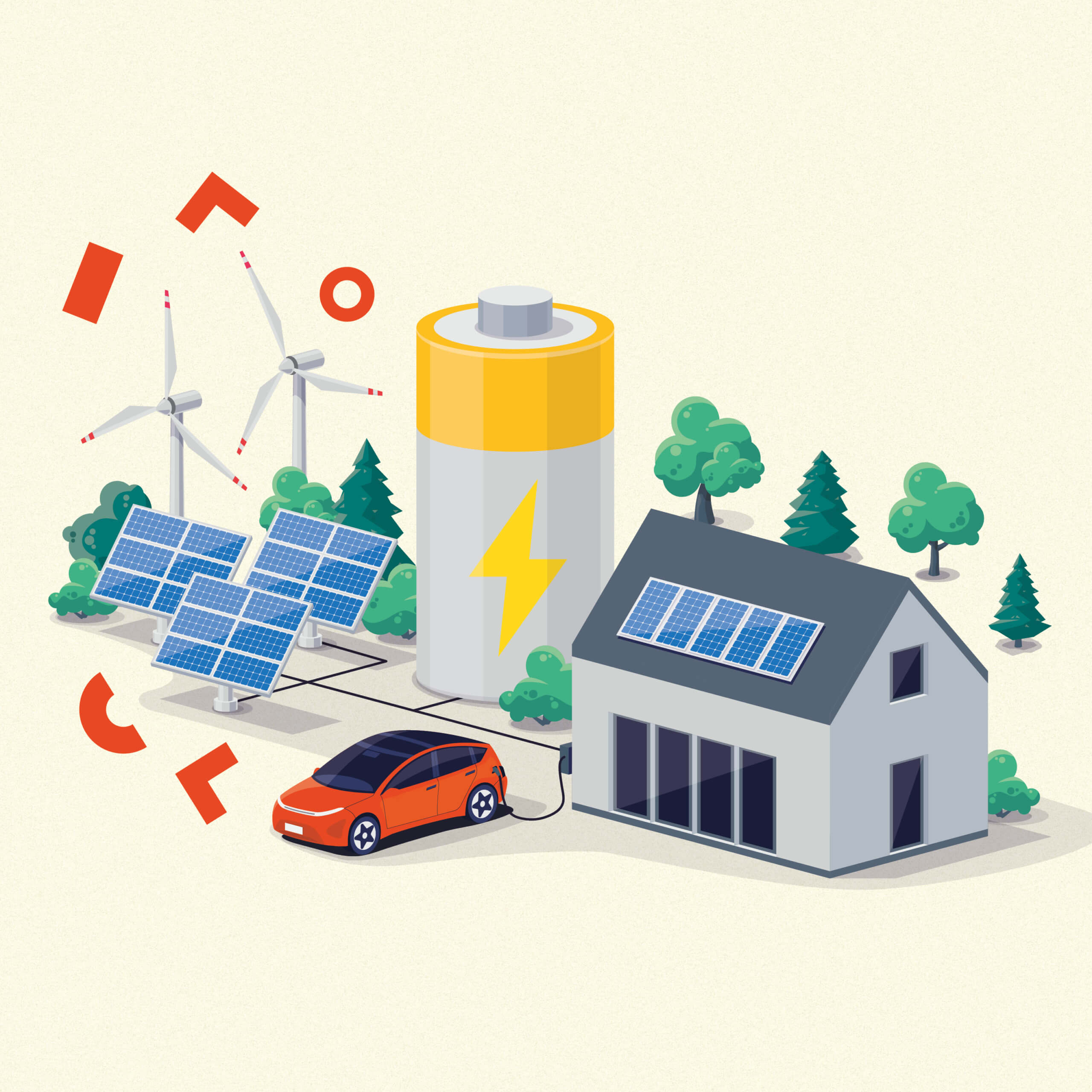
So Watt? Episode 6 – 100% Possible?
Title: 100% Possible?
DESCRIPTION
Change is happening across the network as we move towards net zero. We want to electrify everything, but do we even know how to run our grid on 100% renewables? And what will it take to get there?
So Watt? is brought to you by Origin, with production and scripting from the team at Lawson Media.
Episode transcript
Zach Mander: Hi I’m Zach Mander.
Dom Fay: And I’m Dom Fay, and welcome to So Watt?, the show from Origin that questions everything you thought you knew about energy, and explores the solutions that exist today.
Zach Mander: So Dom, I hate to say this but we’ve arrived at the end.
Dom Fay: What? Zach, we’ve been friends for a decade. Don’t do this.
Zach Mander: No, I mean the end of this season of So Watt?. This is the last episode of Season 2.
Dom Fay: Oh. You’re not friend breaking up with me?
Zach Mander: I don’t think ‘friend breaking up’ is a thing.
Dom Fay: Oh,phew. Well that’s good news. But I can’t believe this is the last episode of the series already though? I was really getting into it. I hope it doesn’t end on a cliffhanger.
Zach Mander: Well, we’ll see about that, because we’re not done just yet. Before we wrap everything completely up, we need to talk about a major energy source that’s been bugging me all season. Gas.
Dom Fay: Yeah, I didn’t want to say anything, but you might want to see a doctor.
Zach Mander: That’s not what I meant. Did you know our National Electricity Market, or the NEM, currently has around 11 gigawatts of dispatchable power coming from gas?
Dom Fay: I’m assuming 11 gigawatts is a lot?
Zach Mander: It is. And as we phase out the 23 gigawatts of capacity currently coming from coal, gas will be increasingly important for the stability of the grid. In fact, AEMO, the Australian Energy Market Operator, says that despite our grid switching to renewables, in 2050 we’ll still need 10 gigawatts of gas for firming up solar and wind.
Dom Fay: There’s that word again, firming, what do you mean by that?
Zach Mander: I’ll get to that in a second, because if you want to know anything about gas, you should probably talk to this guy.
Paul Steiner: So in front of us, you’re looking at four gas turbines that run from east to west. So a mixture of industrial and aeroderivative gas turbines that are in packages, so they’re pretty well self contained. And each one is basically an aircraft engine, with a large generator on the left of it. And behind them, you can see the exhausts where the waste heat leaves the turbines while it’s running.
Zach Mander: This is Paul Steiner, the manager of the Quarantine Power Station, which is located on Torrens Island in South Australia, just near Adelaide.
Paul Steiner: Right in the very far end of the power station is our large frame nine, which is 128 megawatt machine, quite large, it’s the largest one on this site in fact, and that’s been here since 2009. Whereas the four gas turbines you can see, one to four, were installed in 2002.
Zach Mander: Quarantine Power Station is a pretty interesting place. As Paul mentioned, there are five gas turbines. Four smaller units in the front, and a big unit out the back. And this whole facility can generate almost 240 megawatts of power.
Paul Steiner: The smaller machines range from 29 megawatts, the two newer machines, the older two machines are 24.5 megawatts, and then you have 128 megawatts from the gas turbine.
Dom Fay: We’ve heard how pumped hydro, and coal work, but how does a gas turbine work? How is it able to take gas and convert it into energy?
Zach Mander: I’ll let Paul take this one.
Paul Steiner: So I guess for the people that are listening, if we’re standing in front of one of our smaller gas turbines, and looking from left to right, it looks like a big train carriage in some respects, not quite as crude. There’s a lot more equipment on top of and around it. But it’s you know, one big series of compartments tacked onto each other with a generator. And fundamentally, what happens we draw air in through a big filter system as well, and we draw that into a compressor. Now this is a big rotating piece of machinery. And its basic job is to compress air and create energy. And we do that by adding fuel and creating high pressure, high temperature air and that air then, or that gas I should say, is then directed on some other rotating elements called a power turbine, and that drives the generator at the end. So we’re taking mechanical energy, and we’re turning it into electrical energy. And the beauty of it, as opposed to a reciprocating engine, is that it doesn’t need to change direction. As we know, with a typical car engine, once a piston gets to the top, it needs to change direction and go back down again. With a gas turbine, it’s constantly rotating in the one direction, so there’s no losses in terms of inertia, there, it just continues. So 65% of the work the turbine needs is put into compressing the air to get us that high pressure gas that we can then combust.
Zach Mander: Quarantine is also what’s called a peaking power plant.
Dom Fay: Ok, let me get this straight. There’s firming, and now you’ve mentioned peaking. Zach, I think this episode might go a lot better if you’d actually tell me what these terms mean.
Zach Mander: Ok, well peaking power plants basically turn off and on as the grid requires. They’re designed specifically to deal with high demand, or peaks in the network, and they can help fill gaps in the market from other sources. So as we switch to renewables they’ll help us firm up our energy supply to make sure we can keep the lights on.
Paul Steiner: They’re very flexible machines, which means that they can start very fast, they could shut down very fast when they’re not needed. And they can respond to any fluctuations in the grid very well. Where the largest turbine, the frame nine, it sits there as an anchor in some respect to the grid, it’s there to provide base load and provide a high level of stability where the smaller ones respond pretty quickly to the you know, the volatile dynamic market that we’re in at the moment.
Dom Fay: Right, so there’s a big turbine, and there’s some smaller turbines. I think I’m still a little confused as to how all of this is going to power my giant santa.
Zach Mander: Is that a new addition to the display this year?
Dom Fay: One of many. I think you’re especially gonna love the Jack Frost display I’ve bought as a tribute to The Santa Clause 3: The Escape Clause.
Zach Mander: Of course, one of the greats.
Dom Fay: I still can’t believe it didn’t get a Best Picture nomination at the Oscars. Tim Allen, robbed.
Zach Mander: Anyway, there’s actually a couple of different styles of turbines at Quarantine, and the difference in these turbines can give us a bit of a picture as to how the future of our grid will work.
Bill Truscott: There’s fundamentally two types of turbines I’d like to talk about here.
Zach Mander: This is Bill Truscott, Origin’s Group Manager for Asset Development.
Bill Truscott: There’s what they call an industrial turbine. They’re slow, they ramp slow, they take some time to get on the grid. And they’re really built to run to full load and just continue churning through the day. And there is the concept of a aeroderivative gas turbine which is a very fast and flexible turbine. And the reason it’s called aeroderivative, because it actually is the same as the engine you see on the wings of planes. Fitted out to, for the grid. And as you could expect on a plane, you need engines that can turn on and off very quickly and ramp very quickly to different output levels. And that’s exactly what we’ve done at Quarantine, we’ve taken the old, old technology industrial gas turbines out and replaced them with the new technology very fast acting turbines. And that allows us to turn them on and off very quickly.
Dom Fay: Wait, so they’re basically using aircraft engines to power the grid?
Zach Mander: Pretty much, well at least the newer ones. And this is what the future of our grid will look like. Because as Bill mentioned, Origin recently upgraded two of the units at Quarantine to run on these new aeroplane-style turbines. And they can actually turn on and off much quicker than the older units.
Bill Truscott: In fact, the old turbines that came out, if you got a start signal, it would take you 20 to 25 minutes to actually get the machine on and up to full load. These aeroderivative machines can get there in five minutes.
Dom Fay: After making this series, I feel like I’m getting a bit more of an understanding about some of these things. But Zach, why do we need gas turbines to start quickly? It’s not like they need to take off or anything like actual jet engines. Or is it? Actually that’s a cool idea. Flying power plants. Write that down.
Zach Mander: No. I won’t write that down.
Dom Fay: Why not?
Zach Mander: Well we’re talking about making the grid more sustainable. I’m not sure if flying power plants is an idea I should be writing down.
Dom Fay: I don’t see the problem.
Zach Mander: Well that aside, why we need gas turbines to start quickly is a good question though. Because when it comes to the grid, as we invest more in renewables, we need our gas plants to respond quickly to the unpredictability of solar and wind.
Bill Truscott: Now, you may ask why is that important? Well, one of the one of the principles of renewable energy is it’s unpredictable and uncontrollable. So we have no control over when the sun’s going to be shining, or the cloud cover comes over, or the wind picks up and drops. So you tend to get a very, well a much more volatile output out of renewable assets than you do out of dispatchable assets. So you actually need the ability to be able to fill the gaps. For example, if the sun’s shining brightly and all of our solar farms are putting out lots of energy, and all of a sudden a cloud comes over, that solar output can drop very quickly. And the ability to be able to get gas turbines on and fill the gap very quickly is very important. So we saw a lot of value in transitioning those units at Quarantine across to these much faster units, because that aligns very well with that transition to renewable energy, and in fact, allows more renewable energy onto the grid in a secure manner.
Zach Mander: Ok, so as you pointed out back in episode one Dom, the sun doesn’t shine at night.
Dom Fay: What can I say? I’ve always been a keen observationalist.
Zach Mander: And as Bill just mentioned, there’s plenty of times during the day when the output of solar and wind can drop significantly, like when a cloud rolls over. And those drops happen quickly. So while it’s easy to predict when the sun’s gonna go down, it’s much harder to predict the changes in the weather. And all of this variation is making it more challenging for everyone running the grid.
Karen Clark: And those periods are usually really around our evening periods from about five o’clock, when we do know that the sun is going down and the intensity of our solar generation is not not that good anymore.
Zach Mander: This is Karen Clark, who manages Origin’s Monitoring and Support Centre, which handles the dispatch of Origin’s power plants. We heard from Karen earlier in the series.
Karen Clark: And what happens is, then we need to actually fill the gaps in that generation with some of these gas turbines that we do need to switch on. So if this really happens in the afternoon, when everybody gets home from work, and they’re switching in the summer, the air-cons on, or in winter, the heaters on, and that demand actually picks up and there’s no renewables that can actually generate that power. So we step in with those gas turbines during those peak periods. And we switch them on and dispatch that electricity to the market really quickly when it’s needed.
Zach Mander: Karen actually works with plant managers like Paul to make sure all of that demand is met as the market requires it. And the variability of renewables is something that Paul has noticed first hand at Quarantine. Because since installing those new, more efficient, turbines, the plant is seeing those turbines power off and on a lot more frequently.
Paul Steiner: Certainly we’re off and on a lot more in the short space of time than we ever were. You know traditionally, we had the typical peak periods in the morning, and then an evening for the smaller units. And that was summer and winter, typically, so it was really a seasonal base, I mean, there’s still a large element of that, by the way, because the temperature dictates how we use power in our homes, as well. So, but what we have seen is now we’re influenced heavily by the wind, the sun in terms of power production, that while these units would just start in the morning, or in the afternoon peak periods, they’ll start at anytime now, the moment during the day, I should say, you know. It might be at 12 o’clock, it might be at one o’clock, they might start multiple times within that hour. They’ll just come on for five minutes, 10 minutes, you know, depending on what our customers need, and what the grid needs, and then I’ll shut down, after the peak period. And then we might have a, as you can see now, quite an overcast day, and hence, there’s a good reason they’re on now, you know, solar rooftop production at the moment would be quite low, and I wouldn’t consider it a windy day. So the units will stay on to support it. If, by virtue, the sun came out, you would probably see them shut down, I should say. And then if the opposite happens, and the clouds come over, they would start again.
Dom Fay: So if these new turbines are based on an aircraft engine, do they also sound like planes?
Zach Mander: Well yeah. When they start up, or shut down, you could mistake yourself for being at an airport. And it’s actually surprising how many similarities there are between a gas turbine and a jet engine.
Paul Steiner: So one ideal aspect of an aircraft engine, which basically is what was standing in front of here, but it’s just using a land application, is the fact that it’s quite a lightweight, nimble engine. The material is very, very light so it can rotate really quickly. If you’re sitting in your aircraft taking off, you hear the throttles change very rapidly. Likewise, if you’re landing at the airport, you know many of you have heard the engines and the throttle response modulate very, very quickly and that’s because these engines are quite light. And the rotating elements in them are quite light as well, so they can change the speed very, very rapidly. And that’s why the new The turbines that we’ve got here at site are ideal for the current environment,
Zach Mander: And in the same way that an aircraft engine has to slowly wind down when you land, whenever the turbines are shut down, it’s a similar process.
Paul Steiner: So we hear the pitch of the generator change and the power of the gas turbine is reducing. So right now less power is going into the gas turbine and less energy is going into the generator to try to drive the same output so, it’ll start to wind down and then it’ll come down to cool down. Because once these machines operate, we need to come down and get them cool and consolidate temperatures.
Dom Fay: I know we’ve been talking about this all season, but if there’s still these issues with variability, how do we actually get our entire energy grid to 100 per cent renewables?
Zach Mander: Obviously we’ve talked about some of the solutions, and the role of gas and pumped hydro in providing stability, but moving to a 100% renewable grid across the whole country won’t be easy.
Christoph Bergmeir: So I think the main problem that we have at the moment in the grid is that we are getting more and more renewable energy in, right, and, and we cannot really control… how much energy we produce there, because it depends on the sun and the wind. So, and that’s maybe okay, if we have 30,40, 50% renewable energy that can still be handled, then by just ramping up and down the other producers.
Zach Mander: This is Christoph Bergmeir, our energy weatherman from earlier in the series. Christoph is a senior lecturer in the Department of Data Science and AI at Monash University, and Christoph says as we move closer to 100% renewables, we’re going to need to rely a lot more on technology to help us deal with this variability.
Christoph Bergmeir: But now, if we want to get to 100% renewable energy, certain things that we can do today, we might not be able to do them them in five years time, just because we have more renewable energy in the grid. So this control of how to organise this interplay of the different producers and consumers, that will get more and more important as we go forward. So right now, we can probably still manage the grid without these, without AI and without these complex control mechanisms, but as we go forward this will become increasingly more difficult. Well, I mean, the bottom line is always you just, you just switch off the solar, right? So the thing is that the bottom line is always if there’s instability in the grid, we just need to switch off solar.. Well, and we just need to switch off renewable energy. And effectively, a lot of energy gets not used in that way. And that’s something we want to avoid and AI can help us do that.
Zach Mander: Dom, I don’t know if you know this, but we actually have a first-hand example in Australia of what a fully renewable grid could look like.
Dom Fay: We do?
Zach Mander: Absolutely, although only in a temporary sense. Because South Australia is actually leading the charge when it comes to the rollout of renewables. It’s been investing heavily in solar, wind, and batteries, with plans to hit 100% renewables by 2030, and the state has already been running their entire grid on renewables for short periods of time. In 2021, South Australia set a local record by running its grid on 100% renewables for almost a week. But there’s still plenty of kinks to iron out before that could become a permanent thing.
Bill Truscott: We are learning more all the time, and South Australia now sometimes runs purely on renewables. There are lots of issues that we’ve seen in South Australia, and we’ve seen that some years ago with their system blackout. They have installed assets on the grid over there called synchronous condensers, which maintain an amount of inertia on the grid and the amount of fault current on the grid that keeps the grid stable, and allows that grid to run from time to time without any fossil fuel assets running. But I stress that that’s from time to time. Very often, they have to direct those fossil fuel assets back on to maintain that security.
Zach Mander: I want to just pause for a second because Bill mentioned a couple of terms that I found a bit confusing, but they are pretty important to this whole discussion.
Dom Fay: Yeah, I wasn’t going to say anything but I was also confused about a couple of things.
Zach Mander: Just a couple?
Dom Fay: Ok, I was confused by his whole paragraph.
Zach Mander: I’m guessing one of those words was inertia, and maybe synchronous condensers.
Dom Fay: There was also fault current.
Zach Mander: Yes, that’s a good one. Well, pay attention and I’ll try to explain a few of those terms. Let’s start with Inertia. Because all of the coal and even gas power plants we have on the grid have spinning turbines, and these turbines actually play an important role in the stability of the network, because they provide inertia. And as it turns out, that inertia is important for maintaining the integrity of the grid whenever a fault occurs. Here’s Paul again.
Paul Steiner: It’s all about power system security. You know, you can look at it from the view that when we have wind and solar, as important as renewables, renewables are, they lack that, that inertia. That weight that sits behind the system that we would all take for granted… So these machines are built and designed, just like a hose, you know, a lot of people turning on the taps at the same time as well. They provide enough mass flow of power that it takes a lot to stop them. So it’s not an easy squeeze on that hose. It takes a fair bit to interrupt them from doing their job.
Dom Fay: Right, so inertia is all the weight behind the grid. What about fault current?
Zach Mander: Well, Bill says it’s really about how the grid handles issues in the network.
Bill Truscott: So if you get an instantaneous drop in resistance through a fault, you’ve got to feed a lot of current into that fault to maintain the voltage. If you don’t, the voltage will collapse, and then the whole grid will come down. So it’s very important, you have assets on the grid that can provide very short term spurts of current, while giving the grid time to clear a fault. Now, traditionally, that’s been provided by all the big spinning machines you see on the grid.
Dom Fay: So we need the inertia to help manage faults in the grid?
Zach Mander: Exactly.
Bill Truscott: What those spinning machines have is a lot of inertia, a lot of weight that will keep the machine running, and a lot of stored electrical energy inside the generator. So when you get the fault, what happens is that weight tends to power the generator through the fault and release a lot of that current into the fault. Because the fault’s trying to slow the generator down, but it is that weight that keeps it going. If you remove all those assets from the grid, you don’t have the ability to provide that fault current. Inverter based assets like renewable energy assets and batteries struggle with providing enough fault current to keep the voltage up during a fault.
Mark Diesendorf: An electricity grid works on the basis that supply and demand must always be kept in balance.
Zach Mander: This is Dr Mark Diesendorf, an Honorary Associate Professor at the University of New South Wales.
Mark Diesendorf: If the supply is greater than demand, then the frequency of alternating currents increases. Now, our electricity grid has current and voltage that alternates that oscillates at 50 cycles per second. And it’s for many electricity using appliances and pieces of equipment, it’s really important that they receive 50 cycles per second of alternating current.
Dom Fay: So what happens if we don’t get that 50 cycles per second?
Zach Mander: Well, for an energy grid, I think we can assume nothing good.
Mark Diesendorf: If the frequency of oscillation increases significantly, significantly above 50 cycles per second, then some of this equipment is going to suffer. And if it increases too much, we can have a blackout. And the reverse is also true. If supply is significantly less than demand, the grid frequency will decline and, and then we will have the same problems with equipment and then ultimately with producing blackouts, so we must try and balance supply and demand.
Dom Fay: So how can we maintain the frequency in the grid as we switch towards renewables then? It sounds like there’s a lot of issues we still need to figure out.
Zach Mander: Well, that brings me to the synchronous condenser.
Dom Fay: That sounds a lot like a Harry Potter spell.
Zach Mander: It does doesn’t it, and you know, it is a little magical.
Dom Fay: You know I feel like Hermione might have been smart enough to run the energy grid.
Zach Mander: Yes, Harry Potter and the Importance of Energy Inertia.
Dom Fay: Oh, I missed that one. Is that the eighth book?
Zach Mander: Yes, currently unreleased.
Dom Fay: I’ll have to track down a copy of it.
Zach Mander: OK, well while you do that, the synchronous condenser is a solution that’s been tried in South Australia.
Mark Diesendorf: Which basically are sort of heavy rotating machines, they don’t use any power except power they get from the grid, and they can be used to stabilise the frequency of oscillation, in South Australia, and they are very successful. And it means that as the synchronous condensers have been installed, the amount of backup gas fired power is being reduced is becoming unnecessary. And we can see how the synchronous condensers can help the transition of South Australia towards 100% renewables. But I believe by that time the synchronous condensers themselves will become unnecessary because the wind and solar farms will be producing through these new types of inverters that are under development. These wind and solar farms will be producing 50 cycles per second electricity into the grid and feeding it into the grid.
Zach Mander: The other barrier to getting to 100% renewables is of course infrastructure, and as we found out earlier in the series, we need a lot more transmission to make sure we can get power from where it’s generated, to where it needs to be used.
Andrew Blakers: The biggest challenge by far is lack of transmission.
Zach Mander: This is Professor Andrew Blakers from the Australian National University.
Dom Fay: Oh, I love Andrew. He’s been one of our regulars this series. Oh, here’s an idea Zach, we should do a big season 2 party after this episode and invite all of our regular guests along. You & I could host it.
Zach Mander: I think I’m busy that day.
Dom Fay: I didn’t specify a date though.
Zach Mander: Yeah, but I’m pretty sure I’m busy.Let’s just let Andrew speak.
Andrew Blakers: And this transmission will bring the solar and wind farm electricity into the cities, it will strongly interconnect the states, it will connect the large scale pumped hydro systems that support the whole system. And it’s all very straightforward. It just needs state and federal governments to get in there and just do the job.
Zach Mander: Andrew says that one of the biggest things we need to do as a nation is just increase our spending on all kinds of renewables, and back that up with the transmission capacity we need to make it all work.
Andrew Blakers: So we need to triple what we’re doing. But on the other hand, we’re doing it five times faster than we were five years ago. It’s not very difficult to triple the rollout of solar and wind farms. It’s not very difficult to get enough batteries, and pumped hydro to support the solar and wind rollout. The number one impediment is lack of transmission.
Dom Fay: So given all of these challenges then, do we actually know how to run a grid on renewables?
Zach Mander: Well, let’s bring back an old friend.
Bruce Mountain: I think it’s a question we can answer now, to some degree.
Zach Mander: This is Bruce Mountain, Director of the Victoria Energy Policy Center at Victoria University.
Dom Fay: Bruce Mountain! Oh I love Bruce. He definitely gets an invitation to the party. I’ll make it out to Mr Mountain.
Zach Mander: I actually think he has a PhD.
Dom Fay: Oh, that’s even cooler. Dr Mountain.
Zach Mander: And Dr Mountain is confident about our renewable future.
Bruce Mountain: For example, in South Australia, there are many time intervals in the year when South Australia has only the wind or sun at the margin. They’ve been able to turn off almost all of their synchronous gas fired generation and utilise interconnector and battery. So we can do it in pockets, and we can do it for points in time. The question, at what point can we do it across the grid in total, for a sustained period of time? I dare say push, you know, if we push the whole system, it could be the case that even now, the whole grid for intervals, could be run with the batteries, the hydro, the wind and sun we have. We don’t quite have enough to meet it instantaneously, but not far. The question is when we can do that for sustained periods of time, keep the system frequency stable, have the backup reserve. Technology is improving, knowledge is improving, wind and solar is expanding. And there are heaps of super smart engineers who are utterly enthralled by this problem. I have no doubt we’ll completely lick it.
Steve Rigby: It’s got to be a very controlled transition to make sure that one, we supply the energy requirements for customers, but also supply the reliability of supply for our customers. So I think we’ve got to make sure we focus on that transition to get it right.
Zach Mander: This is Steve Rigby, Origin’s General Manager of Generation and Development.
Steve Rigby: Do we know how to run a grid on 100% renewables? You just have to look at South Australia who has done it. Now, I think, for the whole of Australia to do that, you’re going to have to have a huge amount of investment in the renewable space that will allow us to, to close down the large coal fired generators. But is it technically feasible? Yes. Will it require a huge amount of investment? Yes. So do you do you have the appetite as a as a nation to do it? I know that Origin’s got an appetite to go through that transition to be a much cleaner operator in relation to generation. So where there’s a will there’s a way.
Zach Mander: So Watt? is the show that questions everything you thought you knew about energy and it’s brought to you by Origin. Production and scripting by the team at Lawson Media. If you’d like to find out more about the transition to renewables, we’ll put a useful link in the show notes.
Dom Fay: You know Zach, I’ve been trying to think of the best way to wrap up what has been such a fun series, and I’m wondering if a spot of Christmas carolling might be appropriate.
Zach Mander: I’d prefer you didn’t, ‘cause we want people to like, come back again in case we’re renewed for another season in the future.
Dom Fay: Yeah, that’s a good point. Maybe I could record a bonus episode with my tips for the ultimate Christmas lights display.
Zach Mander: Yeah, but we’re trying to manage demand on the network Dom, not increase it.
Dom Fay: Speaking of that, I still think we should look into Christmas spirit as a power source.
Zach Mander: And that’s why we’ve had actual experts on this series.
Dom Fay: “Good King Wenceslas looked out, on the feast of Stephen.”
Zach Mander: Can we turn his microphone off please? You can learn more about this podcast and listen to previous episodes at originenergy.com.au/sowatt, or just hit subscribe in the podcast app you’re in right now.
Zach Mander: This series has been hosted by me, Zach Mander and Dom Fay. And that’s it, we’re out.
—-
Dom Fay: Oh, well that was a lot of fun Zach. I learnt so much this series.
Zach Mander: I learnt a lot as well. Like I didn’t even know what pumped hydro was until a few weeks ago, and I know this sounds basic, but I’ve only learnt in this last episode, to be honest with you, that we need to use energy as it’s generated. Like when you turn on the lights, that energy was generated just a couple of minutes ago. I didn’t know that. For some reason, you know, before this whole process, I thought we could store energy better than we can.
Dom Fay: I also had to buy those steel cap boots to visit the Eraring site. And I’ve never owned steel cap boots before Zach, and I’ve got to say, it’s the toughest I’ve ever felt.
Zach Mander: Getting lots of use out of them?
Dom Fay: Oh, I haven’t touched them since I got back from Eraring.
Zach Mander: Well that’s not a good energy use.
Dom Fay: That’s true. I will find uses for my steel cap boots.
Zach Mander: I hope this whole process has taught you, you need to scale back your Christmas lights display, because we’ve been getting a lot of complaints about how bright it is.
Dom Fay: The only complaints I’ve received say anonymous… are you anonymous?
Zach Mander: Ahh… No. Not me. Definitely not.
Dom Fay: But one of the emails said, definitely not zach at gmail dot com.
Zach Mander: Yeah, definitely not Zach. Did you read it?
Dom Fay: That’s a good point actually. Well, no, I’m actually going to go bigger and brighter this year, but I’m gonna do it solar powered. So there you go. My Christmas lights display will be fully green. Well actually there will be quite a bit of red, and yellow, and other colours too. But from a renewable point of view, fully green. Merry Christmas everybody.
Dom Fay: Oh dear, well. You want to come back to my place now to watch Flubber?
Zach Mander: No thank you.
Dom Fay: Oh.
So Watt? Season 1
Catch up on season one of So Watt? hosted by comedian and former Block contestant Andy Saunders.
Join comedian, sustainability and renovation enthusiast (and former The Block contestant) Andy Saunders to discover everything that’s new in the world of energy, and what’s in it for you.
About Andy
You may recognise Andy as one half of ‘Andy and Deb’ – popular contestants during the 2019 season of The Block, returning for The Block All Stars in 2020.
Or maybe you have seen him performing his critically acclaimed comedy at a festival or show sometime over the last decade. Or perhaps, you are simply just like ‘Andy who?’
Well, let us introduce him.
Here he is with his wife Deb.
They live in Wallabi on the mid-north coast of NSW, 92km south of Port Macquarie, with their four children.
They are passionate about sustainability and renovating, and operate a boutique holiday accommodation called Bask at Green Point.
And in addition to being the host of ‘So Watt?’, they are also currently appearing on TV screens now on another show called ‘Renovate or Rebuild’ on Nine Life.
Through six episodes, Andy will be your host on a journey through the world of energy from EVs to solar and batteries and online gaming!

So Watt? Season 1 Trailer
The show that questions everything you thought you knew about energy, and explores the solutions that exist today. Hosted by comedian Andy Saunders, So Watt? will take you on a journey through the energy sector to find out what’s happening, why you should care, and most importantly, what’s in it for you.
So Watt? is brought to you by Origin, with production and scripting from the team at Lawson Media.
Episode transcript
So Watt – Trailer
Alina Dini: So I’m just accelerating now and as you can hear again it’s still really quiet. I’m going to press the accelerator down a little bit faster so you can feel how zippy it is. And it’s just… it’s fun, you know? It feels like a roller coaster…
Andy Saunders (Host): When was the last time you thought about the energy you use? About the car you drive? And about all the appliances and gadgets we have in our homes?
Jo Quirk: Oh, my partner’s really into the biggest telly on the planet. So we have a very large telly.
Marc Niemes: I can tell you no kid appreciates how much energy they’re using if they’re sitting on a PlayStation or LED bulbs… it doesn’t mean anything to them because they’re not having to earn the income to pay for that
Andy Saunders (Host): G’Day, I’m Andy Saunders and this is So Watt? a podcast from Origin that questions everything you thought you knew about energy… and explores the solutions that exist today.
Greg Jackson: Remember that we’re in a world of dramatic change… but if we get the renewable transition right, we could be at a world in 10 to 15 years, where we’ve eliminated the carbon impact.
Andy Saunders (Host): I’ll explore whether you should switch to an EV, get a battery for your home, and find out why energy companies are trying to pay you to turn off power.
Matt Duesterberg: Last August… we saw some of the hottest temperatures on record… but what was crazy is that we were just not prepared as a grid.
Zack Fitz-Walter: Simply by providing that feedback… to turn off our appliances, or to save some energy, gives us this kind of goal or this challenge. And then to really reinforce that behavior by providing some kind of reward. It can motivate us to change our behaviour.
Andy Saunders (Host): We’re even going to speak to the father of photovoltaics (or solar as I like to call it)…
Martin Green: Yeah… maybe modern photovoltaics, father of modern photovoltaics.
Dorota Bacal: Now when you’re producing the silicon solar panel, you reach the temperature range of 1000 degrees Celsius, that’s a lot of energy… This energy and this emissions are paid back within two years.
Andy Saunders (Host): We’ll learn how technology is making it easier for us to understand what we’re spending, what’s powering our homes and what it might look like in the future.
Chau Le: And in that future… in my future, there would be electric and autonomous travel pods. You can tell that I’ve been watching too much Jetson when I was small…
Dom Pym: I actually think that everyone will be driving around in electric cars, everyone will have battery backup, and everybody will be using a solar or wind or some other form of… renewable energy in the future. And so it’s just about the journey from here to there.
Andy Saunders (Host): So Watt launches on Wednesday, November 10th. Find it on Apple Podcasts, Spotify, or visit originenergy.com.au/sowatt. That’s S-O-W-A-T-T.
Andy Saunders (ALT LINE): So Watt is available now, listen on Apple Podcasts, Spotify, or visit originenergy.com.au/sowatt.
So Watt? Episode 1 – Power To The People
Whether it’s shopping online, hailing a taxi, or booking a hotel, technology has completely transformed the way we purchase products, and access services. And it turns out, the same thing is happening in energy. A new breed of energy company is disrupting the industry, changing the way retailers operate, and empowering you to make smarter choices.
So Watt? is brought to you by Origin, with production and scripting from the team at Lawson Media.
Episode transcript
So Watt – Episode 1 – Power To The People
Andy Saunders (Host): G’Day I’m Andy Saunders and I’m a comedian….to some, and welcome to episode one of So Watt? – a podcast from Origin that questions everything you thought you knew about energy. My wife Deb and I are former contestants on The Block. That experience, as well as renovating a number of properties, having kids, running a small business and a busy home means we have little time for much else. Let alone understanding the complex world of energy – even though our house is jam packed full of it, pent up and let loose. But living a coastal life in Wallabi Point – on the New South Wales Mid-Coast, also means access to magnificent beaches. And I love to surf…
Andy Saunders (Host): So when I’m out for a surf, I’ve often found myself thinking: I wished I could surf for a living and ‘I could do more, live more sustainably, at the very least know where the energy comes from that powers our lives.’
Andy Saunders (Host): So where does our energy come from? What can we expect in the future? How can we make smarter energy choices, and best of all, save money along the way? Throughout the series we’ll look at solar energy, electric vehicles, batteries for the home, virtual power plants, disruption and the customer experience, and even turn energy into a game. I’m determined to find out as much as I can, and I’ll take you along for the ride.
Andy Saunders (Host): So, where better to start understanding my own energy use than at home with Deb, because I think she knows everything.
Deb Saunders: Uh, okay. I’m probably not real up on that…
Andy Saunders (Host): Righto, that went well…show’s over…series done.
Andy Saunders (Host): Deb and I are pretty much on the same page: a basic knowledge of our energy consumption but we do want to find ways to improve.
Deb Saunders: Look, we have always thought about things like switching the lights off? We’re not doing that all the time. But it is, we’ve had the conversations definitely. But I think now as you know, we’re growing older and we’re learning a little bit more… about sustainability… So you know, we’re on that path. Definitely. We’re looking at switching out lights and things like that in our own home to reduce energy costs… And I think we’ve got a lot to learn. But yeah, we’re willing students. We want to learn more.
Andy Saunders (Host): Ohhh, she’s so gorgeous…
Andy Saunders (Host): So maybe the first step on this journey needs to be understanding how the energy grid that keeps our lights on actually works.
Ariel Liebman: It’s actually gotten a lot more complicated to answer that question in the last 20 years than it used to be.
Andy Saunders (Host): This is Professor Ariel Liebman.
Ariel Liebman: Director of the Monash Energy Institute, an energy climate nexus focused institute at Monash University. We’re cross-disciplinary, and I am a professor of sustainable energy systems in the Department of Data Science and AI and the Faculty of Information Technology.
Andy Saunders (Host): Professor Liebman is here to give an overview of Australia’s energy sector. Most of the population live on the East coast and are actually connected to what’s known as the National Electricity Market.
Ariel Liebman: There’s the physical system that creates and generates the electricity and moves it around. And then there’s the market, as you call it, which is a complex mixture of agencies and companies, which both generate and or retail electricity. There is also the other energy grid that we often don’t think about so much, but is in the equation, and that’s the natural gas grid. Which is a smaller part of domestic electric energy use, but it’s still important, although it may decline in importance over the years as we switch towards renewable energy.
Andy Saunders (Host): Switching to renewable energy is actually a big deal for our energy market. We love renewables in Australia, but our grid, like many all over the world, was actually designed for more traditional sources.
Ariel Liebman: Probably three types dominate in Australia, coal, gas, and hydro traditionally, and now of course, we’ve got a lot of large scale wind and solar…. And then once you’ve generated this energy you have to transport it to the consumers and that’s done through both high voltage, long distance transmission lines and lower voltage distribution networks.
Andy Saunders (Host): It helps to visualise what we’re talking about. Imagine a physical power plant, huge turbines spinning, which are generating electricity that is fed along power lines, or into distribution networks. But there are other options out there that many of us are familiar with.
Ariel Liebman: The other one is the emergence of new technologies, such as primarily rooftop solar. And when you combine that with the discussion around the urgency of addressing climate change issues, consumers have also become much more engaged in both the issue and the ability to do something about that issue. Which mostly for most customers, is either putting rooftop solar on or signing up to a electricity plan that is something like a green power certified plan where they can be somewhat assured that their electricity is coming from renewable sources.
Andy Saunders (Host): So we know that when we turn our lights on the power probably came from a gas, or coal-fired power plant. But increasingly the network is being powered by renewables – like solar, or wind, or even pumped hydro, which is a way of storing renewable electricity when it’s plentiful and using it later when demand is higher. The makeup of our energy grid is changing and we’ll explore that in more detail in a later episode. But there’s another change happening – and it’s being driven by tech.
Andy Saunders (Host): When companies like Uber and Amazon disrupted the taxi or shopping experience it was through technology. They transformed industries that weren’t really broken. Taxis always worked… but Uber changed our customer experience forever. So it seems only natural this would happen in the energy space.
Ariel Liebman: Yeah, well, definitely. And there’s two aspects to this. One of them is, is this this actually has been going on longer in Australia… So we have had a few rounds of innovative startups coming into the market, the latest crop, like Octopus, we do have similar ones, but they maybe not making as many inroads into the customer space. They’re probably the types that one would call aggregators, where they offer some technological components to their products.
Greg Jackson: Hi, I’m Greg Jackson, I’m the founder and chief executive of Octopus Energy.
Andy Saunders (Host): Octopus Energy is a startup that’s been making waves in the UK because of their focus on technology.
Greg Jackson: We started in 2016. Really, to use technology to drive down the cost of energy for consumers, to make pricing more transparent, and to really see if we could make the transition to green energy faster and cheaper.
Andy Saunders (Host): Greg isn’t your typical energy CEO whose been in the industry for decades and talks in complex acronyms… it turns out he’s a bit of a gamer.
Greg Jackson: I tell you what, I’ve got a 14 year old son, and he can beat me at any game except Tetris… Last night, he and I were playing Tekken Six. Yes, on a retro arcade game that we’ve got in the house. And it was fantastic fun.
ANDY SAUNDERS: Ahhh… A man after my own heart. Turns out Greg doesn’t just love playing games; he started his career making video games.
Greg Jackson: You know, this was the day of the sort of eight bit home computers. And it was fascinating because, you know, I started as a sort of teenage sole programmer in a bedroom. And I think, you know, even then, what I saw was the emergence of more powerful computing, as we went from eight bit to 16 bit. As you went from being able to do stuff as a sort of one person, or small two person team, to really requiring big teams to create games. And I think, you know, I saw the degree of change, and that was back in the mid to late 80s. That was happening in the world of video games or home computing. You could just imagine where that was going to go exponentially with the world, which is why I decided I should go and get an education because I went to university and then because I think the entire prospect of this amount of change was both terrifying and thrilling. And we sit here today, you know, in the 2021, when you’ve got a phone in your pocket, which has got just in one app the entirety of Hitchhiker’s Guide to the Galaxy’s vision of the future. Nevermind all the other stuff you can do.
Andy Saunders (Host): Greg’s not an energy CEO… well he is… but he isn’t… but he is… but he isn’t… Do you get where I’m going with this? And this is a trend we see amongst other disruptors.
Greg Jackson: You know, when you look at the companies that have changed society, through technology, they don’t tend to have come from the sector they change. So you know, Uber wasn’t set up by cab drivers. You know, Amazon wasn’t set up by shopkeepers. And I think in our case, you know, I started life writing video games. And I think, you know, for me, technology’s always been really core to how I think about the world. I think the most important thing in the run up to this business was that in 2003, I started a business which ended up building enterprise software. We built large platforms for big organisations. And I think when we did that we really got a front seat ride, as different industries faced the technology disruption. And so when we sold that business, we kind of looked around the world and said, What’s the biggest sector where we can make the biggest difference through technology? Energy stuck out a mile, you know, customers are underserved, they’re overpaying. They spent half the time chasing around call centres that don’t want to help them. And then critically, it’s a sector which had held back the fight against climate change. So for a whole pile of reasons, we kind of thought this was, you know, our opportunity to make a big green dent in the universe.
Andy Saunders (Host): So Greg might not be a typical energy CEO, and Octopus is definitely not a regular energy company. In fact, you’d probably call it a tech company first. And the tech problem it decided to solve was energy, and specifically renewables.
Greg Jackson: Government here in the UK, and many other countries had been subsidising renewable generation. And see, we’re beginning to see a reasonable amount of renewables on the grid but what you didn’t have was any real consumer understanding that this brought benefit. In fact, on consumers, all they saw was extra levies on their electricity bills to pay for these renewables. So I think at that time, and it was only a few years ago, but you know, there was a sense that green energy was expensive. It was kind of a luxury. And, you know, actually, it’s amazing how things have changed so quickly.
Andy Saunders (Host): Octopus entered a UK market dominated by incumbents who did offer renewable sources, but Greg saw a lot more potential. He also realised there was no way Octopus could win a price war. But where they could win was customer service.
Greg Jackson: So it’s actually one of the inspirations for starting the business was the pain points I experienced as a customer of energy companies. And aside from pricing, which was a pain point I’d experienced, and that we read about what in the headlines, what you tend to find with energy companies is, customers only call when there’s an issue. But because companies are running all these different systems, you know, some of them 20 or 30 years old, not always properly connected with teams that are trained to handle one particular system. So you get handed from one team, to another, to another. Whenever there was an issue, the resolution of that was drawn out and painful. And you spend a long time on the phone with often brilliant people who were constrained by systems. Now, because we’re from a technology background, we set out from the beginning to create a single platform that covers every aspect of the customer’s experience with us, so that whatever they need solved, our team can help them.
Andy Saunders (Host): What really set the company apart was tech, after all Greg is far more likely to design an app than run a power plant. So rather than jumping onto one of the legacy platforms, Octopus developed its own customer service platform, called Kraken. That’s K-R-A-K-E-N, if you want to look it up, and it powers their whole business.
Greg Jackson: And what Kraken does is it runs the entire company, you know, from the bits that estimate how much energy energy everyone’s going to use, and work with generation, both our own and third point generation to make sure we’ve got that energy every moment of time, through to the bit that calculates how much everyone’s used and starts working out their bills… And so I think the first thing was, by having this kind of consolidated 21st century in the cloud platform built by us for energy, you make fewer mistakes, so customers don’t need to phone as often, if they do find they’ll get better service. And if they choose to contact us by any other medium than phone, they’ll get great service.
Andy Saunders (Host): Origin even noticed the huge potential of Octopus and Kraken, so they purchased a twenty per cent stake in the company, and soon Origin’s entire retail customer business will be run on the platform. It was clear that Kraken wasn’t a huge sea monster, but it was changing the UK energy market, and had potential to go global. I really wished it was the monster though…
Greg Jackson: When we were two or three years old, as a business, we kind of knew that in our technology platform Kraken, and our operating model and our vision for the future, we were sitting on something special. And yet here in the UK, the incumbent energy companies and indeed, around most of Europe, were fairly dismissive. Like so often in a sector that is ripe for disruption, the incumbents just don’t spot, you know that technology is going to give people the edge it does.
Andy Saunders (Host): If Kraken looks at my energy use data, finds me the cheapest way of powering my home, and provides me guilt free electricity by committing to renewables, then it’s fair to say Greg’s disrupted the energy sector.
Andy Saunders (Host): We know disruption has happened with taxis, and shopping, but let’s look a bit closer to home. What Octopus is doing in energy in the UK, is kind of familiar… and that’s because it’s happening here, down under… in banking?
Dom Pym: I’m Dom Pym, I’m probably most well known as co-founder of Up, which is Australia’s first digital bank, and now probably our most successful digital bank. So that’s, that’s what I do day to day, that’s my day job. But I also help other startup founders and get involved in the community and work primarily with FinTech businesses. And also within the sort of… the energy or save the planet type things… anything to do that’s alternative or interesting, that, you know, sort of looks generations ahead. I’m also interested in that sort of stuff as well.
Andy Saunders (Host): Okay…okay, seriously, imagine Dom’s job interview? They ask him; ‘Okay, what are you looking for in this role?’ He answers; ‘Well, anything that saves the planet! That’s alternative or interesting!! That looks generations ahead!!! Brilliant!
Andy Saunders (Host): Dom, as his LinkedIn profile states, is an entrepreneur, technologist, innovator, investor and co-founder of the digital bank Up. Whereas my linkedin profile says “I am none of those things and far from it”. So Dom, what is Up?
Dom Pym: Actually, Up was the first cloud hosted bank in Australia, it was also the first mobile only bank. So I guess it’s really what your definition of digital is, some people call them challenger banks. And then that can also encompass, you know, banks with branches and all that. So in terms of what it was, as I said, first mobile only bank, so you have to have a smartphone to access Up. And we’re also the first bank in Australia that you can download the app, and within a couple of minutes, you could literally have money in your account and be doing banking, you know, maybe buy a coffee or or whatever it is you want to do. And so that’s a bit of a game changer. Because before UP, it could take anywhere between two and 10 business days to set up a bank account, and to get a card and then activate your card and put it in your wallet, and all sorts of things. And you know, all of that just seemed a bit archaic, to us. And we really wanted to disrupt it and make it so that you can download the app and then instantly have a bank account and away you go. And so that’s really, when we talk about a digital bank, it runs on the cloud and the Google Cloud Platform is what we use. And it allows you to instantly activate one or more bank accounts. And so that, that’s really for us what the definition of digital means…
Andy Saunders (Host): With Up, Dom and his colleagues set out to disrupt traditional banking.
Dom Pym: So to be a disruptor. And to do something new and interesting, the bar is actually very high. The big four banks in Australia have amongst the best digital platforms and digital apps in the world, right?… And so for a new digital bank, to come into the market, there has to be some sort of reasonable value proposition. It can’t just be, it’s cheaper, or it’s quicker, or it’s easier, there’s got to be something compelling. Otherwise, why would people even try it?
Dom Pym: Customers don’t know what they want, like, particularly inside the energy sector. It’s a utility, right? And banking is somewhat a utility. So you get what you get and you don’t get upset. That’s how sort of most Aussie’’s would think about their utilities, right? I’ve got a water bill, and I pay it and I get water, I turn the tap on, that’s it, I turn the lights on, and then it works, you know… Most people won’t be thinking too hard about what sort of innovation can happen, but there’s this whole Silicon Valley influence of entrepreneurs and these entrepreneurs. This next generation of young entrepreneurs, that have grown up with technology, are basically looking to use technology to disrupt.
Dom Pym: I think it’s a perfect storm, you’ve got legacy industries that are dominated by a handful of players. And then you’ve got technology…
Andy Saunders (Host): So, the story of UP and of Octopus are starting to sound pretty familiar…
Dom Pym: Accessibility of technology, the cost of implementation and maintenance of technology, the way that technology is disrupting those different industries, and the accessibility and usability from a consumer perspective, is what has sort of converged into this whole new economy… And what we found is that by creating an awesome user experience by creating an awesome brand, by having design embedded in everything we do, being honest, being transparent, publishing our roadmap publicly, for example…
Andy Saunders (Host): I’m pausing here to repeat those phrases: being honest, being transparent, publishing our roadmap publicly…remember, the person saying them is in banking. That’s not the kind of language you often hear from a bank. It’s usually, “Hi, how may I have your money?”
Dom Pym: if you bring all those things together, it’s the perfect storm, we’re seeing it in telecommunications, we’re seeing it in aerospace and space itself, we’re seeing it in internet technologies, we’re seeing it in banking, we’re seeing it in energy, we’re seeing it in consumer goods I mean, there’s pretty much not an industry that you can think of that is untouched by this sort of conversion of legacy businesses into modern technology businesses. And one way to sum it up is that there is no such thing as a legacy or traditional company anymore, every company is now a technology company.
Andy Saunders (Host): You know when you notice a building that seems to have gone up overnight? Or a feature in the landscape that you didn’t see until someone pointed it out? I think that’s where I’m at. That’s what I’m feeling. At the start, I wanted to know where the electricity comes from when I switch a light on. But who would have thought the answer reveals that our world is undergoing such massive change?
Dom Pym: Yeah, for me the number one thing is awareness, right. So, before I started getting interested in this type of stuff, I had no real interest. Like I would get a bill once a quarter or once a month in my letterbox and probably put it in the bin, or the shredder, like I didn’t really look at it, direct debit, or whatever, I just sort of ignored it, I had no real interest in what my energy consumption was, or my carbon footprint was, or you know, whether I was taking it out of the grid or putting into the grid. And none of that was really interesting for me, once I started taking an interest in it, it just snowballs from there.
Greg Jackson: Remember that we’re in a world of dramatic change.
Andy Saunders (Host): Here’s Greg Jackson again.
Greg Jackson: Recognise the world in the next 15 or 20 years will be totally different… So think about the way the world is gonna change around you… but if we get the renewable transition right, we could be a world in 10 to 15 years, where we’ve eliminated the carbon impact. And at that point, it’s less about energy efficiency, and about just what do you want to spend money on to make for a more comfortable, enjoyable life. The critical bit to that is making sure that we do get to the zero carbon system. I think it is an incredibly exciting juncture, where, you know, we can realistically start dreaming of a world of zero carbon, zero guilt, electricity.
Andy Saunders (Host): So, we’ve taken a few steps on this path to exploring the complex world of energy. We’ve learned how energy is generated and distributed to homes, but also that technological disruption is driving change for the better.
Ariel Liebman: So we’re in an unprecedented period in history in fact of technological change. When we’re in it, it doesn’t feel as fast, but it’s much faster than the Industrial Revolution took to happen and the PC revolution or the you know, the 80s, where suddenly you could actually afford a computer on your desk. We think that’s normal now, but it wasn’t that normal.
Andy Saunders (Host): Remember when Dom said he sought out interesting things that look generations ahead to help save the planet…well, if none of that resonates with you – listen in to this next bit.
Dom Pym: I’ve got young kids, and so I just care about the future, I just want them to live in a world that is awesome, you know, and that is sustainable, and that, that their kids, you know, will have a future. And I think that we easily get into a debate… about fossil fuels or about sustainable forestry or, you know, whatever it is. I’m not political, like I’m not that interested in having the debate. I just try for me, and my immediate family and my immediate friends and my colleagues to just help make a difference where we can.
Andy Saunders (Host): All of this disruption across our economy is really offering us choice. So whether it’s grabbing a taxi, choosing a bank, or deciding our energy provider, technology is giving power back to us, the consumers. Companies need to be focused on innovation if they want to succeed in the new economy, and all of this tech is just enabling us to make better, smarter choices.
Andy Saunders (Host): Perhaps Deb and I can do a little bit more than change the lightbulbs or look at installing solar panels. Those are important steps, but it feels like there’s more we can do…Let’s see what Deb has to say, ‘cause she is my little self help guru. I call her this because all of our conversations are about improving me as a person.
Deb Saunders: Our 12-year-old, about to turn 12-year-old son has been pestering us to buy an electric vehicle for years, he loves the Tesla’s and he’s really, really interested in all of that sort of thing. So probably the most I know about that is through him and what he’s told me.
Andy Saunders (Host): Get ready for your EV smile Deb, Because In episode two of So Watt? – we’re in high pursuit of an electric vehicle and the smile that happens when you drive one.
Alina Dini: It’s so smooth and quiet and peaceful when I drive, that I find myself feeling more relaxed sometimes in my car than in my house.
Andy Saunders (Host): So Watt? is the show that questions everything you thought you knew about energy and it’s brought to you by Origin.
Andy Saunders (Host): Production and scripting by the team at Lawson Media.
Andy Saunders (Host): If you’re keen to know more about Origin’s approach to customer experience – I’ve left a great blog post in the episode show notes.
Andy Saunders (Host): You can learn more about the podcast and listen to other episodes at originenergy.com.au/sowatt, or just hit subscribe in the podcast app you’re in right now.
Andy Saunders (Host): I’m Andy Saunders, and I can’t wait to speak to you next time.

So Watt? Episode 2 – That EV Smile
Electric Vehicles have been around for more than one hundred years – but new battery technology, and cheaper manufacturing costs, mean we’ve seen a resurgence in electric cars, and buying an EV is now a possibility for many people. But what will it take to see EVs go mainstream, and should you consider buying one?
So Watt? is brought to you by Origin, with production and scripting from the team at Lawson Media.
Episode transcript
So Watt – Episode 2 – That EV Smile
Alina Dini: So I’m just accelerating now and as you can hear again it’s still really quiet. I’m going to press the accelerator down a little bit faster so you can feel how zippy it is. And it’s just, it’s fun, you know? It feels like a roller coaster. And when I take people for test drives and give them the chance to put their foot on the accelerator, I am never without a smile. In fact they call it an EV smile.
Andy Saunders (Host): An EV smile! Woah – I want one of them. I want an electric vehicle smile! Hi, it’s Andy Saunders here again and this is So Watt? – a podcast from Origin that questions everything you thought you knew about energy… and in this episode, I’m going car shopping.
Andy Saunders (Host): Now, in the past I might have gone looking for a big thirsty monster that chews up the highway. A V8 muscle car with too much torque, rocker rollers, five on the floor, 4 exhausts, and so on… but that’s not gonna get me an EV smile. That’s just gonna get me arrested…. and I don’t want to get arrested… again.
Andy Saunders (Host): So, in this episode I’m going to get the facts about electric vehicles. Look, I’m just going to call them EV’s from now on. EV’s have been around for more than a hundred years now, but these days batteries are much more advanced and cheaper to make, which means more people are jumping on the EV bandwagon. Or should I say, into an EV station wagon. First off, what is an EV and how does it differ from a vehicle with an internal combustion engine?
Scott Nargar: An EV is a lot different to an internal combustion engine that stores the petrol on the back of the vehicle and then powers an internal combustion car. With an EV we have a large battery in the vehicles and the car goes through and pulls that energy from the battery and it runs an electric motor which then propels the vehicle up a hill or, around the, around the city streets…
Andy Saunders (Host): This is Scott Nargar – from Hyundai Australia.
Scott Nargar: I’m the Senior Manager of Future Mobility and Government Affairs at Hyundai Motor Company Australia.
Andy Saunders (Host): Gotcha, sounds exciting.
Scott Nargar: So we go from having a couple of thousand moving parts in an internal combustion engine to having about four to six moving parts in electric vehicle. So there’s a lot less servicing maintenance, there’s zero noise, so it is a whole different driving experience but not dissimilar to what you’re doing today when you’re driving a normal car around the streets.
Andy Saunders (Host): I just wanted Scott to give us an introduction into what an EV is – we’ll come back to him later on. We now know EV’s are quiet and run by a battery instead of an internal combustion engine. But there’s a lot more to find out, a lot more questions that I want answers to. Lucky for me there’s a company dedicated to answering questions that prospective EV owners, like me, might have.
Alina Dini: My name is Alina Dini, I am a sustainability and energy professional. I work as Founder and CEO of Whirl, which is a company that is committed to making electric cars accessible to everyone.
Andy Saunders (Host): Before starting her company Whirl, Alina was the 109th person to be employed at Tesla in Silicon Valley, California. And yes Tesla as in Elon Musk. For those that do not know, Elon Musk is not an aftershave, he is a man, a brilliant man…I mean, we have to ask don’t we, what was it like working with the main man Elon?
Alina Dini: Yeah. Look, Elon is a personality. Absolutely. But he’s also the most brilliant person I’ve ever come in contact with. I think many people would agree. So you know, with that kind of genius comes things that you have to adjust to. But I found him to always be very polite and friendly to me, and I have fond memories of my time working at the company, including the time I sat alongside him.
Andy Saunders (Host): After her time at Tesla taking people like Arnold Schwartzenegger for test drives, Alina moved to Queensland with her Aussie husband and banged out a PHD on clean technology customer experience, with a focus on electric cars. To be fair though, who wouldn’t do this. Any questions I have about EV ownership in Oz, this CEO will set me straight. In fact, one thing I wanna know is how far we can drive an EV before the battery dies and we’re left stranded by the side of the road looking like a galah, and we are about to start surviving on our own, Tom Hanks style in Cast Away. Wilson!
Alina Dini: Range is often one of the biggest issues that comes up when you talk about EV ownership. So once you’ve committed to owning one, you think, Okay, I have this limited range battery, I know what that means, because I have a mobile phone and a laptop. And I’ve experienced that sort of sensation of almost being out of charge before. You know the anxiety is overwhelming, you can’t possibly put that in my car. But the reality is that we have very little, as a people, we have very little consciousness of how much driving we actually do on a daily basis…
Alina Dini: And I can tell you that anytime I’ve ever gone on a road trip I’ve planned ahead. It doesn’t matter whether I’m driving an EV or a petrol car. I always know where I’m going to take a break roughly, because I want to go somewhere that’s convenient to me and I usually plan ahead by packing the things I might need. So in the case of being an EV driver, I would pack my travel charge cable just as a backup in case one of those public charging stations is occupied or inoperable.
Andy Saunders (Host): To be fair though, when I think about my daily use, it’s usually just around town – picking up the kids, dropping the kids off, picking the kids back up, dropping the kids off again. Picking them up again. Dropping them… Look, I really wished they would start walking around the house by themselves, they are teenagers after all. Lazy buggers. Actually I think they’ve gotta start taking the bus and ride their bikes for once, but the hallways are way too narrow! Anyway, I don’t really do that many long haul road trips. But I do live in a regional area…
Alina Dini: And I think what’s terrific about Australia is, Australia really cares about its regional residents. So we’re seeing a lot of infrastructure come into some of those smaller cities and thoroughfares to them to accommodate electric vehicle motoring through those locations, which is fantastic. The other thing that’s really important to note is that the electricity infrastructure that you need to own and operate an EV already exists. So all it’s a matter of doing is tapping into that and making sure you have access… by and large, the electricity is there, so it’s just a matter of accessing it. And a third point I’ll make is that we’re, as a society moving on from this sort of one size fits all solution to whatever we do. What’s great about an EV is whether you are, you know, at a lower affordability range, and you can only accommodate a secondhand car with a reduced range, that’s an option for you. Or if you prefer a longer range vehicle, and you have the ability to purchase one that accommodates that bigger battery that’s available to you. So… it’s no longer a one size fits all petrol engine car that you must drive, but there are lots and lots of products and ways to access them that can enable you to become an electric vehicle motorist, if you choose.
Alina Dini: My advice is find someone who, who owns one. So you might have a friend or a colleague or a neighbor. If you don’t, you can visit our website and talk to electric vehicle owners who are available for a virtual chat. Notwithstanding that, there are lots of YouTube videos, and podcasts, and case studies available online you can read through and understand what the ownership experience is like. And just really, think through the mechanics of what the lifestyle change might mean for you. Because once you do, you realize that it’s actually not a huge shift. And there’s a lot more to be gained from being an electric vehicle owner than what is perceived to be an impediment.
Andy Saunders (Host): Okay, Alina’s given me a good place to start: think about my driving habits, what’s my average range distance, find someone to hit up for a test drive. But even if I do all of this I still want to be sure that there’s decent infrastructure out there. Places for me to charge. It’s not like I notice EV charging stations in the same way I notice petrol stations, why is that?
Doug McNamee: Power really is everywhere. And there’s really no reason why you can’t charge an EV anywhere you like.
Andy Saunders (Host): This is Doug McNamee. Doug is the founder and CEO of JOLT Charge.
Doug McNamee: JOLT is an Australian chargepoint operator. We are an urban fast-charging network, which operates currently the largest fast charging network in South Australia. And we’re building over 500 chargers in Sydney, in partnership with Ausgrid.
Andy Saunders (Host): Doug started JOLT after looking for EV charging stations close to his apartment in Sydney and finding none. Knowing that most people live along our eastern coastline within forty kilometres of major cities, he then discovered that 85% of the trips urban dwellers make, are less than twenty kilometres from their home. But, there were very few urban EV charge stations.
Doug McNamee: Like everybody, right, I am a consumer first. And so thinking about my own consumption needs identified a gap in the market from a supply side. And so then started thinking about, well, what type of solution would I potentially need as as a driver and as a customer, and so from there, built on… various business plans and the like, to found the company whilst I was working my old job and, and started, you know, thinking about it more deeply from there.
Andy Saunders (Host): Doug saw a gap in the market which he filled, by giving away EV charging for free. You know my favourite anything starts with free.
Doug McNamee: We give out seven kilowatt hours per person, per day, which is about 45 kilometres of range. So that’s what we offer for free. So after which time, you can buy energy. So depending on your consumption needs, you may buy more on a weekend, or you may be fine with the free charge, it really just depends on how you’re, you’re using your car and what your use case is.
Andy Saunders (Host): Eventually, JOLT aims to have 5,000 EV Chargers operating in urban environments.
Doug McNamee: Yeah, it’s a big number… But, you know, Australia needs over 35,000 DC fast chargers to reach our targets that we’ve set for 2030…. Our chargers are fast chargers, too, right? So the average charge time on our network is, I think it’s 19 minutes or something like that. So we’re not looking for, you know, somebody to come and spend 15 hours at one of our sites. So being able to access it conveniently is a really critical piece of that.
Doug McNamee: Now we’re seeing that… dramatic growth in the number of EVs that are arriving in Australia on a monthly basis. And as a result, you know, the demand for convenient fast charging is is shifted. So, you know, I think understanding, you know, the difference between the charging speeds and their locations is probably something that is starting to become apparent…
Andy Saunders (Host): Yeah, I’m always worried my phone is going to run out of juice, or how fast I can charge it. So it’s only natural I think about how fast or slow or convenient it might be to charge my EV.
Doug McNamee: The charging landscape is divided into three… levels… level one, which is essentially the speed that you would charge your car at home. And so that can be AC charging, that ranges from one kilowatt, you know, maybe through to about seven kilowatt hours. The charging speeds that you’ll get on that could be, again, depending on the size of your battery, but it might be eight hours through to maybe 12 or 15 hours from zero to 100. You then move into what they call level two. So level two charging is, you know, traditionally also being called destination charging. And that’s these faster AC charging speeds… And again, depending on the type of car you’ve got, you will have, you know, charging speeds that will vary from, you know, maybe four or five hours through to eight hours or something like that.
Andy Saunders (Host): AC, that’s the kind of power you get from a socket at home. Eight to 10 hours of charging is fine and all, but before you get too thunderstruck by what’s happening here, the real key to unlocking that highway to hell, is what’s called DC – or direct current.
Doug McNamee: Which is when we start and see a more efficient transfer of electrons. So the grid runs on AC, the batteries in the car all run on DC. So when you start and get to those DC fast charging levels, you start and have energy, which is coming into the battery, which is already in DC… it’s been inverted, and it’s now DC. DC then allows you to increase the speed of the charge. So you see charging in what we call DC level three, or fast charging, starting at 25 kilowatts, and it goes up to 350 kilowatts, you know, 350 I think they’re calling that ultra fast charging, and then you’ve got… fast charging and DC fast and a whole bunch of different names that kind of fall into that. But I think, more broadly speaking, that division between AC and DC tends to be where we start and see that step change into fast. And that allows the car to generally take the energy more efficiently because it doesn’t have to rely on the inverter which is already in the car.
Andy Saunders (Host): That charging landscape relies on fast charging, but where are the EV charging stations? Why aren’t I seeing them? Am I blind to EV stations? Do I have EV station phobia? Please Doug, tell me.
Doug McNamee: Everybody lives and uses their time in different ways, a big part of what we do at JOLT is optimise for people’s time. So if you are into exercise, you might be using our charges that are adjacent to a gym or one that’s at a pool. If you are a footy fan, you might be using the ones that we’ve got at footy ovals, if you like to surf, you might be using our beach chargers. What we have is, I guess, a large network that we’re building that is going to cater for a very large percentage of the population. And so we’re finding that, you know, people optimise for what they want to do with their time, and that’s an optimum location for them to charge.
Doug McNamee: I got an email from one of our happy clients, customers I should say, from our brand new charger in Mona Vale, which is adjacent to their favourite sushi restaurant. So they love that. And that’s like the optimum, you know, set-up for their lifestyle and what they want to do.
Andy Saunders (Host): No wonder I wasn’t noticing EV stations like I do petrol stations. They’re all at footy ovals, gyms and sushi bars!! I think part of the evolution with the idea of potential EV ownership is about matching behaviour with needs. It feels like we’ve been doing things around the wrong way, know what I mean? We used to drive those gas guzzlers, running on empty, pulling off the highway and limping into the petrol station. But with EV’s we have the fuel in the form of charging stations, located at places we like to go!! So they’re coming to us instead of us going to them! I like that!
Doug McNamee: I guess as a general rule of thumb, we like, you know, sites that can be accessed 24/7, have safe locations for people to be able to charge, you know, lighting, things like that. A lot of those are things that we can build in if they’re not already there. But it’s about creating a user experience that… allows people to spend their time how they want to spend. And I guess that’s one of the biggest benefits of EV charging over, you know, other propulsion mechanisms is that power really is everywhere.
Andy Saunders (Host): And there should be no reason you can’t charge an EV anywhere you like.
Doug McNamee: It really comes down to what people do with their car and how they think about it. But at the end of the day, you know, understanding what you use your car for and what’s that purchase actually for I think is going to be the key to understand what would be best for you.
Doug McNamee: That process can unlock your perception about, you know, what you need your car for, and how you need your car, and then it gives you, like, the freedom to kind of think differently.
Andy Saunders (Host): Unlocking my perception – the freedom to think differently – wow…Okay, so that’s the urban environment taken care of, and it’s great to know what’s coming. But I don’t live in the city. In fact I live hours out of it, and I don’t fall into that 85% of people that live within 45 minutes of the CBD. So if I’m going to unlock my perception and think differently I need to know the experience of an EV owner living regionally, remote, out in the sticks… And I don’t think they’re gonna be so easy to find.
Tim Devereaux: I’m Tim Devereaux – live in Harvey, Western Australia.
Andy Saunders (Host): Okay, that was a fair bit easier than expected.
Tim Devereaux: I’m early 60s and retired and enjoy doing things for the community… and interested in sustainable energy and electric cars.
Andy Saunders (Host): Okay mate, don’t rub it in. Tim lives in Harvey, a little town of a few thousand people, smack bang between Perth and Margaret River.
Tim Devereaux: Oh, it’s a great little community minded town, population actually in the town is about 6000 people. But it’s spread over a big area taking in quite a few other towns… Very good access to Perth, it’s about 150 kilometers to Perth.
Andy Saunders (Host): Tim, his wife and family landed here a few decades ago. He’s a pretty knockabout bloke. He’s been a plumber, dairy farmer, worked in mining and ran his own home maintenance business. And, like a lot of us, he always thought he could live a little more sustainably.
Tim Devereaux: My parents have always been very conscious of the resources and what we have in the world. And my… brother studied environmental science. So he always was (a) passionate carer for the environment. And so I guess a bit of that rubbed off on me. And then, in more recent years, I looked at solar power and conserving energy and reducing our reliance on coal, and looked at it for many years. But then about seven years ago, I put solar power on my house, and started to get a bit more involved and making more effort, I guess, towards cutting my reliance on fossil fuels.
Andy Saunders (Host): Okay, so Tim had an interest in renewable energy and sustainability. He threw a couple of solar panels on the roof, maybe had a compost bin out the back. A lot of us probably tick those boxes. But still, it’s a massive leap to go from solar panels to jumping behind the wheel of an EV, isn’t it?
Tim Devereaux: I researched for six or 12 months… and I finally settled on a Hyundai Kona electric… Because living in the country, I wanted a reasonable range. And although it was four times more than I’ve ever spent on a car before… I worked out that I would save approximately $30 to $35,000 in fuel over a 10 year period, traveling about 30,000 kilometers a year.
Andy Saunders (Host): Okay, so that’s like putting eight to ten dollars back into your bank for 3,650 consecutive days…or skimping on those lattes and choccy croissants…
Tim Devereaux: So I researched it for six or 12 months and then went ahead and purchased one and never looked back. I love it.
Andy Saunders (Host): ‘course you did. But do you get the range?
Tim Devereaux: I can travel about 400 kilometers, doing 110 at highway speeds, slower speeds, you can do 550 kilometers on a charge. So for me, I can go to Perth for a weekend, not have to worry about charging, come home and then plug it into my solar power and charge it and I haven’t stressed about it. There’s no range anxiety, it just works.
Andy Saunders (Host): Now I know there’s EV’s that have less range, that offer about three hundred k’s on one charge but still when we go on a road trip in petrol cars we pull over for a pit stop, grab a bite, stretch the legs. Yeah okay, so when EV drivers do that, they plug in – top up and tune out. Okay, alright, now I think I am getting it.
Tim Devereaux: People just have got this mindset of they’ve got to get there in a hurry. And we’ve actually quite enjoyed this stopping and taking time for lunch and having a look around a town.
Andy Saunders (Host): Depending on the town though… I think it is a mindset thing. In fact it’s starting to feel pretty zen if you ask me. But, I found out Tim’s Hyundai Kona cost him about $65,000, which isn’t cost effective for most of us. It’s about four times more than he ever spent on a car, but the thing is, he knows it’s going to pay off. After ten years he’ll have saved upward of $35,000, if not more, because his EV hasn’t guzzled 25 – 30 thousand litres in petrol. This mindset thing, it’s about the future being affected by the present – and, there are cheaper EV’s are out there with more coming down the track. Failing that, we need to start investing in very long extension cords.
Tim Devereaux: If you can afford it, do it. I think one area where people would really benefit are people who are retiring… putting money into an EV is a really good investment. Because you’re paying not just for the EV but reducing your costs into the future once you’re retired.
Tim Devereaux: I’ve got a lot of my friends who drive big four wheel drives, still guzzle diesel fuel and regularly joke with me about it. Several of my neighbors and friends ribbed me about my solar power, saying that I wasn’t contributing to the poles and wires down the street. But now several of them have gone out and got bigger systems than I have, and are very happy with their systems and are proud to show me their phones and what their system is currently producing. So I think the fact that one person does it – it rubs off… and people see that it works, they’re more happy to take it on board, because someone else has already tried it and taken the risk.
Andy Saunders (Host): Unlike me, ever, Tim’s done his homework. He’s researched his driving habits, took a risk and it’s already paying off. Let’s swing back to Scott. Remember him from the start?
Scott Nargar: What are you actually driving each day and could you live with a battery that’s a bit smaller?… So understand what your driving requirements are and choose a battery that suits that. Yes, you will do longer trips a couple of times a year when we, we can get out of the house and explore Australia after COVID. But we can save a whole lot of money between that by buying a battery or a car that suits our needs…
Scott Nargar: With Hyundai in Australia, we have hybrid vehicles on the road, plug-in hybrid vehicles, or full battery electric vehicles and a couple of models of those, and we’ve got a hydrogen fuel cell vehicle on the road today as well as our normal complement of internal combustion… As global emission regulations starts to impact around the world and as we see countries especially in Europe looking to ban the sale of internal combustion from 2025, 2030, 2035 as a global car manufacturer, we need to be prepared to have vehicles that go into every market in the world and meet those emission regulations or internal combustion bans so we’re working very hard to deploy a range of zero emission vehicles being electric and hydrogen fuel cell around the world now, and we’re doing that here in Australia with a number of models.
Scott Nargar: We’ve got EV’s on the road now, but the Ionic five and the cars that have come down the track after this one are what we really need to compete with internal combustion today and then enhance that experience and make it better.
Andy Saunders (Host): In the past, many EVs were actually just modified versions of cars built to have an engine. They weren’t designed to be filled with batteries so they didn’t make the best use of space. However, things are changing.
Scott Nargar: We are moving to a vehicle that has got a dedicated platform and in Hyundai we call that the E-global modular platform. So that’s a platform that will be used by Hyundai and we also own Genesis and Kia. So there’ll be a number of vehicles that run that platform, it will have an 800 volt battery… 350 kilowatts of energy that will be able to go into it… so we can charge a vehicle from 10% to 80% in about 18 minutes.
Scott Nargar: Every five minutes you charge is about 100 kilometres of range… far different to what we’re seeing today with electric vehicles that can take up to 45 plus minutes to fully charge one of the high voltage batteries today on a charger, so this really moves to the fastest chargers available in the world and the fastest intake of energy into a battery of any cars in the world.
Andy Saunders (Host): Having a car designed from the ground up to be electric – offers huge advantages. Not just to the functionality of the vehicle – but also to the user experience!
Scott Nargar: So it is a really phenomenal experience. And we’re gonna see that from a number of manufacturers as well, you know, we’re going to have some great cars here, we’re doing very well against our competitors. Right now we’ve got you know, the next generation, actually, I wouldn’t even say the next generation, I’d say we’ve skipped a generation going from what we’ve got now to where we’re heading, the technology inside the vehicle is, is just phenomenal what it can do and what it achieves. And the comfort, the practicality it’s like sitting in a – in an armchair in your house.
Scott Nargar: Once every couple of years, while judging that a car would come along, you’d say yep, this is a game changer now. I wouldn’t hesitate spending my own money on a car… and that’s a choice that people need to make themselves… With any EV, whether it’s ours or Nissans, or Tesla’s or MG’s. Go into a dealership, drive one, because what we find is most people that put their backsides into an electric vehicle, don’t want to get out of it. If they can live with the range of that particular vehicle, they’re driving and it meets their needs, then yeah, you are the you’ve made a decision that this is going to change the way you do things. You don’t need to go to a service station, in fact, your home becomes a service station, you can charge the vehicle up in the garage, you can use off peak energy, if you’ve got solar, you can charge the car through solar, a lot of manufacturers are moving to technology called Vehicle to Grid. So we’ve got Vehicle to Load working to power devices and things off the vehicle. But in the future, we’ll have it where you can power the house.
Andy Saunders (Host): A couple of phrases jump out at me: Vehicle to Load; that means the stored energy in your EV battery being used to charge appliances like camping gear, electric bikes, coffee machines. The other was Vehicle to Grid – some Energy Operators also call it Smart Charging. Now imagine EV ownership is booming, and all these EV drivers come home after work and plug their cars into the grid at the same time. Energy consumption is peaking out. So, to combat that, EV’s will have visibility to the energy grid. Energy operators will be able to see when they’re plugged in. Now to help explain Vehicle to Grid or Smart Charging further I need to go ‘Full Jetson!’ or get my Tron on.
Chau Le: Hi, I’m Chau Le. And I’m the General Manager of Corporate Strategy and E-mobility at Origin Energy.
Chau Le: When we reach mass adoption of EV we might see a lot of EV’s plugged into the grid at the same time… and this coincides with the peak period for the energy markets as well as the wholesale network because that’s the period where your household energy consumption is also at its peak. So that’s definitely the scenario that both energy retailers as well as the distribution network are trying to avoid.
Chau Le: So it’s the ability to manage the charging of these EV’s to push it away from the peak periods in the wholesale energy markets and the constraint on the grid, push it away from that peak evening period into the midnight off peak period. And then more importantly into the midday period where there is excess solar in the energy system.
Chau Le: So having a very flexible EV load that can be turned on when there is this excess renewable energy and soak that up, will add value to customers’ solar system, because they’re not being curtailed. They’re actually using all of that excess energy to power their car basically for free.
Andy Saunders (Host): And then, in the future, as Scott says, we’ll be using our EVs to power our homes.
Chau Le: That would be kind of the next evolution of smart charging, that we want to to really tackle is imagine like your car battery, acting as Tesla powerwall. And soaking up the solar energy that you would have had to export back into the grid or worst case being curtailed. Soaking that up and then in the evening peak period, being used to power your fridge, your aircon, your dishwasher, and basically, you’re getting energy for your car and your house for free. That would be kind of Nirvana.
Andy Saunders (Host): Thanks Chau, I can always rely on you to go ‘Full Jetson’…
Chau Le: I’ve gone full Jetsons…
Chau Le: I haven’t spoken about my Jetson vision publicly so it’s been really good to have that conversation.
Andy Saunders (Host): Back on earth now, picking up with Scott…
Scott Nargar: So you can sell energy back to the grid, or use energy from the car that you’ve picked up elsewhere in the network, and you power your house with that at night. That’s really the big game changers. And what it does for people like Origin, and other energy producers around Australia, it actually helps balance out the grid. So if we can help absorb energy from the grid, when there’s a lot of excessive wind and solar, the cars can soak up that energy. And then at night, when everyone’s got the TVs, the heaters and the microwave on, the oven going. The kids have got all the TVs going with their Xboxes the cars can then dispense energy back in the grid and help maintain that frequency in the grid. The cars enable better performance of the grid. And that’s what everyone’s looking for with EV’s.
Andy Saunders (Host): Sometimes we don’t even know what we’re looking for but it’s staring us in the face. Like my mum used to when I was naughty, in other words, she stared at me constantly.
Scott Nargar: We need to make cars safer for the environment. And this is where zero emission vehicles come into it. And the technology that’s here now is as practical and as durable as internal combustion technology. In fact, in a lot of cases better. And what’s coming in the next five to 10 years is just the next level beyond that, they’ll become more efficient, they’ll charge faster, the cars will perform much better than that, then internal combustion and they do that now. It’s just mind boggling to know what our engineers are working on, what other engineers are working on around the world and other factories and competitions a great, great way to innovate, you know.
Scott Nargar: So there’s a number of different manufacturers doing a great job here in Australia, we just want the whole nation to step up and look at what’s happening. If it’s happening in Germany and America and the UK and Italy, Spain, you know, some of the biggest countries in the world. They’re already starting the transition, started it many many years ago. Let’s just look at what’s happening and jump on board.
Scott Nargar: We’ve got great resources, why not use our great renewable resources to power these vehicles of the future. I keep saying vehicles of the future, they’re the vehicles of today.
Andy Saunders (Host): So imagine you’ve done your research. Like our mate Tim over in W.A. You understand your driving needs. You keep a log book for a month and estimate how much you spend on petrol every year. And the outlay for an EV? Might be more money than you’ve spent on any car before, but from day one, instead of depreciating, this EV is saving you money into the future. You’ve looked at EV charging infrastructure, it’s there already and more EV stations are rolling out every day. Range anxiety is a thing of the past. Occasional road trip’s are not a problem. The power is there. Unlock perception. Plug in. Recharge. Yep, I know what Alina means, about that EV smile, I thought my fuel fumed smile was good but this is great.
Andy Saunders (Host): In the next episode of So Watt?, what if energy was all a game? Would you turn off your appliances if it meant you could get some free cash, or even win a car? Yes Please.
Matt Duesterberg: And so we made an app to really get consumers to change their behaviour to create energy reductions… We were seeing Uber democratising taxi service across the world, Airbnb democratising hotels or lodging across the world. Why couldn’t we do the exact same with energy?
Andy Saunders (Host): Join us next week for episode three.
Andy Saunders (Host): So Watt is the show that questions everything you thought you knew about energy and it’s brought to you by Origin.
Andy Saunders (Host): Production and scripting by the team at Lawson Media.
Andy Saunders (Host): If you’re keen to know more about Origin’s approach to powering the EV space – check out some of the resources I’ve left in the episode show notes.
Andy Saunders (Host): You can also learn more about the podcast and listen to other episodes at originenergy.com.au/sowatt, or just hit subscribe in the podcast app you’re in right now.
Andy Saunders (Host): I’ve been Andy Saunders, ‘I’ll be back’ in the next episode.

So Watt? Episode 3 – It’s All A Game
Imagine if your energy provider asked you to use less electricity? In fact, to shut down – switch off – unplug. And if you did, just for an hour, they’d reward you. Would you think, what’s the catch?
So Watt? is brought to you by Origin, with production and scripting from the team at Lawson Media.
Episode transcript
So Watt – Episode 3 – It’s All A Game
Andy Saunders (Host): Imagine if your energy provider asked you to use less electricity? In fact, to shut down – switch off – unplug. And if you did, for just an hour, they’d pay you. Would you think, what’s the catch? I know I would.
Jo Quirk: Well, the first thing was that you get paid to save energy. So it’s kind of (a) win win. And the more I looked into it, I thought it was too good to be true, but it’s true.
Andy Saunders (Host): This is Jo Quirk, she’s an Origin customer using Spike. Spike is a reward program that encourages customers to help reduce the load on the energy grid by switching off their appliances, lights and anything else that chews through the juice.
Jo Quirk: And the more I looked into it, it’s also got some… parts to it where you get higher rewards if you meet certain targets. So it makes you look at the results. Have the results come in yet? We’d always keep saying to each other: ‘We got the results yet?’ So it takes like, about a day to get the results in. And yeah, it just felt like this competition we’re having with ourselves to win.
Andy Saunders (Host): And what does Jo win? Stick around to find out.
Andy Saunders (Host): Hi, it’s Andy Saunders here again and this is So Watt? – a podcast from Origin that questions everything you thought you knew about energy and explores the solutions that exist today. And in this episode, an episode I am very excited about, we blow your mind with the concept of energy companies paying you to NOT use their power!
Andy Saunders (Host): You’ll hear from Jo again, after she finishes counting her money, but right now I’m going to introduce you to episode three and the concept of gamification.
Zac Fitz-Walter: So gamification is the application of game design elements to non game contexts. Gamification has its roots in video games, the idea is that video games can be really engaging.
Andy Saunders (Host): This is Zac Fitz-Walter, he’s a gamification designer and educator. In his time as an educator and consultant he’s seen games evolve away from the screen and out into the real world. And I’m not talking about games like red rover, cross over, or leap frog.
Zac Fitz-Walter: There’s this idea that if games can be so engaging, if games like World of Warcraft, and if games like Pokemon Go can be so engaging, then how can we take these engaging elements and apply it to non game activities to make them more engaging as well?
Zac Fitz-Walter: So one of my favorite examples is Zombies Run. It’s an application, which essentially adds a zombie apocalypse narrative to your running experience.
Andy Saunders (Host): About 70% of Australians are considered to be gamers, whether they know it or not. Whether you crush plenty of candy on your phone, race luxury cars from your couch, or are motivated to run faster because of a zombie apocalypse like Zac is, then you’re a gamer.
Zac Fitz-Walter: The way it works is you go out, you run, you put your headphones in, and you listen to a narrative unfold, about a zombie apocalypse. But then sometimes during your run, you might hear zombies start to breathe down the back of your neck. And at that point, you then have to speed up, run faster, otherwise the zombies get you and all the things you’ve collected in the game. So that one’s really exciting, and quite a different example of gamification being used effectively, and that that application alone has had over 4 million downloads, there’s been 29 million kilometers run and 3.7 million zombie chases out there.
Andy Saunders (Host): If it takes a zombie horde to motivate some to change behaviour…
Zac Fitz-Walter: So gamification design falls under the umbrella of behavior design, where designers are looking at ways in which to help promote behavior change, whether it’s to exercise more to learn a new language, or to save energy.
Andy Saunders (Host): Or avoid a zombie plague. Games work best when people are motivated to engage with a task after being prompted.
Jo Quirk: Yeah, well they usually give you at least 24 hours notice that it’s going to happen so I know a lot of families will come home and do the washing, and make dinner, and things like that. We wash clothes at all various times, so if we know a Spike hour’s coming we just don’t do the laundry that night we’ll do it the night before or the night after, or even the hour before or the hour after… If the spike hour is going to be on a weeknight, and it’s usually between like five and nine… they will average out your previous 10 week nights electricity usage for that hour. So if it was the six o’clock hour or the nine o’clock hour… They call it the forecast and you can always see what the forecast is and what nights they’ve based it on… But the target that they set for you is this forecast is the average of your previous 10, seven to 8pm’s on a weekday. So it’s an average, so it’s actually really easy to beat your average… and if you beat your forecast, you get points. And so if you beat it by a lot, you get more points.
Zac Fitz-Walter: So simply by providing that feedback of giving us an hour when we need to turn off our appliances, or to save some energy gives us this kind of goal or this challenge. And then to really reinforce that behavior by providing some kind of reward. It can motivate us to change our behavior, especially when there’s no motivation to begin with. Having some kind of reward or incentive is a great way to encourage people to change their behavior.
Andy Saunders (Host): And Jo’s reward after switching off? Points which can be converted to cash or even gift cards.
Jo Quirk: We’re currently sitting on 44,366 points. So it’s $443.66.
Andy Saunders (Host): Jo’s quarterly energy bill is pretty high. It’s usually around five hundred dollars. She doesn’t own a home so can’t offset that by installing solar or a battery, so anything that eases the strain helps in a huge way.
Jo Quirk: There are other benefits other than points, the points you can cash them out and it goes straight to your PayPal account or you can swap them for gift vouchers for like JB, Bunnings or Woollies or Kmart or whatever. There’s a few different stores… But, every now and then they’ll have a thing called a Mega Spike hour, where, aside from all the other bonuses that you might get based on your status or your streak, they double your points as well. So sometimes we might get $40 an hour, which is insane. But that would usually only happen if it’s the middle of summer, and there’s a heatwave, probably they happen a few times a year and they’re like, please, please save energy at this time.
Andy Saunders (Host): Heatwaves, extreme weather events and natural disasters like fires can trigger black-outs and outages that can roll on for weeks. But these events aren’t exclusive to Australia. Nor is the concept of incentivizing customers to power down. It arrived here after Origin noticed what OhmConnect in the US were doing.
Matt Duesterberg: It was super hot in New York, and I was at a friend’s apartment, he had the windows open, and his AC, just going off full blast.
Andy Saunders (Host): This is Matt Duesterberg.
Matt Duesterberg: Co-founder of Ohmconnect. I had started this about seven years ago, really with the intention of democratising the electricity sector for everyone to participate in.
Andy Saunders (Host): Matt was an energy trader in New York. That meant he knew the wholesale cost that… utility companies paid for energy, before selling it on to the customer. So, at his friend’s apartment, during the summer, he had a brainwave – probably during a heatwave.
Matt Duesterberg: And I was like, Hey, you know, you’re trying to cool the entire city of New York, that’s not going to work very well… So when we started OhmConnect, the idea was, how can my friend and every other New York resident actually see those wholesale energy market prices and then actually benefit from it?
Andy Saunders (Host): Matt saw a gap. So with a colleague, who later became his co-founder, they made this idea a reality, while at a hackathon focused on accelerating the transition to a 100% clean energy economy. Aaah… I remember the hackathon days, they were good. To be clear, I have no idea what a hackathon is.
Matt Duesterberg: And so we made an app to really get consumers to change their behaviour to create energy reductions. A lot of people in the energy sector really scratch their head and no one is looking at their energy usage at any time. But at the end of the day, same thing was happening across other sectors in Silicon Valley. We were seeing Uber democratising taxi service across the world, Airbnb democratising hotels or lodging across the world. Why couldn’t we do the exact same with energy?
Andy Saunders (Host): And again, gaming proved key to unlocking the future success that OhmConnect would find.
Matt Duesterberg: Yeah, game mechanics is such a large and broad scope of different interactions that can happen. My co-founder Cadir Lee actually worked in the gaming sector and brought some of the cutting edge technologies into OhmConnect. So one of the biggest game mechanics that we use at OhmConnect is what we call status. And you can think of this kind of like airline miles. You can either be silver or gold or platinum. If you’re really, really good, you can get to diamond level. And once you hit those different levels, you start to unlock rewards.
Andy Saunders (Host): Spike works in a similar way, here’s Jo.
Jo Quirk: I like that the lowest level is called gold. It’s gold, platinum and then diamond. And so we’re just like well what’s diamond how do we get there. So early days, the rewards that you would get for the hour, the amount of points that you get are much lower because these other sort of… you won’t be diamond status until I think we had to do five in a row that were diamond status or gold or platinum and you get then you get that status evermore so it means that you get not only the base points, but you also get 150% more points. And a point is a cent basically worked out to be so if you get 200 points for the hour, you’ll get $2 but after you’ve done it for a while it grows. They also have another bonus that’s a streak bonus… and on top of that I’m also now diamond status so we’re getting 150% bonus on that so we get lots of points for just doing an hour’s talking to each other or an hour or an hour going for a walk. It really adds up.
Matt Duesterberg: Unlocking different types of game mechanics for different types of people are really important. There are a lot of game mechanics we tried, and it actually failed. So for example, we tried a fairly complicated mechanic called gacha mechanic. It’s very common in Japanese culture. But if you’ve ever played the Monopoly game that McDonald’s does, this is the same gacha mechanic, it combines two components. One is a spin or kind of a random draw. So for example, you get randomly assigned, in the monopoly mechanic, Park Place or Boardwalk, but then it also combines a collectible, you need to have both Park Place and Boardwalk. So the beauty of this mechanic is that you always feel like you’re gaining, you’re always building up your collections. And then you can then cash in a big reward. This is a very common mechanic in more complicated games. What we found is because our whole process is actually already very complicated, our users do not want to have also a complicated reward structure. So they really wanted, Hey, I want to just spend a win, and we’ll, we’ll get a prize if we actually win, or I want to have a collectible. So separating those out have been has been really powerful.
Zac Fitz-Walter: Yeah, I think it’s a great idea.
Andy Saunders (Host): Remember Zac Fitz-Walter, the zombie fleeing gamification designer?
Zac Fitz-Walter: What it does is it creates a more engaging experience for people to help motivate them to change their behavior. So you know, it’s doing a couple of things. And you mentioned a couple of key things there, which can help promote behavior change. So… OHMConnect and Spike, the Origin Energy’s Spike program is that. First of all, it provides us with feedback. So you know, these companies have information about our energy use… And so providing this feedback and in the form of a challenge, or a goal for people can be a motivating aspect, I guess. So it gives us kind of this sense of feedback or a challenge that we can tackle. So simply by providing that feedback of giving us an hour when we need to turn off our appliances, or to save some energy gives us this kind of goal or this challenge. And then to really reinforce that behavior by providing some kind of reward. It can motivate us to change our behavior, especially when there’s no motivation to begin with. Having some kind of reward or incentive is a great way to encourage people to change their behavior.
Andy Saunders (Host): Like Jo said earlier on, it’s win, win. When customers reduce energy, energy grids stay online. And in recent years, places like California and Texas have endured long-lasting blackouts from heatwaves, wildfires, and even ice storms. And in recent years here in Australia, we’ve also had our fair share during the summer months.
Matt Duesterberg: Yeah, in August 2020. In California, when we had those blackouts, it was a variety of factors, the number one factor was it’s hot… It was super hot. And it was really putting a lot of strain on the grid, we had a lot of ACs going, and we’ve had a really ramp up in air conditioning installed in California for the past few years. So it was just kind of maxing out the entire grid. But there were some other components with the grid itself. So for example, we were still exporting some power. And that energy could have been used within the state of California. The other component was we had a few gas power plants offline. And then of course, we also saw some kind of reduction in solar performance, and some of the renewable performance as well. All of those factors combined to what was unfortunately just a few hours of blackouts with hundreds of 1000s of folks being out of power. Now nothing as catastrophic as what we saw in Texas, but certainly a big wake up call for the grid.
Andy Saunders (Host): By the summer of 2020 OhmConnect deployed a strategy that enabled them to change the load capacity and reduce the pressure on the grid.
Matt Duesterberg: Yeah, we had some of our biggest events last August… during these blackouts, and we saved a gigawatt hour of energy during that time, which is the same amount to basically power San Francisco for an entire hour. And so we saw massive reductions from our user base. And it was hard for them. We were seeing in social media: ‘Hey, it’s super hot. But what I am doing is I’m saving energy and getting paid’. So what we did was we had correctly aligned incentives from the beginning. So if they turned off their electricity, they knew they would be compensated for it. So people were willing to take on that additional burden, because we had incentivised them properly. So there are some posts on social media saying, ‘Hey, I’m sitting in front of a fan, I’ve got my laptop on’. There’s a lot of references to swamp coolers, which is just basically a cooler with water in it to help cool you down during those really hot events. And people were prepping for it, because we’re compensating them for it and incentivising in the right way. And so when they, we had the first few events, we had compensated them. And later on that week, we had a three or four hour event. And people were like, Bring it on, give me another three hour event, give me another four hour event, because they wanted to be incentivised and get paid for it.
Andy Saunders (Host): OhmConnect don’t generate electricity and they’re not an energy retailer. They manage demand across the grid. It’s different to what Origin does here in Australia. But, as I said earlier, Origin saw how gamification worked for OhmConnect and it felt like a shared vision of a future energy landscape.
Brendan Manzie: And that’s where Spike came from.
Andy Saunders (Host): This is Brendan Manzie from Origin’s future energy team.
Brendan Manzie: What we’re sort of seeing, you know, as a thematic and a real, you know, a shifting trend is that as we move to this more connected energy future, we’ve got more and more customers that are engaging in solar, more and more customers that are looking, perhaps, you know, adding a battery to store their solar, more customers now looking at EV’s, electric vehicles and thinking about, well, how might I charge that up, you’ve naturally got a real groundswell of, you know, much higher engagement you know. You’ve got a lot more folks thinking very hard about their energy, not just from a cost point of view, like how’s this bill, sort of looking this month? But looking at well, how’s this energy being produced, you know, how much carbon am I in my sort of making by being part of this.
Andy Saunders (Host): In practical terms, Jo’s experience emptomises this trend. Even if she doesn’t drive an EV or have solar, in her own way she’s engaging with the energy future… but it’s a future that’s happening today.
Jo Quirk: It’s made it more obvious to me, you know, how much energy is used by standby products, how much energy some of our big appliances use, like for one of the Spike hours you know, we turn off the fridge for an hour, which was fine. Certainly the drinks fridge we turn off. But it was amazing how much our energy usage was reduced just in that one hour by those small appliances, or maybe they’re large but it was, it was amazing how much they were reduced by.
Brendan Manzie: So we sort of see that emergence of a real awakening of interest in a number of different customer groups. And that’s where we thought, Well, you know, something like gamification really can play a role. Because we’re no longer just talking about issuing the bill every quarter and servicing the customer in a really good way there. It’s really about bringing them on that path and that journey and kind of opening the door to what’s possible in that sort of more contemporary, connected and renewable energy system.
Andy Saunders (Host): Brendan will join us later in the series. I just want to give you his take on the origin story of Spike….hahaha, get it… ‘origin’ story…because of the whole…Origin thing… uhh, tough crowd, oh well, there’s a first time for everything….anyhoooo…Now, remember our mate Zombie Zac. He has some great insight into why human beings respond to gamification so enthusiastically.
Zac Fitz-Walter: Yeah, so researchers, in the past have hypothesized or theorized that games are motivating to the extent that they support three things. So three basic psychological needs, which is autonomy, competence, and relatedness. And this falls under the theory known as self determination theory, and it’s essentially saying that for for humans to flourish, then these three things need to be supported.
Jo Quirk: I think it’s brilliant. I don’t know if it’s my demographic or my personality type, but I love gamification of anything. So I think you just get that feel good feeling, a bit of an endorphin rush when you achieve something and meet a goal or exceed a goal. So gamification, I think, is quite good.
Zac Fitz-Walter: Then there’s also the theory of flow, which is another interesting theory that’s been developed in research… When we have a challenge that matches our skill level, then we can get into this, this flow zone I guess, where you know, everything else kind of we ignore everything else and we’re so focused on the task at hand, and, you know, it feels good to achieve it… Researchers have looked at the theory of flow and how it’s been seen in sport; in dancing, things like rock climbing, you might have that feeling when you read a book, and you know, it feels like time flies past. And it’s the same for video games as well, you can sit down, think that you’ve played for five minutes, but in actual fact, an hour or two hours have gone past.
Jo Quirk: An hour goes very quickly. And there’s so many different things we do in the summer months, we would, you know, stop and have a barbecue and you know, we go for a walk or play games on our phones, or we have a nap or we just sit and talk. It’s been quite, it’s been good because we know that hour’s coming up.
Andy Saunders (Host): Zac’s explanation of gamification supports Jo’s customer experience. She has autonomy: that sense of free will over the choices she makes. Competence; Jo’s challenged with tasks neither simple nor impossible. And relatedness; she’s supported by members of her household and relates her experience to friends. And then of course in that flow zone, time flies, an hour goes by pretty quickly. Thanks Zac, any final words of wisdom?
Zac Fitz-Walter: Yeah, sure thing. Gamification works really well when… (Zombie growl)
Andy Saunders (Host): Ewww, that’s gotta hurt.
Andy Saunders (Host): Come here zombie!
Andy Saunders (Host): Poor old Zac. Zombies zero, Andy one. Right, back to it. Jo seems a pretty good fit for Spike. Obsessed in a good way, saving money, helping the planet. But, tech wise, is she the average Jo?… Okay, in terms of tech Origin requires customers to have a smart meter, where possible they can upgrade meters. But, how smart, how decked in tech does a house have to be? Matt from OhmConnect has seen things change a lot over the years.
Matt Duesterberg: What’s been amazing in my seven year journey is the number of different devices that is available in a home that controls electricity… When we first started, we often give people a free smart plug for example. Those users that’s often the first smart device in their home. They get a smart plug from OhmConnect. And then within three to six months, we find that those same users will, on average, adopt another one or even two devices. So they’re going from zero devices to three devices in six months. And so then all of a sudden, you’ve got this trajectory of a much smarter and enabled grid from the end user perspective.
Jo Quirk: We got some, I call them like Interferers, or just a little plug that plugs into the wall. And it could be a remote control in the kitchen, I could just turn on the amb, and these lights would turn on and I loved it. I said let’s get more of those lazy things. And when we went to look at them, we were at Bunnings. And we found these appliances that you could turn them on and off from your phone. Or if you’ve got a little Google machine, you could ask Google to turn them on and off for you.
Andy Saunders (Host): Light sensors, a smart tv, a smart plug and a voice activated assistant. Not overly tripped out in tech. Pretty much describes many of our homes. There is also a Spike App as another way customers can control their appliances. Not like Magneto but similar..ish.
Jo Quirk: You can connect it in the spike hour app. And you can have it that all those appliances that you’ve connected just automatically turn off when a spike hour is upcoming.
Andy Saunders (Host): At the top of this episode I told you that if my energy supplier told me they’d pay me if I turned my power off, I’d think what’s the catch? The catch is that we’re in this together, this transition toward a better future with energy. Okay Jo, let’s shut it down for an hour.
Jo Quirk: Google, turn off everything.
Google: Okay, turning 15 things off.
Andy Saunders (Host): Hello? Hey, anyone there?
Andy Saunders (Host): Um…guys??
Andy Saunders (Host): Hey, stop mucking around…turn the lights…
Andy Saunders (Host): Zac! NOOOOoooooooooo!!!!
Andy Saunders (Host): Next week on So Watt – Solar. Australians are in love with solar. It’s part of our psyche. So what is it about solar that’s made over three million homeowners, and counting, install it? How do we take heat from the sun and convert it into free power?
Martin Green: Yes, there was a French scientist, Edmund Becquerel… And he just shone some light on these bits of metal that were immersed in some solutions and managed to get an electrical current out of it. So that was the first sort of thought that light could be turned into electricity…
Andy Saunders (Host): Join us next week for episode four.
Andy Saunders (Host): So Watt is the show that questions everything you thought you knew about energy and it’s brought to you by Origin.
Andy Saunders (Host): Production and scripting by the team at Lawson Media.
Andy Saunders (Host): If you’re keen to know more about Origin’s Spike program – check out some of the resources I’ve left in the episode show notes.
Andy Saunders (Host): You can also learn more about the podcast and listen to other episodes at originenergy.com.au/sowatt, or just hit subscribe in the podcast app you’re in right now.
Andy Saunders (Host): I was Andy Saunders… until Zombie Zac got his pound of flesh. Hopefully I’ll be OK by the next episode.
So Watt? Episode 4 – Sunny Side Up
Australians love solar. In fact, more than 3 million homes already have panels installed. So what is it about solar that we love so much? What should we look for when installing rooftop solar? And how are we able to take heat from the sun and convert it into free power?
So Watt? is brought to you by Origin, with production and scripting from the team at Lawson Media.
Episode transcript
So Watt – Episode 4 – Sunny Side Up
Andy Saunders (Host): G’Day, I’m Andy Saunders and this is So Watt? a podcast from Origin that questions everything you thought you knew about energy, and explores the solutions that exist today.
Andy Saunders (Host): If you tuned in before then you’ve shared a journey that I hope you’ve found as fascinating and informative as I have. You’ve also heard me make attempts at jokes, but this subject matter isn’t much to make fun of, that doesn’t mean I’ll stop. But you’ve heard where power comes from and how companies are using technology to disrupt traditional energy markets, giving us all renewable energy choices. Then, we went full Jetson with electric vehicles and found that EV smile.
Chau Le: I’ve gone full Jetsons…
Andy Saunders (Host): You learnt how energy companies use gamification to change the customer experience. You get rewards to switch off, reduce the strain on energy grids and help prevent blackouts. A win for us, a win for the planet. Although, that episode didn’t end well for me when Zombie Zac ate my brains. To be fair, there wasn’t much to chew on, Zac is now quite malnourished.
Andy Saunders (Host): Anyway, I’m a pretty renewable kind of guy…hold for laughter and applause… Join me now in episode four as we explore the perks of solar. To find out more, I’ve strapped a giant pair of wings to my back and I’m flying toward the sun.
Andy Saunders (Host): What could pooosssssibly go wroooooonnnggg?
Mark Kerr: Yeah. Look, if you’re starting to do some research and thinking about a solar system, there’s a number of things you can think about.
Andy Saunders (Host): This is Mark Kerr, the group manager for large scale solar and operations at Origin.
Mark Kerr: First of all, you want to think about… the quality of the system that you want to get. I view solar as a long term investment, you put it on your roof, you don’t want to have issues with it, you really want to be able to put it there and have confidence that it’s going to be there for the long term. So have a good think about who you think good providers are, ask around with friends, family, all of those sorts of things. Do your research. But certainly I’d encourage people (to) go and find a good credible provider who will be with you for the journey.
Andy Saunders (Host): Deb and I have a holiday home that the bank owns and that had solar panels when we bought it, when they bought it. The family home doesn’t, but we’re thinking about it. Mark is going to help explain the first steps towards going solar, like what’s it going to cost?
Mark Kerr: Yeah, so it depends, like solar systems come in all shapes and sizes, you can have the base model. You can have the advanced model. You can have, depending on how much roof space you’ve got, you might have a small system, a medium system, a large system, so there’s no there’s not really a one size fits all solution to solar. But having said that, if you take a typical residential solar system, it costs you somewhere between five to $6,000. Or you can pay more if you want better features, in terms of you know, fancier electronics and, and all those sorts of things, but you can get a good quality basic system for around the five to $6,000 Mark, if you want, you know, a higher quality system, you might pay $1,000 or $2,000 more. That sort of system should give you savings of about $1,000 a year in terms of electricity that you don’t need to buy off the grid anymore. So that gives you payback times really around five, six years on average. It depends on things like feed-in tariffs, which is if you generate more solar electricity than you use, and you send it into the grid, your retailer actually gives you money for that. That’s called a feed-in tariff.
Andy Saunders (Host): How good is being paid to feed energy back into the grid and getting a suntan at the same time? Not that i need one. .Aussies love solar! More than three million homes now have it. That’s about one house in three! Okay, next step: where do I get my solar panels from? Is it the local take away or grocery store?
Mark Kerr: They’re predominantly made in China, but there’s also panels which are made in various other parts of Asia, there’s panels which are made out of Europe, there’s panels which are made out of America, so on and so forth… But clearly, Solar is very much a, it’s a customer driven choice. You don’t have to buy a solar system. It’s a discretionary thing. So customers should choose what’s most important to them.
Robert Sporne: I’m Robert Sporne from Tindo Solar. I’m the general manager here.
Andy Saunders (Host): Robert runs Tindo Solar. That’s Tindo not Tinder. They’re based in Mawson Lakes, South Australia. You might be as surprised as I was to find out that Tindo Solar are…
Robert Sporne: Australia’s only solar panel manufacturer.
Andy Saunders (Host): There’s so much happening in the solar space. Change is fast and constant. You can expect to see other Australian solar manufacturers coming online in time. Just because we import most of our panels from overseas, doesn’t mean we love solar any less and Robert has a pretty good theory why.
Robert Sporne: I like to think of it as the democratisation of power. So for so long, we’ve been wedded to our energy retailers and having to take the power that they give us and put up with the prices they charge us, and we haven’t had much of a say. And Australians, we’re an independent lot. And we like to take control and be able to have that independence, and be able to know, you know, this is my power, it’s my solar. I’m generating my own electricity for my own family. And that’s probably the biggest driver we have in Australia is they just want to take control of their own destiny, basically.
Andy Saunders (Host): Okay, a quick recap: your initial investment of several thousand dollars hopefully pays off after half a dozen years. You might even get paid for sending electricity back onto the grid. To choose a solar manufacturer you can look worldwide or hit up Robert at Tindo Solar, if you want to go Australian. Again, don’t hit up Robert on Tinder, it’s Tindo, please remember that guys, I didn’t. Next, how does a solar panel work?
Robert Sporne: Yeah, so a solar panel, in its simplest form is silicon metal, with a few coatings and treatments and some silver and we then solder those solar cells together into strings of cells, we laminate them between glass and layers of protecting film, put a frame around the outside. And that’s how we end up with a with a single solar module. Once we connect all those solar modules together, we end up with a nice simple solar system for either a residential or commercial system. Those panels they’ll produce, they’ll take about 20% of the incoming light, turn it into electricity, and typically directly power the property that they’re connected to.
Andy Saunders (Host): But a lot of properties are different, households and families vary, so surely it can’t be one size fits all? Like me and my brothers undies when we were young.
Robert Sporne: We do a number of systems where customers know that they have certain daytime usage. And so we’ll do a two or three kilowatt system for them. They understand they’re going to have their evening usages. And so they’ll get a smaller system just to cover their personal needs during the day, they may be a retired couple with no kids, that sort of thing. Then we have big families, big usages, and they’ll go with a 10 or 15 kilowatt system, generate the hell out of it, and have plenty of option and they can add batteries down the track. And then there’s everything in between.
Andy Saunders (Host): Shop around for a good installer that works with you to figure out what you need to power your home. Before we go on, I want to go back to something Robert said before, when he mentioned that solar panels only turn about 20 per cent of incoming light into electricity. That really surprised me. I thought it would have been more.
Robert Sporne: We get about 1000 watts per square metre of light hitting the earth surface every day. Whereas the solar might put out 200 watts per square metre of electricity. So that difference, the 800 watt loss or the 20 per cent efficiency it’s a fundamental principle of photovoltaics. So there’s a lot of R&D pushing the cells up, the cells that we use are about 23%.
Martin Green: We held the world record for silicon solar efficiency for 30 of the last 38 years.
Andy Saunders (Host): Remember when Robert mentioned photovoltaics? Well, to explain that term let me introduce you to the top-dog, the big cheese, Il Padrino, the man many regard as the Father of Photovoltaics. Sounds like some sort of selfie mafia.
Martin Green: You so, maybe modern photovoltaics, father of modern photovoltaics.
Andy Saunders (Host): Okay…the father of modern photovoltaics.
Martin Green: We completely dominated the field and the ideas that we published, you know, other groups around the world would cotton on to them and follow in our footsteps more or less to improve what they were doing as well.
Andy Saunders (Host): This is Martin Green, from the University of New South Wales.
Martin Green: I work in the school of photovoltaic engineering that we established at the university in around the year 2000.
Andy Saunders (Host): He and his colleagues have an international reputation for improving silicon solar efficiency, optimizing solar cell voltage, and reducing manufacturing costs. With Martin we fly close to the sun. He’s a very big deal. With me, I have a reputation for improving hot chips with tomato sauce.
Martin Green: I’m Director of the Australian Centre for Advanced Photovoltaics that involves groups, other Australian universities and the CSIRO.
Andy Saunders (Host): Martin’s been researching solar energy conversion for over 40 years. So who better to explain Australia’s long love affair with solar.
Martin Green: Yes, there was a French scientist.
Andy Saunders (Host): A French scientist!! Seriously? Le wow.
Martin Green: Edmond Becquerel. And he, I think he was 19. He was quite young, but his father was a very well known scientist, and he was working in his lab, and he just shone some light on these bits of metal that were immersed in some solutions and managed to get an electrical current out of it. So that was the first sort of thought that that light could be turned into electricity, you know, via chemicals, and so on. So that’s, that’s normally regarded as the start of the photovoltaic era. Although it wasn’t until later in the 19th century that people started making solar cells that look more like the ones that we’re used to today.
Andy Saunders (Host): So, we know what a solar panel looks like, and Robert from Tindo Solar told us about the components: silicon solar cells soldered together, forming a string of cells layered between laminated panels. But, when sunlight hits those solar cells how is it converted into electricity? Please tell us, please, Martin.
Martin Green: Yeah, so, it depends on modern physics… so it took the development of quantum mechanics to allow the operation of the cells to be understood. But even before that, Albert Einstein just had this insight that tha… the way the light interacted with, with solid materials, you could regard the light as being made up of little packets of energy as well. So these are known as photons. That type of thinking then led to quantum mechanics itself and the formulation of the equations and everything that you need to understand the material the semiconductors, that light is interacting, in a solar cell.
Andy Saunders (Host): For some of you, those packets of energized sunlight – photons, are hitting your solar panels, the semi-conducting, photovoltaic cells, right now. Go on, go outside and take a cheeky look. Also think about what I just said and how I said it and how it sounded like I knew what I was talking about.
Martin Green: So the photons in sunlight hit the semiconductor. And if they’ve got enough energy, they can excite an electron from these lower energy allowed states up to the higher energy across the band gap.
Andy Saunders (Host): The band gap is not when musicians forget to turn up for a gig. In a semiconductor the band gap is the minimum energy required to excite an electron. I know it doesn’t sound like a great night out but If there’s enough energy in the form of sunlight hitting the solar panel, the electrons are agitated and go into a free state.
Martin Green: And once they get into these high energy states, they can move through the semiconductor so you can carry electrical current in the semiconductor. So a solar cell, you just have the semiconductor, the light falls on it, the photons with enough energy create these free electrons. And then the solar cell is designed to get them all moving off in the same direction. If you just have a piece of semiconductor sitting there, though, the electrons will get excited up and then just sort of relax back to their ground state eventually. But if you have a solar cell, you whisk the electrons out of the material before they have a chance to relax back to their original states.
Andy Saunders (Host): As Martin explained, photovoltaics is the conversion of light into electricity via a semiconducting material, silicon. His passion for solar began with an interest in microelectronics, which led to completing a PHD in Canada and then – like me flying toward the sun… Martin found himself hurtling toward space… in the pursuit of semi-conducting structures that produced the greatest solar conversion efficiency.
Martin Green: Yes, there was a… bustling industry for spacecraft. So that was the first efficient cells were made in the 1950s. As a result of all this understanding of semiconductors and things that develop then. And… people were quite excited about being able to make energy from the sun efficiently and everything but they were way too, the cells were way too expensive then. So that the only use that was found for them was in powering satellites, where they proved ideal.
Andy Saunders (Host): Then, in 1973, oil embargoes between the US and the Middle East forced the United States to pursue other forms of energy. And Project Independence was launched. I love that movie. Will Smith is awesome.
Richard Nixon: What I have called Project Independence 1980. Is a series of plans and goals to ensure that by the end of this decade, Americans will not have to rely on any source of energy beyond our own.
Martin Green: Nixon launched project independence, which was you’re trying to find non fossil sources of energy, not because of the climate impact, but because they wouldn’t be dependent on the Middle East for their energy supplies.
Andy Saunders (Host): But it wasn’t until Jimmy Carter’s presidency, between 1977 and ‘81, that funding for solar really took off.
Martin Green: So there was a big program launch that got well funded during the Jimmy Carter era, to take what we knew about solar cells for spacecraft and try and develop much cheaper cells for terrestrial use. So that sort of stimulated programs worldwide, and also created a lot of activity in the industry.
Andy Saunders (Host): By then, in the mid 70s, Martin had set up a research program in solar at the University of New South Wales. Although the solar industry was bustling and energised, manufacturing this would-be alternative to oil, remained hellishly expensive. It was even more expensive than getting a haircut in the 70’s.
Martin Green: So there was this huge international effort promoting the technology, and you’re aiming to get the cost down, and the durability of the technology to its maximum potential.
Andy Saunders (Host): Martin and his colleagues held their own against larger, better funded groups around the world. His PhD work, developing new structures, set them apart. No one else could do what this small Australian group was achieving. And more innovation was to come when Martin plonked solar technology in the middle of nowhere, outback Australia. After all, that’s where the sun always was. To be fair it’s always everywhere. Hmmmm, deep.
Martin Green: The application that started taking off and sort of shot Australia to the forefront was in remote telecommunications. In those days, telephone signals and things were beamed around the country by transmitting radio waves from one sort of antenna to the next sort of bouncing about 30 kilometers apart, you’d beam the signal right across the country.
Andy Saunders (Host): The diesel powered repeater stations needed constant maintenance and refuelling, conversion to solar had numerous benefits.
Martin Green: You just needed to send someone out every now and then to make sure everything was ticking over. And it wasn’t nearly as much servicing and so on required. That sort of shot Australia, we were the main commercial market for solar cells and there was two companies manufacturing the cells in Australia by the mid 1980s.
Andy Saunders (Host): With commercial credibility and international recognition came funding, which in turn boosted research and development. Two really significant ideas that Martin and his colleagues worked on made their way through to commercial manufacturing.
Martin Green: So one of the cells that we developed in the 1980s was called the PERC cell PERC. And now, I think it’s 95%, this year, of all the manufacturing worldwide is manufacturing this PERC cell, because it can be made very cheaply, and it gives you very high efficiency at the same time, so that that’s just completely taken over the whole market… You’ll see PERC here and PERC there, PERC everywhere. But that was an acronym that I coined in the 1980s.
Andy Saunders (Host): PERC stands for Passivated Emitter and Rear Cell. The second technology they improved was borne from Martin’s PHD, after he’d found a way to increase the voltage output.
Martin Green: Again, something from quantum mechanics, but generally, it’s hard to pass current through an insulator, but if you make it thin enough, quantum mechanics shows that you can, it can be quite, quite conductive. So that’s what my PhD thesis was on, looking at the properties of these tunneling structures… the reason people are interested in these tunneling structures that we originated is it looks like they might might be able to get even higher efficiencies than with the PERC. So there’s, so that’s keeping everyone on their toes.
Andy Saunders (Host): Please don’t underestimate Professor Martin Green’s contribution to photovoltaics. It’s because of him, we love and embrace solar innovation here in Australia. He has won Australian and international awards for his work in solar, including The Right Livelihood Award – also known as the Alternative Nobel Prize. Students that have worked with him often become industry leaders. One of them, Dr Zhengrong Shi set up solar cell manufacturing in China in the early 2000s and even became known as the first solar billionaire. Unlike myself, a one in a billion solar user. Martin even beat Elon Musk to win the 2018 Global Energy prize. The majority of solar panels made today use the PERC solar cell that Martin and his team invented. However, those PERC cells that took the world by storm are not manufactured here. Here’s Robert from Tindo Solar again. Swipe right.
Robert Sporne: At the moment, the PERC crystalline cell that we use on our modules was actually invented in Australia. And nobody actually makes those cells in Australia, and they’re off being made in predominantly China, and then coming back to this country, so we have a massive sort of brain power in this country… What we are hoping to see over the next few years is that we actually have the industry capable of developing those technologies and manufacturing them within this country, rather than having to send the IP overseas.
Dorota Bacal: But that’s not everything what is happening in the space, actually the space is much more exciting. And in particular, the development of new different types of technology.
Andy Saunders (Host): This is Dorota Bacal. She works for ‘Race For 2030’. Their mission is to drive innovation for a secure, affordable, clean energy future. That’s pretty cool.
Dorota Bacal: And what I do every day is helping our industry partners to decarbonise and to go through the energy transition.
Andy Saunders (Host): Dorota also has a PhD in renewable energy.
Dorota Bacal: So we do have many other technologies not only the silicon base solar panels that you can buy and one of the technologies that I was working on was the perovskite solar cells which is kind of a breakthrough of the recent years.
Andy Saunders (Host): Perovskite solar cells are a fast advancing technology. There’s still hammering out to do, in research and development, but so far they’re proving incredibly efficient, and cheaper and easier to make.
Dorota Bacal: It’s actually pretty interesting that perovskite itself, the name, it actually, it’s not the name of the solar solar cell. It is actually the name of the crystal structure… the atoms within the crystal are arranged in a very symmetric but very specific way. Perovskite is just another type of crystal.
Andy Saunders (Host): Just like salt flakes or a diamond have a specific structure, so too does perovskite. Sort of like me as well.
Dorota Bacal: So the perovskite crystals can contain different types of atoms and molecules, and some of them are able to, to generate the electricity when they are exposed to sunlight.
Andy Saunders (Host): Although it’s commonly found, it’s only a specific type of perovskite crystal that can convert light into electricity.
Dorota Bacal: So if I were to describe how a perovskite solar cell look, it is a sandwich, it basically is a sandwich. And in the middle of the sandwich, there is a soup that you are creating by following a recipe and later on drying. So it actually stops being a soup. But then it is a, this layer of perovskite is actually the most exciting one, it’s the one that is generating the electricity.
Andy Saunders (Host): Now don’t rush out to order your perovskite sandwich just yet. As I said, there’s more research and development that needs to happen. And they need a lot of tomato sauce as well, very bitter.
Dorota Bacal: When we talk about the, the most, I guess, common perovskites that we are now using for solar technology, they would contain some organic molecules, and this unfortunately, decompose over time… But that said, there are actually companies around the world who are working very hard to commercialise this technology.
Andy Saunders (Host): Pilot programs are testing the commercial viability – but there’s another, kinda fun reason why I want this technology to succeed.
Dorota Bacal: Flexibility is something that we are able to achieve with perovskite pretty quickly. That’s because the perovskite solar panels, solar cells, they are produced out of liquid. So if something is a liquid, we can actually use it as an ink. And this is where the printing of the solar and solar panels comes to play. And if you are printing something at home on paper, paper is obviously flexible. And you can print solar panels on the flexible substrate just like you do at home printing documents.
Andy Saunders (Host): Imagine printing solar panels from home, or on our clothes, camping or hiking gear. Imagine windows and blinds in houses and towering skyscraper exteriors. All potential solar panels, electricity generating surfaces. Not sure about a speedo though, could get warm.
Dorota Bacal: And that’s pretty cool when you think about the surface of all of this windows, in the high rise buildings in the city. All of the windows are usually a little bit dimmed in order to you know, decrease the light that comes inside of the building. But they could be also working like they could be earning money for the building or the building occupants or, or the owner of the of the building. I mean, that’s just so much surface that’s wasted, and it could do something.
Andy Saunders (Host): Flexible solar panels might still be a few years off, and in the meantime perovskite technology may be gazumped by something else. The point is, the solar industry can innovate through research and development only as long as it’s supported. Professor Martin Green started on his own, but the support he found helped him change the world. Like me with my idea of practicing parkour while travelling long distances on an aircraft.
Dorota Bacal: And nothing really would happen in the space, unless there were scientists who actually make this first move. It’s really so important to support the innovation, because that really gives us the future. We can’t do things the same way we were doing it for the you know, past few decades, because that obviously is not working. I mean, it works, but it’s just you know, it’s pushing us off the cliff. And it’s really time to take this seriously… So more innovation in the space, that’s something that I really hope for, and the support of, of the investors and the support of the government for innovations. This is exactly what we need right now. And unfortunately we need to do it very fast.
Martin Green: Just looking at my window now I can see five or six houses with solar panels of the 50 or so in my line of view. So you know, it’s quite rewarding to see the that type of uptake. But I think the really big impacts are still in the future when we generate most of our electricity from solar, which I think we’ll be doing, you know, maybe by 2030, 2040. 2030, we’ll see huge amounts installed and 2040 maybe most of our electricity will be coming from solar.
Andy Saunders (Host): Around 10 per cent of Australia’s electricity currently comes from solar. But like all love affairs, issues arise from time to time. Our electrical grids have been traditionally powered by a handful of consistent coal, gas, or hydro power stations…. but we now have millions of distributed resources all trying to feed their excess energy into the grid. During the day, this means we’ve got a lot of excess power hitting the grid, and at night, a lot of that goes away. A bit like my hair thickness at my age.
Andy Saunders (Host): So we’ve got to come up with a long-term solution to deal with these fluctuations… and a popular fix is installing a battery. Or hair plugs.
Martin Green: Batteries are preferable because they can be installed very quickly, like Elon Musk put in the Hornsdale battery in 100 days… So yeah, so that’s going to be an important part as well.
Andy Saunders (Host): If Martin Green believes batteries are the future then let’s get on board. Next week on So Watt? – Batteries. What are the benefits of a home battery, how do they work, and what’s in it for us? Plus how are giant, Elon Musk sized batteries, helping us stabilise our energy grid?
Marnie Shaw: So batteries ramp up output in a fraction of a second and can detect if there’s a change in frequency in sub second timescale. So technically, batteries are just performing even better than we possibly expected. So now we know that they’ll be able to provide the services moving forward as we electrify our energy system.
Andy Saunders (Host): So Watt is the show that questions everything you thought you knew about energy and it’s brought to you by Origin.
Andy Saunders (Host): Production and scripting by the team at Lawson Media.
Andy Saunders (Host): If you’re enjoying the series… head on over to Apple Podcasts and leave a review, or share it with a friend.
Andy Saunders (Host): And if you’re keen to know more about Origin’s approach to solar – check out some of the resources I’ve left in the episode show notes,
Andy Saunders (Host): You can also find out more about the podcast and listen to other episodes at originenergy.com.au/sowatt.
Andy Saunders (Host): I’m Andy Saunders and unlike Icarus I survived flying close to the sun. Ouch, it still burns.

So Watt? Episode 5 – All Charged Up
Batteries have the potential to change the way we use energy in our homes. They can allow us to store solar energy and give us access to that power at night. They’re also becoming increasingly important to keep our entire energy network operational. But should you go out and invest in a home battery right now? And what new battery tech is coming down the pipeline?
So Watt? is brought to you by Origin, with production and scripting from the team at Lawson Media.
Episode transcript
So Watt – Episode 5 – All Charged Up
Andy Saunders (Host): G’Day, it’s Andy Saunders here again… (SFX: sound of batteries being changed)
Andy Saunders (Host): This is So Watt – a podcast from Origin that questions everything you thought you knew about energy and explores the solutions that exist today. And in this episode we explore batteries and what they can do for you.
Mark Kerr: Batteries do two things primarily for customers. One is that they obviously let you store the solar power that you generate. Because the sun shines in the middle of day, that’s when most of your electricity is generated. And often what you find is the property itself consumes some of that solar, but often it’s more solar than the house consumes, so it gets exported currently.
Andy Saunders (Host): This is Mark Kerr from Origin. Mark was in our episode on Solar. So he’s part of the podcast furniture here. He’s the group manager for large scale solar and operations within Origin. His team looks after ‘behind the metre’ operations. Think of your energy metre as a border crossing checkpoint. There’s in front of and behind the metre. In front of the metre refers to anything that happens on the grid side, that’s the national electricity market we’ve talked about before – all the poles and wires. Then there’s ‘behind the metre’, that’s anything that occurs on site, on the user’s side of the metre, such as solar, or your home battery.
Mark Kerr: Whereas if you have a battery, what will happen is you’ll charge up your battery. And then as you get to the evening, and the sun starts to drop, rather than purchasing electricity from the grid, you’ll just use the electricity that you generated yourself and stored in your battery. So it allows you to capture more value from your solar system is essentially what it does. And it helps you avoid grid costs. So that’s the first thing that storage systems can do for customers. And often that’s the main thing that customers are looking for.
Andy Saunders (Host): Normally, home batteries allow you to time-shift when you use solar energy. Hmm time-shift… But the other exciting possibility with a battery is the ability to provide backup power for your entire home.
Mark Kerr: The second thing that… storage systems can do. If you pay a bit more, you can set them up so that they effectively can provide backup to your home. So under default sort of installation, with no backup, if… the grid goes down and there’s a blackout, well, you lose your power as well. But if you pay a bit more and get a partial backup or a full backup system, when the poles and wires or the grid goes out, what happens is the battery will disconnect your home from the grid, and then it will power your home for you to the extent that you’ve got power stored up in your battery. And if the solar’s still running, it will continue to charge up your battery. So that’s called backup capability.
Andy Saunders (Host): If you think back 10 or 15 years ago, I would be younger and you probably didn’t know that many people who had solar. Now you see panels everywhere. Batteries are going to be the same. While they’re a bit of a novelty right now, more and more people are choosing to add a battery to their home to participate in the transformation of our energy network. I’ve added 2 but have to change them constantly, maybe they should be bigger than triple A’s I reckon, yeah.
Mark Kerr: So you’re seeing a big transition, in my view, at least as to how consumers – or prosumers, or businesses think about energy for themselves, because they can start to become generators themselves through their own solar systems, they can start to change their own energy mix themselves.
Andy Saunders (Host): And while the initial entry price for solar was pretty high, our enthusiasm for the technology, and government incentives, helped many of us take the plunge, and eventually the price dropped. Right now, batteries are still quite expensive, and have a lengthy payback period. Some states have incentives, but could the same price drops happen for batteries? Gosh, I hope so, mine are 10 bucks for a dozen at the moment.
Mark Kerr: You know, for every 100 solar systems that go in Australia, right now there’s maybe… two or three batteries go in. Having said that, batteries today are kind of where solar was 10 years ago… Batteries will get cheaper over time, batteries will provide more benefit to customers over time. So it’s really it’s a matter of I think, those time frames playing out and you’ll find that customers will, as we sit here right now, will say that they’ll gradually adopt it, but in 10 years time, we’ll probably look back and go, Wow, everyone’s adopted batteries all of a sudden.
Andy Saunders (Host): And those residential batteries charged by solar, can feed into the grid. Or, can buy power when it’s cheap and sell it back to the grid during peak periods.
Mark Kerr: I would certainly say to people that battery technology does continue to improve year on year, and the cost position of it is improving year on year. It’s just a matter of where those products are being prioritised right now.
Andy Saunders (Host): As manufacturing scales up, technology will improve and the cost of residential batteries will come down. Like it did with solar. Right now, manufacturers are prioritising batteries for electric vehicles but also large and grid scale projects. And, as we’re finding out, those large scale batteries have a lot of benefits.
Mark Kerr: The large scale batteries have a bunch of technology built into them that allows them to really support the strength of the grid. So that’s the grid, runs at a certain frequency and it has all these other parameters and the batteries, they act to keep the grid robust and reliable. Those things, combined with the ability to store power and respond in a very quick way, really gives grid scale batteries some key capabilities compared to other sorts of technology that sits on the grid.
Andy Saunders (Host): Okay, I want you to lean in and listen here, because this is important information about how batteries can work to stabilise the grid. And there will be a test, so pay attention. Yes, Deb Saunders I’m talking to you!
Deb Saunders: With a battery, you can store your energy, use it back, if you don’t have the battery, you lose it. Is that right?
Andy Saunders (Host): Sort of. Our energy grid has a set frequency, which needs to remain at around 50 Hertz – that means fifty voltage cycles per second. Batteries can quickly determine if the grid needs help and they deliver or draw power in a fraction of a second to maintain the grid’s frequency.
Mark Kerr: A lot of your more traditional fossil fuel type plants just can’t respond quickly. Coal fired power stations, even the flexible ones, takes them considerable amount of time to ramp up in temperature and then ramp back down in temperature. Whereas batteries simply, they operate on like millisecond timescales. So they can detect weaknesses in the frequency of the grid and other features of the grid and respond to those things in and keep it very robust. And they just have great flexibility in terms of when they can store power from the grid or send power back to the grid, depending on what the battery operator is looking to achieve. So the flexibility of them, the adaptability of them, in a world where the costs of them are coming down, you can see that there’s very extensive plans by many, many companies in Australia, to put in more and more grid scale batteries to really allow that flexibility and all those things to occur. And that’s why they’re so attractive!
Andy Saunders (Host): Australia has already learned how successful a grid scale battery can be thanks to the giant Tesla battery at Hornsdale in South Australia. I thought a hornsdale was a cow, anyway. The battery was made famous thanks to a Twitter exchange between Elon Musk and our own Mike Cannon-Brookes – where Elon promised to install the battery in 100 days or it would be free. Wow, that’s sometimes faster than food delivery. To be fair though, I shouldn’t order it from overseas. Back when it launched in 2017, it was the biggest battery in the world – and became an example of what could be possible. Like my 34 pocket pant invention, fits everything.
Ariel Liebman: I think we learned everything that we more or less sort of expected, they’re incredibly flexible and effective tools for energy balancing.
Andy Saunders (Host): We heard from Professor Ariel Liebman from the Monash Energy Institute way back in episode one. Remember those good old days, only seems like 3 or 4 episodes ago. Wow, where did that time go? Where’s a time-shift when you need it.
Ariel Liebman: And particularly, the important thing to know is because they’re actually computer managed devices, they’re on top of your battery cells, which are a little bit like the ones in your mobile phone. They’re a lot like actually, but just bigger lithium ion batteries. There’s a sophisticated battery management system with a sophisticated digital control system that allows you to sort of sculpt down to milliseconds, the output of the battery or the charging of the battery, so the battery can play the role of, of a balancing actor, helping balance the supply and demand in very, very fast timescales which are the timescales at which we’re starting to struggle when you just look at things like the interaction between coal and gas and Hydro and renewables, like wind and solar.
Andy Saunders (Host): Like my wife, batteries can respond in a millisecond if things go haywire, if a grid or a transmission line goes down. Or, over minutes or hours they can build up energy storage, in anticipation of it being required later on. That’s a bit like me.
Ariel Liebman: So we’ve seen through the Tesla battery it can do that. And it’s really not a surprise. I mean, by the time you install one of these things at that scale, you know that it’s going to be able to do all these things. So it really just proves what we already knew, and gives us, I guess, a lot more confidence that we need another 10,000 of those. And we will need that sort of scale… as we go towards and beyond 100% renewables.
Andy Saunders (Host): Grid-scale batteries are offering us stability, especially as more of our energy demands are being met by renewables. Since 2017, we’ve learnt a whole lot more about how batteries can benefit the network, and the projects being launched have become even more ambitious.
Andy Saunders (Host): Origin’s even planning to build a giant battery at Eraring in New South Wales of up to 700 Megawatts. To put that into perspective, the giant Tesla battery in South Australia is just 150 Megawatts… When it’s built, Origin’s big battery will be one of the biggest in the world. Then we can take over the universe….I think?
Mark Kerr: Origin’s got some big plans for grid scale batteries, throughout the areas that it operates in. It’s building its plans to be able to put very large scale batteries at a number of its existing facilities. And they offer great benefits to customers in terms of being able to make sure that there’s reliable and consistent supply to the customers. And it’s also a very good economic choice in terms of what’s the best way to provide customers and the grid with the lowest cost services that customers are wanting from them. And they’re also just a great environmental choice as well, in many ways. Because they’re a good use of land, they don’t make noise and all of those sorts of things.
Andy Saunders (Host): So just as grid scale batteries can provide stability to the grid imagine, if our home batteries could connect and interact with the grid in the same way.
Mark Kerr: And that’s what’s called a virtual power plant.
Andy Saunders (Host): A what now!?
Mark Kerr: A VPP is a virtual power plant. And what it is, is essentially, you can take all of these behind the metre energy assets, whether that’s solar systems, and batteries in particular.
Andy Saunders (Host): Oh, hang on, hang on to your batteries now. Let’s not time-shift ahead.
Mark Kerr: But it can be other things like customers’ hot water systems, and it can be a whole range of…
Andy Saunders (Host): Sorry Mark, like Deb does to me when i mention my 34 pocket pant idea I’ve got to shut you down. We’re going to hear more in our final episode about Virtual Power Plants, so stay tuned. For now, back to batteries. From large scale to residential our relationship with batteries is evolving. But not everyone will be able to get a battery installed in their homes – only the chosen ones will… just joking. So there’s a promising area of research happening around what’s known as community batteries.
Marnie Shaw: So neighborhood scale, batteries are just like normal batteries, you know, you’d see a Tesla household battery, but they’re bigger.
Andy Saunders (Host): This is Marnie Shaw. And I’m sure Marnie will tell us more. See what I did there? Go on Marnie.
Marnie Shaw: I’m from the Battery Storage and Grid Integration program at the Australian National University. And I’m a senior research fellow there.
Andy Saunders (Host): After receiving a grant from ARENA: Not the amazing singer Tina Arena. The Australian Renewable Energy Agency, Marnie, along with some of her postdoc students spent a few years looking at the potential benefits of community batteries.
Marnie Shaw: So they’re, like 10 to 100 times bigger than a typical household battery. The power is sort of around half a meg to one, megawatt. And the important thing is that they’re positioned on the low voltage network. And whereas a household battery would be positioned behind the meter on your house, a neighborhood scale battery is typically positioned in front of the meter.
Andy Saunders (Host): Remember our border crossing checkpoint? Behind the meter is anything that occurs on your side. In front of the meter is anything that happens on the network side with all the poles and wires.
Marnie Shaw: It’s a shared energy storage designed to be shared between, say, 10 to 100 houses.
Andy Saunders (Host): Marnie says community batteries could be made financially viable by having a discounted network tariff applied to them. Then, solar equipped houses would feed solar energy into the large neighbourhood battery for homes to draw from at night. Win, win.
Marnie Shaw: But then there are these other benefits right and you can use community scale batteries to provide network support services. Things like frequency support, voltage support, and the battery can be paid for providing those network services from the network services provider. And in addition to that, you can also use the battery to make money through energy markets, you know, say through FCAS or through energy arbitrage.
Andy Saunders (Host): Okay, arbitrage is the buying and selling of electricity from the market; for example, buying in off-peak periods, storing that electricity and then selling it back during peak time as needed. Ha, I thought it was at the market, like fish market or a flower market, okay. And FCAS stands for Frequency Control and Ancillary Services. Remember earlier, when I said there’d be a test? Deb Saunders, what is the set frequency the grid needs to maintain?
Andy Saunders (Host): Yes, I thought so. 50 Hertz, which means fifty voltage cycles per second. As we found out earlier, batteries are really good at helping maintain that constant frequency by delivering or drawing power out from the grid when needed. She is still so much smarter than me.
Marnie Shaw: So it could potentially earn revenue for the battery owner. And then I guess one important benefit or potential benefit, I should say, is that communities see community batteries or neighborhood scale batteries as a way that they could manage their own local energy and help them in their shift towards a decarbonized energy system… So we need to decarbonize as fast as possible. Communities are tired of waiting for governments… to make those changes. So they see assets like community batteries as a way for them to take matters into their own hands, manage their own energy locally. And they know that energy storage is an important way to do that.
Andy Saunders (Host): In Melbourne, local networks are about to start rolling out trials of community batteries. That doesn’t mean the batteries have committed a crime. But in Sydney, the first of three batteries was installed at Beacon Hill in early 2021. And Western Australia already has thirteen communities with batteries up and running, with encouraging results.
Marnie Shaw: Yeah, so the largest trial so far in Australia is in W.A. And they’ve just had the results published this year. And what they found was that most people saved money. With the community battery’s, around about 85% of people save money. The way the trial worked is that people paid a monthly fee. So they paid $11 a month for basically unlimited virtual storage. So they did save money in general, but there was a small proportion of people who didn’t save money, so 15% of people didn’t save money. Really importantly, for the local network is that there, those batteries were really successful at reducing the peak load in the evening, which was what they were designed to do. They found that there was something like an 85% reduction in that peak load in the evening. So it’s a really successful technically, mostly successful economically, but some lessons moving forward.
Andy Saunders (Host): One of the lessons that came from the trials is the question of who owns the battery? This is something local communities will have to grapple with. Because the way the battery is owned and operated impacts the services it provides and the customer expectations.
Marnie Shaw: So you might have a network who owns and operates the battery. And they’re doing it to provide network services, which are obviously crucial and very important. But it doesn’t necessarily reflect what the consumers are wanting, which is that they want the battery to be used to keep the energy local, and to make sure that the electricity that they’re consuming is increasingly decarbonised. So we have to make sure that whatever the ownership model that is adopted, and the operation model, that it does continue to reflect what consumers and what communities actually want, and why they were so interested in community batteries to start with.
Andy Saunders (Host): But what if you live in a towering apartment block rather than a leafy community that has the space for a battery?
Marnie Shaw: Yeah, I think shared energy storage is perfect for apartments, and especially in big cities where people don’t have the room, don’t have the opportunity to install their own batteries. In practice, it’s a little tricky with apartments, because they have a shared meter, electricity meter. So the regulations around providing energy from a battery are a little bit more complicated. But because it’s such an obvious use case of shared energy storage, that I’m sure that moving forward, those rules will be adapted to make sure that part of our society has access to shared battery storage.
Andy Saunders (Host): Marnie’s convinced community batteries will play a role beside grid scale and residential batteries. And they’ll also provide what’s called energy equity.
Marnie Shaw: Yeah, so we see neighborhood scale batteries as a way to improve energy equity in our energy system moving forward. One issue we have in our energy system at the moment is that some people have been able to install solar panels and have their electricity bills substantially reduced. But other people might not have had the opportunity to install solar and have the benefits of both, you know, being able to access the renewable energy as well as have the reduced bills. So if we install neighborhood scale storage in suburbs, it could provide a way for us to share that solar energy around the suburb. So say, if I had solar panels on my house, but you didn’t have them on your house, and we’re in the same neighborhood, my solar energy could be stored in the battery, and then could provide the energy to power your house later in the evening. So it’s a way to share around the solar energy within the suburb and provide more people in that suburb with access to renewable energy.
Andy Saunders (Host): Like a lot of people you’ve heard from in this series, Marnie’s research is also motivated by a desire to do good for the planet’s future. Imagine when the planet grows up and starts driving and going to school, I am going to worry endlessly ‘cause I love it so much.
Marnie Shaw: I really love the idea that I’m contributing in some way, maybe some very small way to helping achieve that goal. I mean, it’s not a difficult goal. We can electrify our energy system pretty easily without too much inconvenience. And we have all the technology in place, to do so. So I just want to be part of the solution in making sure it’s implemented as quickly as possible.
Andy Saunders (Host): Back in our homes, the number of houses with batteries is already increasing. More and more of us are looking for ways to store that renewable energy we’re generating to use later on. And many are making that choice because we want to make a difference. Remember Dom Pym from our very first episode? He’s the co-founder of the digital bank Up and like Marnie, has other motivating interests. Please let it be my invention of the 34 pocket pants, I need a victim – investor I mean, investor.
Dom Pym: Sort of save the planet type things, you know, anything to do this alternative or interesting, that, you know, sort of looks generations ahead. I’m also interested in that sort of stuff as well.
Andy Saunders (Host): No surprise then that Dom’s installed a battery in his home. Wonder if he has pants with more than 4 pockets?
Dom Pym: Oh, yeah. 100%. So I have two Tesla power walls. I was an early adopter. So I got the first version, and now I’m on the new the second version, or the third version, or whatever it is now. And so we have, we have two and the thing that opened my mind the most was the animations inside the app and the analytics that were just on tap right, so I was able to open the Tesla app, scroll over from my car and see my batteries and see you know what energy I was generating from the solar, how much I was storing, how I was using it, and then I was able to just with a flick of a switch, turn on the backup.
Andy Saunders (Host): Dom fit thirty one solar panels on his roof, the maximum he could, to fill up both batteries during the day, to run his house at night. And, connected to a three-phase charger that also charges his electric car quickly. This guy is serious.
Dom Pym: You know, I’m able to, I’m able to store the solar power in the batteries, charge the car, and then drive around clean. You know, whenever I like. And we take the Tesla on all of our trips with us the last couple of years, we haven’t done any, obviously. But you know, we’ve been to Tassie, we’ve been to Adelaide, we’ve been to Brisbane, we’ve been to Sydney, like, we’ll just go everywhere with it, and it’s just no problem at all. So at home, that’s amazing. Out and about with the electric car, it’s amazing. And I think I mean, it’s absolutely the future. And I’m just, I’m surprised that it’s taken so long, like decades for us, you know, this technology is not that new storing power in a battery pack, you know, solar panels, you know, electric cars. Electric cars are from the 1800s, you know, loads, it’s just taken us decades and decades for it to get sort of mass consumer adoption, but actually think that everyone will be driving around and electric cars, everyone will have battery backup, and everybody will be using a solar or wind or some other form of, you know, renewable energy in the future. And so it’s just about the journey from here to there.
Andy Saunders (Host): As our adoption of batteries is increasing, we’re going to need to make more of them. Australia is one of the biggest producers of lithium in the world – one of the key ingredients in battery manufacturing. So it’s probably no surprise that there are companies out there looking to make premium home batteries, right here. Not here, here, but here in, you get it.
Bradley Paton: My name is Bradley Payton. I’m the CEO at PowerPlus Energy, we manufacture lithium ferro phosphate batteries for the solar and off grid industry.
Andy Saunders (Host): Bradley was interested in electronics from a young age. And he’s worked as an industrial salesman on solving people’s power problems. That was around the time the idea of manufacturing lithium batteries occurred. Talk about timing.
Bradley Paton: So I sort of formed a friendship with a chap, my now business partner, and we started to explore how we could design and build something. Initially, we were looking to get it built in China, because that obviously has an attraction, price wise. However, we found that by building it here, we had more control, it allowed us to innovate. And we’re able to choose quality components, and design a product that suited what the market wanted.
Andy Saunders (Host): And PowerPlus was born. My favorite avenger.
Bradley Paton: We registered the trading name, we registered the website eating $1 hotdogs outside IKEA. And that was sort of four and a half years ago.
Andy Saunders (Host): PowerPlus have their own engineering, research and development teams and they manufacture about seventy percent of the battery, except for the cells, locally.
Bradley Paton: So we use Lithium Ferro Phosphate, we use cylindrical cells because they’re more stable and last longer.
Andy Saunders (Host): Most of us are familiar with Lithium-Ion batteries, that’s what we all have in our phones and laptops. Manufacturers love them because of their energy density – that’s how much energy you can pack into each cell. But they have a number of issues – Lithium-Ion batteries can catch fire if damaged, and often rely on rare metals like cobalt. They can also be difficult to recycle. Like my hair.
Andy Saunders (Host): LFP or Lithium Ferro Phosphate is one type of battery that is making waves. They are also known as ‘Lithium Iron’ – that’s Iron – not Ion – and don’t rely on the same rare-earth metals as batteries in your phone. I’ll keep referring to them as LFPs so we don’t get confused. I mean Oh my God right or OMG, you get it.
Bradley Paton: They’ll say, we can do 20,000 cycles, so it’s gonna last for 20 years, or we can charge in 30 minutes. But it’s like trying to sell a Ferrari to a mother that is doing the shopping or taking the kids to school. Yes, it’s got a better zero to 60 than the Holden Commodore or the, you know, the family SUV. But you don’t need to get zero to 60 to take your kids to school or to do the shopping, you need a family wagon to do the shopping. And that’s why LFP at the moment ticks those boxes. It’s the family wagon, that’s going to give you the watts when you need it in a reliable fashion, it’s going to last a long time, it’s going to be easy to maintain, it’s not going to break the bank. So in my mind commercially at the moment, it’s the go-to technology.
Andy Saunders (Host): So that part of the battery, the lithium cell, is imported from China, but Bradley wants to make as much of the battery locally as possible.
Bradley Paton: The metal work is made here for our cases, is made here in Melbourne. We use Australian made copper cables. Our BMS boards are now being made in Australia. Our packaging is made here. Our copper busbars in our cabinets are made here. Everything that we can source locally we do. And we make all our own cable assemblies here in the factory. The focus is on Australian made as much as we can.
Andy Saunders (Host): Being locally manufactured and providing local support teams is important to Bradley. He sees it as the defining ethos of PowerPlus. Okay that’s way too close to superhero jargon and that’s not even a joke.
Bradley Paton: Plus we put Chupa Chups in every pallet that goes out.
Andy Saunders (Host): And apparently, supplying Chupa Chups is important as well.
Bradley Paton: The installers are sometimes more disappointed if the storemans forgot to put the Chupa Chups on, than if he’s gotten the order wrong shipping out the batteries.
Andy Saunders (Host): Once they have gathered all the materials, and a few boxes of Chupa Chups, the batteries are assembled. When Bradley first started PowerPlus, his office was a small rented storage unit. Today, PowerPlus operates out of a warehouse with about sixty employees, including some of Bradley’s eight – yes eight – children.
Bradley Paton: So now on the quiet month, we’ll build sort of, you know, 1000 to 1500 batteries, and with the new expansion our capacity is about four and a half, 4800 batteries a month. That’s about the limit of what we can do on this site here.
Andy Saunders (Host): Like Dom, Bradley also has a battery at home. Although it doesn’t power the house at night…. I like the dark anyway.
Bradley Paton: I’ve been married for 39 years, I’ve never owned a petrol lawnmower.
Andy Saunders (Host): A lead acid battery powers Bradley’s electric lawn mower…for the moment.
Bradley Paton: I’ve already tagged some 48 Volt Lithium replacements that’ll be going in just after Christmas… I have my own electric vehicle with an electric charging port that’s charged by solar… It does have a USB port, I can plug my phone in and listen to podcasts while I’m driving as well.
Andy Saunders (Host): Give us a wave Bradley!
Bradley Paton: And it’s got a little box on the side that I can put my Chupa Chups.
Andy Saunders (Host): Of course it has a little box for Chupa Chups! Well played Bradley, well played.
Andy Saunders (Host): Next week on So Watt – Virtual Power Plants.
Wow, just a few weeks ago we learnt where power came from and now we’re launching into the future. Time-shift! Technology and artificial intelligence is enabling the creation of virtual power plants, allowing your renewable energy to be stored, and then exported to the grid when it’s actually needed.
Marc Niemes: I get little text messages from the virtual power plant when it says congratulations we’ve taken five kilowatts from you and given it to your neighbour to use but don’t worry, we’re charging your batteries now, sort of thing. So you’re never – you never lose in the situation. You just haven’t bought something, some power at 30 cents, you’ve given it to your neighbour. So all other things being equal, you’ve done some environmental good by not having to basically go and get power from a long distance away.
Andy Saunders (Host): Join us next week for Episode Six.
Andy Saunders (Host): So Watt is the show that questions everything you thought you knew about energy and it’s brought to you by Origin.
Andy Saunders (Host): Production and scripting by the team at Lawson Media.
Andy Saunders (Host): If you’re keen to know more about batteries – I’ve stored some resources in the episode show notes.
Andy Saunders (Host): You can also learn more about the podcast and listen to other episodes at originenergy.com.au/sowatt, and if you love the show… why not share it with a friend… over a Chupa Chup.
Andy Saunders (Host): I’m Andy Saunders and I’m off to get a Chupa Chup! Bradley, get over here!!

So Watt? Episode 6 – Everyone’s Connected
Have you ever wanted to be part of something bigger? Technology and AI is enabling the creation of virtual power plants (VPPs) that connect your home battery to a network of smart devices, and export your stored renewable energy to the grid when it’s needed. So why would you want to be part of a VPP? How does it work? And what do you need to get in on this new form of energy generation?
So Watt? is brought to you by Origin, with production and scripting from the team at Lawson Media.
Episode transcript
So Watt – Episode 6 – Everyone’s Connected
Andy Saunders (Host): Hi there, it’s Andy Saunders here again and this is So Watt? – a podcast from Origin that questions everything you thought you knew about energy and explores the solutions that exist today. And in this episode, our last for this series, we discover where our power actually comes from. Nope, we’ve done it! We look at Electric Vehicles? Did it. We dive into the gamification of the energy industry! Computer says no. What about Solar? Done, flew to the sun and back! Batteries? Wah-wah. Ooohhh…The VPP, Virtual Power Plants. Yes!
Andy Saunders (Host): Have you ever wanted to be part of something bigger? Like the Rock Dwayne Jonhson’s left arm, or even his right. Technology and artificial intelligence is enabling the creation of virtual power plants allowing your renewable energy to be stored, and then exported to the grid when it’s actually needed. In episode six, our final for the series, we explore virtual power plants. How they work, what customer incentives might compel you to sign up and get in on this new generation. We’ll also hear some closing thoughts from a few of our series guests about what the future energy landscape might look like.
Marc Niemes: I’m not saying they had me at hello. But they kind of did.
Andy Saunders (Host): This is Marc Niemes.
Marc Niemes: They had me, they said we have a power plant here and here is what we’ve got. And like three minutes later, tick.
Andy Saunders (Host): Marc ticked the box and signed up with Origin’s Virtual Power Plant called Loop. We’ll hear from him throughout this episode and unpack his experience as a VPP – VIP. But first let’s get familiar with what a Virtual Power Plant is. In episode five, you might remember, I pulled the batteries from Origin’s Mark Kerr because he started talking about Virtual Power Plants. Well now it’s his time to shine, let’s power him back up. Time-shift.
Mark Kerr: VPP is a virtual power plant. And what it is, is essentially, you can take all of these behind the metre energy assets.
Andy Saunders (Host): Remember, behind the meter assets are your solar panels, residential batteries, air cons, hot water systems and even electric vehicle batteries.
Mark Kerr: And then what you do is you create an ability for them all to to work together, or you orchestrate them. And that requires you to have some relatively sophisticated software. And it requires that software to be able to talk to each of those behind the metre energy assets through the internet effectively… So what happens is you can create a power plant by getting all of these distributed behind the metre energy assets to actually work together and talk together through a software platform. And that’s what’s called a virtual power plant.
Andy Saunders (Host): Unlike power plant’s we’re accustomed to, a virtual power plant doesn’t take up space, nor does it require new transmission lines, stretching out from it across the countryside, like monster-tentacles. Oooh, that’s one of my phobias.
Mark Kerr: You can create effectively the same effect, by having all of these distributed assets, and you have this great ability to, you might not need to turn the whole asset on or the whole asset off, you can just turn the bits of those virtual power plant on that year that make the most sense, at the time. So you might turn 10 per cent of it on, you might turn 50 per cent of it on to do certain things, you might turn 90 per cent on.
Andy Saunders (Host): We all know that at certain times of the year, like in the height of summer or dead of winter, the grid works overtime. Storing energy from assets like residential batteries to be tapped into as needed, that’s got to help stabilise it, right?
Mark Kerr: Well, let’s run a scenario. The middle of summer, air conditioning (is) on high, maybe the centralised power plants are struggling to provide enough generation. If you can get all of those behind the metre assets to work together to send additional electricity back into the grid, then you can reduce the cost of electricity and potentially avoid a blackout… And so when you have things like natural disasters, they can play a really important role in being able to ensure that some individual houses keep power, but even the grid in certain areas, keep power… it’s early days, but they have the potential to be really quite an important aspect of energy infrastructure in the future.
Andy Saunders (Host): Remember Marc ‘they had me at hello’ Niemes? Marc was quick to recognise the benefits of signing on to LOOP and being part of this new type of power plant.
Marc Niemes: I’m genuinely saying it took about three minutes for me to agree to it, when it was actually explained to me what they were actually doing. And the notion of basically buying a plant of batteries that you can use yourself when needed, and then that the utility in the area can actually use some of that power when it needs it and pay you for it, right, is an absolute game changer. And if you think about what it is from a someone like an Origin perspective is or from a utility, instead of going and getting that power from the Latrobe Valley or wherever we buy and bring in all the way to you when your neighbour’s using more than you are. It makes so much more sense for me just to give it to the neighbour, but I’m not arranging all that it’s all automatic. So that’s all worked through.
Andy Saunders (Host): Marc says his family home uses a lot of energy. But, to be bleeding edge sustainable, as he puts it, he incorporates old school ideas with tech.
Marc Niemes: So most people are familiar with a worm farm that you might have where you put your kitchen scraps on. So for this particular property, instead of having their sewerage that’s available, but before things go into the sewerage, we basically have a 12,000 litre tank… that’s effectively full of worms. So all of the wastewater, everything goes into that tank first.
Andy Saunders (Host): Okay, Marc’s house is more sustainable than most. But put aside the 12,000 litre worm farm, forget about the 20,000 litre water tank, ignore the renewable building materials and don’t even look at the environmentally conscious design. What helped convince Marc to be part of the Virtual Power Plant was using tech gadgets to monitor energy usage.
Marc Niemes: So right now… we’re generating three kilowatts of power and I’m using two. So right now, my batteries are taking one kilowatt. So what does that equate to? What 25 cents, 20 cents. So I’m putting 20 cents of power into my little piggy bank in the garage, that I know, in an hour when the sun goes down, I’m then instead of buying it at 25 cents, I’m actually taking it out of my battery. Right, and it’s that metric that makes a lot of sense to me is that I store it there for when I need it, our house uses a lot of energy, relatively speaking, on standby.
Andy Saunders (Host): Just because you go to sleep at night doesn’t mean your appliances on standby suddenly stop costing you money. It’s not like shutting your eyes and the bogey man disappears. My number 2 phobia. Except when you’re connected to a VPP it sorta, kinda is.
Marc Niemes: When we go to sleep and everything is off, the batteries are there just keeping the whole house on standby, right? And you, and you just know that our standby in most houses might be a couple hundred watts, your fridges are running… your smart devices, whatever they are, they’re just being taken care of by the batteries.
Andy Saunders (Host): In episode five: you heard our guests predict that the cost of home batteries will start to come down, like solar did. Well, being connected to a virtual power plant helps reduce that payback period… because if you’re on the VPP your battery is earning money. Here’s Ariel Liebman. We’ve heard from him throughout the series, he’s a professor at the Monash Energy Institute. I think we’re best friends now.
Ariel Liebman: So if you can access additional value, if you can provide additional services without degrading the value to yourself, if you, which is primarily if you’re talking about payback periods you’re talking about, you know, offsetting the energy you’re going to buy from the grid when the sun is not shining. So obviously, there are trade offs. If you do something with your battery, that’s not optimal to managing your own costs, then you’ll degrade your payback component due to your offsetting your things, so your own use so in that case, you will be able to, hopefully, get higher benefit than that loss through the virtual power plant.
Brendan Manzie: So there’s a, you know, for the customer, a really big win there to say, ‘Hey, I can use my battery in the home not only to store and use the extra solar energy that I’m using’.
Andy Saunders (Host): This is Brendan Manzie from Origin’s Future Energy Team. We’re going to be best friends too.
Brendan Manzie: But also if I now enrol it and if I connect it to this Loop, I can even save more by at certain times when the grid demands really high I can send some energy out to the grid and win from that. So it’s turning that battery owner almost into a bit of an energy energy trader, you know, they’re there, and they can sell their energy at a really high price out into the grid. And we kind of do the hard work for the customer in managing all that.
Andy Saunders (Host): Reducing that payback period for batteries is yet another drawcard for Marc. Like BBQ sauce on a hamburger is for me.
Marc Niemes: And the deal with Origin was, the simple metric was I’m either going to pay it to you in energy, or I’m going to pay you because it’s financed over 24 months, I’m gonna pay to basically to pay off that device, it’s the same cost of what is what I was using an energy, and then I basically get it. So the payback period on batteries has completely shrunk…. say the batteries are $10,000 or $15,000. If the batteries were that price, and you took that money off your home loan, if you had the ability to do so and you’re paying interest at two or 3% on that money. But in the meantime, you’re saving 10% or 20% or 30% on your power bill, the metric still sticks up, right, because you literally have the device and you’re paying that off, if you can, in the case of the virtual power plant, they literally, similar to when you buy your phone, like a Telstra store or whatever, they just take the price of the phone divided into 24 months or 36 months. And then you have to pay that, they’re not giving you really any discounts. They’re basically financing it for you. It’s exactly the same on the power plant, the deal that I was on… So the payback period on batteries has completely shrunk. And the virtual power plant makes. If I could double the batteries, I would.
Ariel Liebman: I think they’ll end up playing a pretty major role.
Andy Saunders (Host): Professor Liebman’s convinced that Virtual Power Plants like Loop are a future energy feature.
Ariel Liebman: …because this is where you can sort of double dip in the expenditure of on the assets. As a consumer you want your battery at home to give you reliability, added reliability, perhaps and then it helps you soak up your solar and utilise your solar better, but you also can also subscribe to be part of a virtual power plant to then provide additional services that are only useful when you have an aggregation of a large amount of capacity of these batteries. So then that’s what they call value stacking and even many value streams that can be delivered by the battery at home and then that will be, you’ll either be paid for it or given discounts based on how you allow that to be operated. So you will have ultimate control as the as the consumer but somebody else will send you a little digital signals for the battery to automatically do its thing.
Andy Saunders (Host): Being able to monitor energy usage and mesh digital technology to our home appliances makes sense as our homes become smarter.
Marc Niemes: Most people’s power apps on their phone, just tell them when their bill is due, and can you pay it online, and maybe how much energy you’re using. So that’s cool. The next step is, well, if that’s my primary interface, then I want to be able to turn things on and off remotely. So that, phase one of that is to be able to do that remotely. Alright, so turning things on and off remotely is sort of phase one that you can do on your app. Quite frankly, is that better than a light timer that you’re I grew up with over the last 20 years, who knows? The next step is where the devices themselves start to make decisions for you based on your profile of usage… you then now have a device that is learning. It’s looking at what the weather is, it’s looking at what you normally do at this time. And it’s beginning to make those decisions around whether or not to turn the heat on based on your normal profile. And the fact that that’s happened automatically, is effectively when people are talking about AI and decision, it might be scary for some people. But for others, it’s actually kind of that’s the true power of this sort of stuff where it makes that decision for you based on your metrics.
Andy Saunders (Host): Earlier, I asked you to imagine behind the metre assets from your own home connecting to a grid. Now, imagine thousands, or millions of home assets. Like solar, pool pumps, hot water systems, air-conditioners, EV and residential batteries; all connected, all communicating with the grid. That is very smart.
Brendan Manzie: So all of these things because they are now increasingly digitised and they have the sort of communications built into them, they can be essentially controlled and optimised as more of a, you know, a mesh or a network.
Andy Saunders (Host): Here’s Origin’s Brendan Manzie again.
Brendan Manzie: We’re moving from a world where you know, most of our energy is sourced from a handful of big points of supply… and increasingly moving towards many 1000s, or millions of points of supply, through, for example, rooftop solar, where you’ve got you know, two and a half million homes now, with rooftop solar all generating energy being used in the home, but also spitting it out into the grid. And you’re also moving to a future where you’ve got this digitally connected sort of web of, of energy demand. So if you think about the big devices, like air conditioners, or a pool pump, or a hot water system, or even an electric vehicle charger, increasingly, these things are now digitally connected, and they can talk to the internet. And they can talk to a sort of a, or they can become part of a bigger connected ecosystem. So Loop and virtual power plants are really trying to look at those many hundreds of 1000s, if not millions of points of supply and demand that are out there, and really play an orchestration role in thinking about well, how do we shift the consumption and also the generation of energy around the day to create a much more efficient system, where you’ve got energy demand and supply sort of matched and married up. And a system that can accommodate increasingly renewable energy and use it really effectively.
Andy Saunders (Host): To be most effective, a VPP needs to connect to our assets, like home batteries. But why would I give an energy company that kind of access?
Brendan Manzie: The primary reason is, a battery is a whole lot more useful, when it can be connected to a broader connected ecosystem, and not just meet the needs of somebody in a specific home or specific business. But when it can play a role in that, that broader connected Loop, or VPP ecosystem. And what that means for that customer is, we will use small amounts of the battery at specific times, and that might happen once or twice a month. And the value of that energy that’s used, is very, very small compared to the sort of benefits that the customer can earn.
Andy Saunders (Host): It’s not like Marc Niemes needed any more reasons to sign up.
Marc Niemes: It makes so much more sense for me just to give it to the neighbour, but I’m not arranging all that, it’s all automatic. So that’s all worked through.
Andy Saunders (Host): If there’s anything I’ve learned during making this series it’s that the future feels less about big footprint houses consuming tonnes of energy, and more about, as Brendan says, our homes, ourselves and our energy providers being part of a larger ecosystem. I also learnt that Elon Musk wasn’t an aftershave.
Brendan Manzie: So we’ve got something like 84,000 connected services as part of Loop now. And that spans across homes with solar homes with batteries, electric vehicle charging, hot water systems, as well as Spike customers and customers within Spike with with connected devices. So 84,000 connected services through that, and at the moment, we’re providing about 180 megawatts of capacity. So no, we’re very much on a path now to growth.
Mark Kerr: Once you’ve created that, that ecosystem in each of those houses, you’ll then create the overlaying virtual power plant type ecosystem as well,
Andy Saunders (Host): Here’s Mark Kerr again.
Mark Kerr: What can happen is you can actually get all of all of those different properties or houses also to work together in a collective sense, along with all the other things that might be in the grid. So what you’ll actually find is that you’ll get orchestration between grid scale batteries, grid scale solar, as well as all the behind the metre assets the individual houses own, as well as individual businesses own, as well as EVs will grow and grow and grow. And what happens is EVs, electric vehicles, won’t just be charging them up and drive them, they will actually start to work in a bi-directional way. So you can use the electricity in the battery of your EV to support your house or support the grid. Or vice versa.
Andy Saunders (Host): But we can’t end our series without going Full Jetson… Here’s Origin’s Chau Le from our Electric Vehicle episode.
Chau Le: And we recommend that EV drivers invest in these dedicated EV chargers to future proof their home. Because at the range of these EVs increase, plugging into the standard power point is not going to cut it anymore… And if you have a dedicated EV charger that is connected to you know a virtual power plant say, Origin’s Virtual Power Plant, then you can do a lot with your EV charging so you can optimise the time at which your EV is charged to lower the cost of charging and actually earn money from charging your EV.
Andy Saunders (Host): Thanks Chau, any more thoughts on what to expect in the future?
Chau Le: My vision for the future is electric and autonomous travel pods, and everything will be connected and sustainable. So electric is definitely the first journey onto that sustainable mobility future… If these vehicles are autonomous, they can just be constantly travelling around. And you know, picking up customers, dropping off customers, knowing exactly when they need to charge where they need to charge. And everything can be so much more efficient.
Andy Saunders (Host): Wow, Chau, travelpods! That really is a Full Jetson future! I love chocolate pods too.
Chau Le: You can tell that I’ve been watching too much Jetson when I was small.
Andy Saunders (Host): Origin’s Mark Kerr can also see a more interconnected future. One that will have benefits as we journey toward a grid powered by renewables.
Mark Kerr: So all of these things will start to become interconnected in a way that’s quite foreign to now. But it’s starting to happen, it’s already starting to happen. It’s already starting to get scale. And there’s there’s you know, there’s lots lots more to do. But you will just see a future world where things are decarbonised, things are decentralised, things are digitised because you’re using IT smarts to bring all this together. And you really get these, this whole new ecosystems within your home, but also the ecosystems that join all the properties and premises together in a way that’s, it’s very, very different to what the traditional models look like.
Andy Saunders (Host): An interconnected grid sounds amazing, but how do we as energy consumers get on this renewable highway? Do we just install a smart meter? Or can we do more? I thought I’d check in on Deb to see where she wants to start.
Deb Saunders:
Yeah, I think we would probably, first of all, look at costs and reducing costs. Our questions now would be, if we were building again, for example, we would definitely be looking at how to reduce the overall running costs of the house. Probably when we first started out building homes, we weren’t as aware of what you could do in that space to make a house more comfortable and efficient. So we’ve changed I guess, we’re learning more as we go along, and reducing costs would be definitely where we would start.
Andy Saunders (Host): So creating a house that’s both comfortable and efficient, that sounds quite sustainable. As I mentioned earlier, Marc’s home is more sustainable than most and he’s an early adopter of tech, so I’m curious to know how he feels to be in the Loop?
Marc Niemes: I can answer that question in two ways. Number one is, don’t care.
Andy Saunders (Host): Okay, there we go. He doesn’t care. Fine, roll the credits. That’s the end folks. Series done. No-one cares. Actually, Marc does care a lot. God I’m dramatic.
Marc Niemes: You don’t even realise it. Like you just sit here and say, you know what, most people would say I just want to pay the least amount of money for my energy and do no harm. That’s the way most people sort of feel about it… I’ve got those two monitors, little LCD displays like little weather… they look like little weather stations. And they’re sitting on the mantelpiece under the TV, and one is what I’m generating, and the other one is what we’re using. And I can’t really change what we’re generating. But I can change kind of what we’re using. And that’s the thing I have a control over… What makes me incredibly happy is when I’m generating eight to 10 kilowatts of power. Knowing that I’m powering my devices, my pool, my pumps, the all that sort of stuff, then charging the batteries, and then the excess is a credit on my account. So you sit then you go, it’s kind of like a win win win…. The virtual power plant thing might sound sort of complicated. I think moving forward, though, it’s really going to be around the metrics of how that power is used… Once you have the base level of technology there, it will actually be the ability to basically make decisions based on your own individual usage… Let the tech learn from you and adapt to you… part of me is kind of happy about it, but the other part of me is doesn’t really care, doesn’t really think about it.
Andy Saunders (Host): Throughout this series we learned about solar and electric vehicles, gamification, home batteries, zombies, virtual power plants, Chupa Chups, 12,000 litre worm farms and so much more. With all that in mind I asked Marc what he thought my first step should be on this journey? His answer was surprisingly simple, yet profound and complex. For me, it sums up our journey through this series because the answer, when all said and done, comes down to changing our behaviour to create a new normal for future generations.
Marc Niemes: Now one of the great things about the kids, and sort of my wife is pretty big on basically changing behaviour because of a metric. And so when we built the house one of the best things you can do is you put in a thing called an energy monitor that basically monitors in real time what energy you’re using. There’s so many options now you can get you know people that will come and plug something into your smart meter and it will put it to your phone or what have you. But for us, with the family, when you’re talking about the family, one of the great things about them is you give them a metric and a gaming dynamic. So that the family knows that our house on standby will use x amount of energy, and when we walk out the door as a family the family would look at that and they know that hey we’ve left something on because it’s showing three kilowatts. ‘What’s on? Oh the pool pumps on’ okay cool, no problem. We know that. So they know to basically know to look for that… and these devices from a family, the reason I mentioned that around the family is the family is the one, the younger ones are the ones that basically caused the change in behaviour for the older ones. So my father in law was what you’d call a black recycler, he would never change, it all ends up in the same bin anyway. But until the, until my daughter, at that stage, who was 12 said, Well, you’re not even giving it a chance, well, why wouldn’t you separate? They’ve done the hard bits, about giving you the different bins, so you might as well give it a chance. So until my daughter told my… his granddaughter, my daughter said to him, why wouldn’t you do that he wouldn’t change his behaviour. So that’s the great thing about the kids is for them, it’s just normal. For our family it’s just normal, and we’re not doing anything that no one else… couldn’t do in their own environment.
Andy Saunders (Host): I thought our journey began at the very start of episode one. But now, at the end, I understand this is our true beginning. I hope you feel as empowered and inspired as Deb and I do to continue learning more, or at the very least install a smart meter, maybe some solar panels…and Origin, I’d be happy with an electric vehicle. Or even an electric toothbrush or razor, anything electric really.
Andy Saunders (Host): Thanks so much for coming along for the ride. I’ll see you in the future. Right now I’m off for a surf.
Andy Saunders (Host): So Watt is the show that questions everything you thought you knew about energy and it’s brought to you by Origin. Production and scripting by the team at Lawson Media.
Andy Saunders (Host): If you’re keen to know more about Origin Loop, check out some of the resources I’ve left in the episode show notes.
Andy Saunders (Host): You can also learn more about the podcast and catch up on other episodes at originenergy.com.au/sowatt, or share with friends and keep them in the Loop, inform family you’re going to Loop them up, or Loop them in, ask random strangers if they’re into Loop…ohhh, I could go on for hours… and if you found the series valuable leave us a review.
Andy Saunders (Host): I’m Andy Saunders and that’s it… we are done… Can someone hit the lights on the way out?